


News & Events
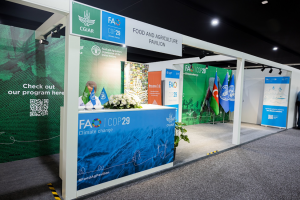
As the curtains close on COP29 in Baku, we reflect on two weeks of intense negotiations, side events, and discussions. The conference, branded as the “Finance COP,” set the stage for critical conversations about global climate goals, adaptation, and finance— at CGIAR we viewed these through the lens of food systems and agriculture.
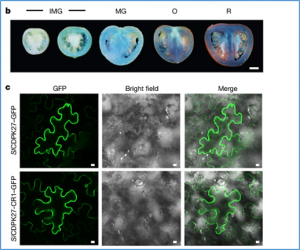
In tomato, sugar content is highly correlated with consumer preferences, with most consumers preferring sweeter fruit1,2,3,4. However, the sugar content of commercial varieties is generally low, as it is inversely correlated with fruit size, and growers prioritize yield over flavour quality5,6,7. Here we identified two genes, tomato (Solanum lycopersicum) calcium-dependent protein kinase 27 (SlCDPK27; also known as SlCPK27) and its paralogue SlCDPK26, that control fruit sugar content.

Regulations surrounding organisms and food products developed using gene editing remain to be discussed among different countries and regions. Several discussions are focused on the similarities between gene editing and natural mutagenesis, and whether gene-edited products should be treated like genetically modified organisms or GM food.

The European Food Safety Authority (EFSA) GMO Panel has released its Scientific Opinion on the safety of soy leghemoglobin produced from genetically modified (GM) Komagataella phaffii for use in food in the European Union. The assessment showed that the GMO Panel did not identify safety concerns regarding the toxicity and allergenicity of soy leghemoglobin protein as expressed in K. phaffii.
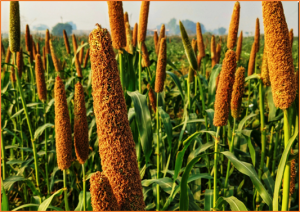
Millets are essential for global food security and nutrition, particularly in sub-Saharan Africa and South Asia. Sorghum is an annual diploid (2n = 2x = 20) species with a genome size of approximately 700–772 Mb. Pearl millet is a diploid crop with an estimated genome size of 1.76 Gb consisting of seven pairs of chromosomes (2n = 2x = 14). Foxtail millet is a diploid annual plant with nine chromosomes (2n = 2x = 18).
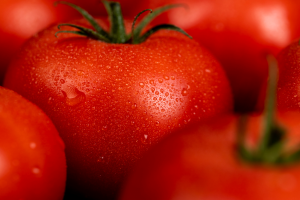
A study conducted by researchers from the Chinese Academy of Agricultural Sciences and partners demonstrated the potential of gene editing to increase sugar content in tomatoes without affecting the weight and yield of the fruit. This scientific breakthrough could pave the way for sweeter tomatoes in the market. Tomato is one of the world's most widely cultivated crops, valued for its nutritional content and contributions to human health

An international team of 80 scientists from 12 different countries led by the Leibniz Institute of Plant Genetics and Crop Plant Research (IPK) has reported a pangenome of barley, providing insights into the crop's disease resistance, architecture, starch mobilization, and the hairiness of a rudimentary appendage to the grain. The results were published in Nature.
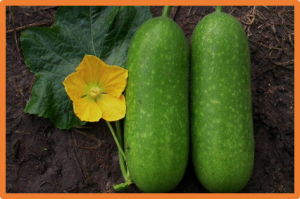
Fruit pedicel length (FPL) is a crucial trait in wax gourd (Benincasa hispida) that affects fruit development and cultivation management. However, the key regulatory genes and mechanisms of FPL in wax gourds remain poorly understood. In this study, we constructed an F2 population using wax gourd plants with long fruit pedicels (GF-7-1-1) and short fruit pedicels (YSB-1-1-2) as parents.
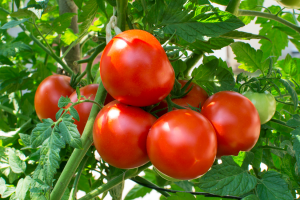
Brown University biologists studied tomato varieties that produce fruit in exceptionally hot growing seasons and found what makes some types more heat tolerant, yielding insights that could help tomatoes adapt to climate change, as rising temperatures are predicted future crop yields. The researchers identified the growth cycle phase when tomatoes are most vulnerable to extreme heat, and the molecular mechanisms that make the plants more heat tolerant.

Almost all countries look at agrifood systems as a primary consideration for climate change adaptation (94%) and mitigation (91%) in their Nationally Determined Contributions (NDCs). This finding is according to the latest analysis of the Food and Agriculture Organization of the United Nations (FAO). NDCs are national climate action plans and the primary tool for attaining the Paris Agreement's goals.
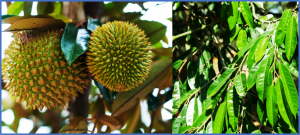
Durio zibethinus L. is known as the "king of fruit" in Malaysia. Meanwhile, Jelebu, Negeri Sembilan has always become the top choice district to visit for durian lover for its Durian Kampung Jelebu, which possessed good quality on par with top D. zibethinus clones such as D197 Musang King and D24. However, there is still lacking in taxonomic data of D. zibethinus especially from Jelebu. This study aimed to analyse the leaf architecture and genome size variations of selected D. zibethinus accessions from Jelebu. Five D. zibethinus accessions from Jelebu were examined.
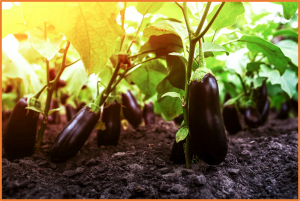
Researchers from South China Agricultural University have identified SmDDA1b, a critical gene in eggplants that boosts the crop's resistance to bacterial wilt, a major threat to solanaceous crops. The study published in Horticulture Research shows that SmDDA1b degrades the SmNAC protein, triggering the plant's immune defenses against the disease. Bacterial wilt is caused by Ralstonia solanacearum which impairs plant water transport, leading to crop devastation.