


News & Events

ISAAA Inc., in collaboration with the Philippine Agriculture and Fisheries Biotechnology Program of the Department of Agriculture (DA Biotech Program Office), will hold a webinar titled Leading Breakthroughs: Gene Drives for a Sustainable Agriculture and Biodiversity Conservation aimed at providing information and recent developments on the new and emerging applications of gene drives.
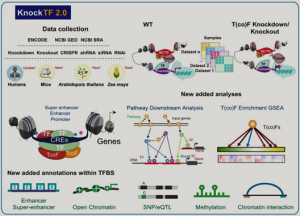
Transcription factors (TFs), transcription co-factors (TcoFs) and their target genes perform essential functions in diseases and biological processes. KnockTF 2.0 (http://www.licpathway.net/KnockTF/index.html) aims to provide comprehensive gene expression profile datasets before/after T(co)F knockdown/knockout across multiple tissue/cell types of different species. Compared with KnockTF 1.0, KnockTF 2.0 has the following improvements: (i) Newly added T(co)F knockdown/knockout datasets in mice, Arabidopsis thaliana and Zea mays and also an expanded scale of datasets in humans.
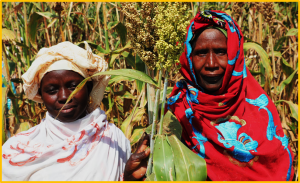
This year, the primary goal of the Open Field Day was to introduce and promote technologies designed to address production challenges and improve the yields of key crops such as sorghum, millet, and groundnut. Through interactive discussions and field demonstrations, attendees learned about the potential of high-yield, climate-resilient crop varieties and sustainable farming practices.

During the first week of COP29, the urgency to address agriculture’s role in climate resilience and food security has never been clearer. The Asia-Pacific region, home to some of the world’s most climate-vulnerable populations, is at the forefront of this challenge. Climate change, water scarcity, and political conflicts threaten food security, disrupt livelihoods, and exacerbate nutritional deficiencies across the region. At the multistakeholder COP29 panel discussion hosted by the Asian Development Bank (ADB) and moderated by IRRI Director General Dr. Yvonne Pinto, ADB’s $14 billion food security commitment and the emerging partnerships that reflect the urgency of fostering sustainable and inclusive agricultural systems were highlighted,
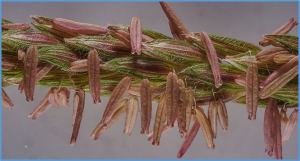
Understanding how maize (Zea mays) responds to cold stress is crucial for facilitating breeding programs of cold-tolerant varieties. Despite extensive utilization of the genome-wide association study (GWAS) approach for exploring favorable natural alleles associated with maize cold tolerance, few studies have successfully identified candidate genes that contribute to maize cold tolerance. In this study, we used a diverse panel of inbred maize lines collected from different germplasm sources to perform a GWAS on variations in the relative injured area of maize true leaves during cold stress-a trait very closely correlated with maize cold tolerance.
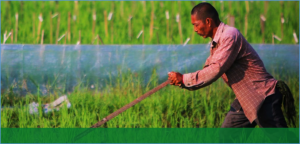
The International Rice Research Institute (IRRI) has launched an ambitious project aimed at transforming the environmental footprint of rice farming in Southeast Asia. The Methane Accelerator for Southeast Asia (MASEA), supported by the United States Agency for International Development (USAID), targets significant reductions in methane emissions from rice cultivation.

Today, FAO Deputy Director-General, Beth Bechdol, Assistant Director-General and Regional Representative for Africa (RAF), Abebe Haile-Gabriel, and Director of the FAO’s Office of Emergencies and Resilience, Rein Paulsen, have concluded a seven-day mission to the Democratic Republic of the Congo (DRC), aiming to raise awareness of the severe food security situation on the ground and mobilize support to reverse the alarming trend.
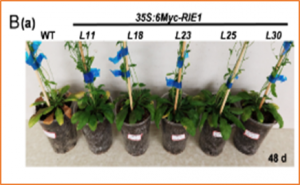
Ethylene is widely recognized as a positive regulator of leaf senescence. However, how plants coordinate the biosynthesis of ethylene to meet the requirements of senescence progression has not been determined. The rate-limiting enzyme in the ethylene biosynthesis pathway is ACC synthase. AtACS7 was previously considered one of the major contributors to the synthesis of “senescence ethylene” in Arabidopsis
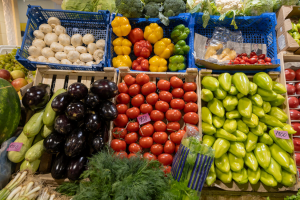
The United Nations food standards body, the Codex Alimentarius Commission, is meeting on 25–30 November 2024 to adopt food safety and quality standards. Charged with protecting consumer health and facilitating fair practices in the food trade, the Codex Alimentarius Commission is a joint initiative of the Food and Agriculture Organization of the United Nations (FAO) and the World Health Organization (WHO).
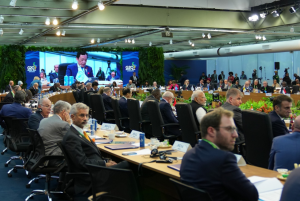
The Director-General of the Food and Agriculture Organization of the United Nations (FAO), QU Dongyu, today urged all FAO Members and partners to join the new Global Alliance Against Hunger and Poverty, which was officially launched today at the G20 Leader’s Summit in Brazil. The Global Alliance Against Hunger and Poverty, an initiative crafted by the Brazilian presidency of the G20, aims to offer an ambitious and urgent platform for accelerating progress towards achieving the international pledges of eradicating poverty and hunger by 2030 (Sustainable Development Goals 1 and 2) as well as to reduce inequalities (SDG 10).
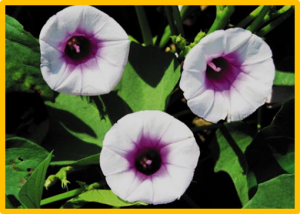
In this study, we successfully identified and categorized 95 CYP450 genes from the sweet potato genome into 5 families and 31 subfamilies. The predicted subcellular localization results indicate that CYP450s are distributed in the cell membrane system. The promoter region of the IbCYP450 genes contains various cis-acting elements related to plant hormones and stress responses.
At COP29, CGIAR advanced climate action as the world’s largest publicly funded agri-food research network. Our work spans 13 Research Centers, 10,000 staff in over 80 countries, across 3,000 partnerships. Aligning with COP29, CGIAR’s mission is to deliver science and innovation that advance the transformation of food, land, and water systems in a climate crisis.