


News & Events
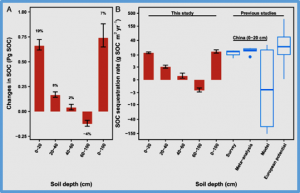
Increasing soil organic carbon (SOC) in agricultural systems is a primary nature-based option for mitigating climate change, improving soil fertility, and ensuring food security. However, the consequences of global warming and increases in carbon inputs on cropland SOC stocks over the last few decades remain largely unknown, particularly in deeper soil layers. Here, by using repeated measurements, we reassess variations in SOC stocks across a 0 to 100 cm soil profile at the same locations in China’s upland croplands in 1980 and 2023.
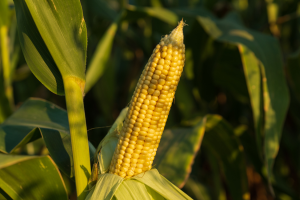
A study published in GM Crops & Food assessed the safety of genetically modified (GM) maize event DP-915635-4 for food and feed use and the environment. GM maize DP-915635-4 expressing the IPD079Ea protein was developed to help control damage from corn rootworm (Diabrotica spp.). The safety assessment found that consuming DP-915635-4 maize poses no risks to human or animal health, suggesting that supplementary studies were not necessary.
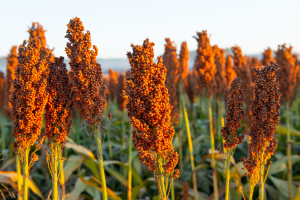
Australia's Office of the Gene Technology Regulator (OGTR) has received license application DIR 209 from the University of Queensland to conduct a field trial of sorghum genetically modified for altered reproduction. The field trial is proposed to take place at one site in the Lockyer Valley Region in Queensland, covering an area of up to 1 hectare per year over 3 years. The plants in this field trial would not be used for human food or animal feed.
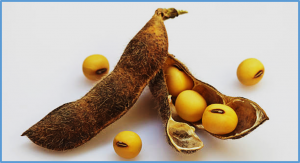
Soybean is an economically important crop that is rich in seed oil and protein. The 100-seed weight (HSW) is a crucial yield contributing trait. This trait exhibits complex inheritance regulated by many genes and is highly sensitive to environmental factors. In this study, an integrated strategy of association mapping, QTL analysis, candidate gene and haplotype analysis was utilized to elucidate the complex genetic architecture of HSW in a panel of diverse soybean cultivars.

Have you used the ISAAA GM Approval Database? If yes, we are happy to hear about it and we hope to provide you with a better experience. Kindly help us improve the database by answering our short feedback survey form. We value what you think and we will do our best to continue enhancing the database to be more useful for you. Please also provide feedback on our recent article and infographics about biotech crop approvals.
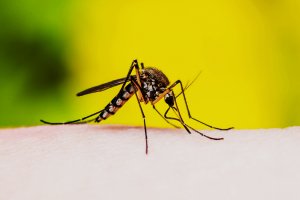
A new biological pest control method, called Toxic Male Technique (TMT), could be a faster and more effective solution for reducing the threat of insect pests, such as disease-carrying mosquitoes, compared to current methods. TMT was developed by experts from Applied BioSciences and the ARC Center of Excellence in Synthetic Biology at Macquarie University.
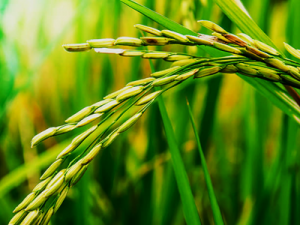
Clustered regularly interspaced short palindromic repeats (CRISPR) and CRISPR-associated proteins (Cas) (CRISPR-Cas) is an adaptive prokaryote immune system against foreign DNA/RNA that is now applied widely to genome editing. A miniature Cas, CRISPR-Cas12f, is one-half to one-third the size of the CRISPR-Cas9 that is commonly used in genome editing experiments in many organisms, including higher plants
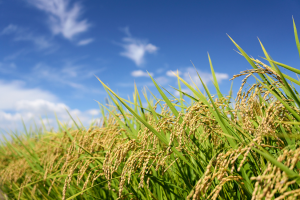
Researchers at the National Agriculture and Food Research Organization (NARO) in Japan harvested 440 kilograms of genetically modified rice designed to alleviate hay fever. The anti-allergy rice variety has been under development in Japan since 2000 and is now progressing toward clinical application. Researchers genetically engineered the existing Kitaake rice variety to produce the allergens found in pollen to combat hay fever associated with Japanese cedar pollen.

On December 31, 2024, China's Ministry of Agriculture and Rural Affairs (MARA) announced the issuance of new and renewed biosafety certificates for genetically engineered (GE) and gene-edited crop events. The newly-issued certificates include the following:
- 7 renewed and 1 new biosafety certificate for GE crops approved for import as processing materials;
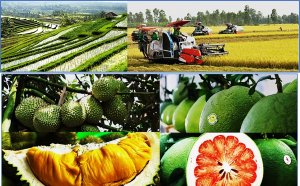
Agriculture has been recognized as a bright spot in the economic development of 2024. The agricultural and rural sector implements the 2024 Plan in the context of mixed advantages, difficulties and challenges; including the strong impact of market fluctuations, intense hot weather, drought, rainstorms in the Central Highlands and Central regions, salt intrusion in southern regions, Storm No. 3 (Yagi) caused heavy damage to the agricultural production (VND 31,800 billion lossed).
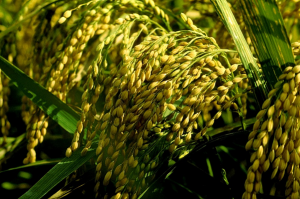
Polyploid rice and its reverted diploid show rich phenotypic variation and strong heterosis, showing great breeding value. However, the genomic differences among tetraploids, counterpart common diploids, tetraploid-revertant diploids, and hybrid descendants are unclear. In this work, we bred a new excellent two-line hybrid rice variety, Y Liang You Duo Hui 14 (HTRM12), using Haitian tetraploid self-reverted diploid (HTRM2).

In the southern coastal deltaic regions of Bangladesh, freshwater canals are a lifeline to multiple food system-based livelihoods. However, these resources are mired in unequal conflicts and contestations, an outcome of resources appropriation and control by local elites and ambiguous interpretations of policies and strategies. Marginalized farmers and women who rely largely on agri-food systems-related livelihoods are most affected by these canal water appropriations.