


News & Events
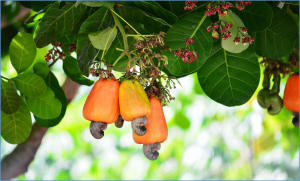
In this study, 35 new microsatellite/simple sequence repeat (SSR) markers were developed, and a set of 20 highly polymorphic and reproducible markers were used for DNA fingerprinting and genetic diversity analysis in 32 cashew cultivars. The polymorphic information content (PIC) of newly developed markers varied from 0.19 to 0.67, with an average of 0.44.
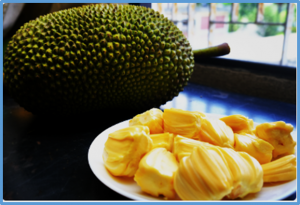
Khadiga Khanom never used to give much thought to jackfruit. In her home district of Gazipur, about 50 kilometres north of the Bangladeshi capital Dhaka, Khadiga had certainly seen plenty of jackfruit trees in her life. They are hard to miss, as oblong, spiky green fruits, which can easily each weigh several kilos. She had even cooked jackfruit in her curries along with an array of other ingredients. But she never imagined that one day it would become one of the main sources of her family’s livelihood.
A groundbreaking new study, “Governance and resilience as entry points for transforming food systems in the countdown to 2030”, published today in Nature Food, presents the first comprehensive analysis of change since 2000 in key food system indicators. Lawrence Haddad, Executive Director of GAIN, said, “This new report reveals a mix of encouraging advancements and concerning setbacks, underscoring the urgency of accelerating food systems transformation.
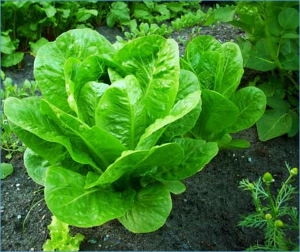
Heat shock protein 20 (Hsp20) plays a very important role in response to abiotic stressors such as drought; however, in lettuce (Lactuca sativa L.), this gene family is poorly understood. This study used bioinformatics methods to identify 36 members of the lettuce Hsp20 family, which were named LsHsp20-1~LsHsp20-36. Subcellular localization results revealed that 26 members of the LsHsp20 protein family localized to the cytoplasm and nucleus.
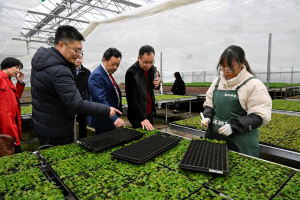
QU Dongyu, Director-General of the Food and Agriculture Organization of the United Nations (FAO), today wrapped up his visit to China, during which he visited farms with innovative agricultural practices, agriculture enterprises, as well as key research institutions, with the objective of strengthening partnerships and support knowledge sharing and exchanges with FAO Members to support the transformation of agrifood systems and ensure the Four Betters – better production, better nutrition, a better environment and a better life, leaving no one behind.
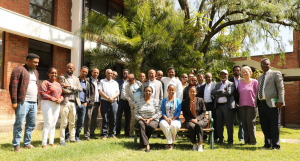
The Ethiopian landscape, a tapestry of rolling highlands and vast pastoral plains, has long echoed with the sounds of livestock. For generations, these animals have been the lifeblood of rural communities, providing sustenance, income, and a connection to the land. However, farmers face significant challenges, including climate change, disease, and limited resources.
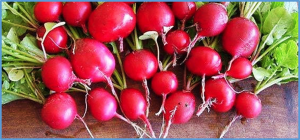
Monosomic alien addition lines (MAALs) are developed through interspecific hybridization, where an alien chromosome from a relative species is introduced into the genome of the recipient plant, serving as valuable genetic resources. In this study, an allotetraploid Raphanobrassica (RRCC, 2n = 36) was created from the interspecific hybridization between radish (Raphanus sativus, RR, 2n = 18) and Brassica oleracea (CC, 2n = 18)
Today the CGIAR FOCUS Climate Security team launches an ArcGISStoryMap that explores the role of social protection for inclusive climate change adaptation and sheds light on some of the key challenges across contexts. The Storymap shares findings from a study conducted by the CGIAR FOCUS Climate Security team of the Alliance of Bioversity International and CIAT within the CGIAR initiative on Gender Equality (HER+).
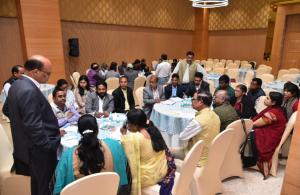
ICRISAT, in partnership with the Odisha University of Agriculture and Technology (OUAT), organized a Science-Policy Workshop on Advancing the Mainstreaming of Millets into Agri-food Systems in Odisha: Learnings, Insights, and Way Forward. The workshop was held in Bhubaneswar on 26 December 2024 under the aegis of the CGIAR National Policies and Strategies Initiative.
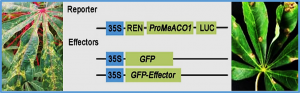
The nuclear factor Y (NF-Y) transcription factors play important roles in plant development and physiological responses. However, the relationship between NF-Y, plant hormone and plant stress resistance in tropical crops remains unclear. In this study, we identified MeNF-YC15 gene in the NF-Y family that significantly responded to Xanthomonas axonopodis pv. manihotis (Xam) treatment. Using MeNF-YC15-silenced and -overexpressed cassava plants,

Previous reports show that stringent regulatory processes and high research and development (R&D) costs cause approval lags and postponement in the adoption of gene editing. A study conducted by researchers from Wageningen University and Czech University of Life Sciences Prague explores the impacts of accelerating agricultural R&D transfer on global food security.
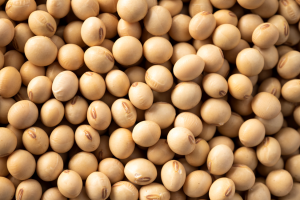
Food Standards Australia New Zealand (FSANZ) is calling for comment on an application by Bayer CropScience Pty Ltd. to allow the sale and use of food derived from a genetically modified (GM) soybean line MON94637. GM soybean line MON94637 has been genetically modified to protect the plant from damage caused by lepidopteran insect pests.