


News & Events

ISAAA Inc., in collaboration with the Philippine Agriculture and Fisheries Biotechnology Program of the Department of Agriculture (DA Biotech Program Office), held a webinar titled Plate of the Future: Nutritious and Sustainable Novel Foods on January 30, 2025, via Zoom. This webinar provided information on the new and emerging applications of biotechnology to novel foods.

As governments in Europe are yet to agree on the proposal for new genomic techniques (NGT), Poland seeks to move forward from the stringent EU licensing and traceability requirements, according to documents. A week after it took over the chair of intergovernmental policy talks as holder of the rotating EU Council presidency, Warsaw wants to discard Hungary's call to reopen the entire policy discussion – reverting instead to an earlier outline of the definition and focusing on the patent issue.

Stay-green refers to the phenomenon that plant leaves remain green during senescence and even after death, which is of great significance for improving the commerciality of leafy vegetables during storage or transportation and extending their shelf life. In this study, we identified a stay-green mutant of pak choi and named it nye2. Genetic analysis showed that the stay-green trait was controlled by a recessive nuclear gene
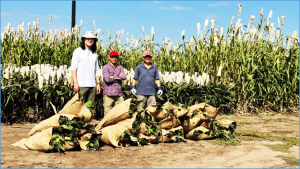
Researchers at the Center for Advanced Bioenergy and Bioproducts Innovation (CABBI) have developed a new variety of sorghum that produces significantly more oil than traditional sorghum, outperforming even soybeans in oil production per hectare. In their study published in Plant Biotechnology Journal, the CABBI research team highlights the utility of a lab-to-field pipeline to deliver sorghum that's high in triacylglycerols (TAG).
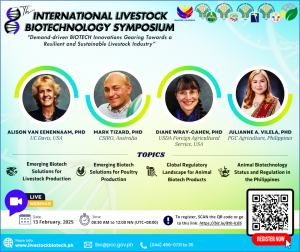
The event, with the theme Demand-driven BIOTECH Innovations Towards a Resilient and Sustainable Animal Industry, aims to bring together leading experts, researchers, and stakeholders from around the world to tackle demand-driven biotechnological innovations with emphasis on scientifically sound and market-responsive solutions. By aligning biotechnological advancements with the needs and preferences of consumers, producers, and policymakers, the symposium seeks to foster a resilient and sustainable animal industry.
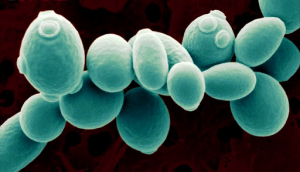
Ethanol tolerant Saccharomyces cerevisiae is compulsory for ethanol production in starch based biorefinery, especially during high-gravity fermentation. In this study, adaptive evolution with increased initial ethanol concentrations as a driving force was harnessed for achieving ethanol tolerant S. cerevisiae. After evolution, an outstanding ethanol tolerant strain was screened, which contributed to significant improvements in glucose consumption and ethanol production in scenarios of 300 g/L initial glucose, high solid loadings (30 wt%, 33 wt%, 35 wt% and 40 wt%) of corn, and high solid loadings (30 wt% and 33 wt%) of cassava, compared with the original strain.
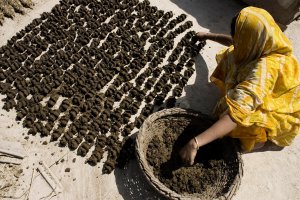
The rise in nitrogen fertilizers over the past century has significantly contributed to enhancing agricultural production and bolstering food security and nutrition for an expanding global population. Nevertheless, improper use of nitrogen can severely damage air, water, and soil quality, result in biodiversity loss, and exacerbate climate change. A new report from the Food and Agriculture Organization of the United Nations (FAO), launched today at an event at its headquarters in Rome, provides a comprehensive overview of nitrogen use and the resulting challenges in agrifood systems.
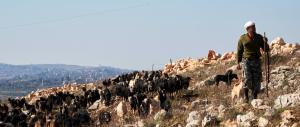
Nearly a third of Lebanon’s population is facing acute food insecurity following the escalation of conflict in late 2024 and recovery from the impact of hostilities on agriculture and the economy is likely to be slow, according to a new food security assessment. The Integrated Food Security Phase Classification (IPC) analysis on Lebanon, developed by FAO, WFP and the Ministry of Agriculture, shows that some 1.65 million people in Lebanon are now facing crisis or emergency levels of food insecurity (IPC phase 3 or above), up from 1.26 million before the escalation.

Cassava (Manihot esculenta Crantz) is a key crop for starch and biofuels production. This study focuses on the polysaccharide composition and saccharification efficiency in cassava pulp through genome-wide association studies (GWAS), targeting the improvement of root characteristics for industrial use. We analyzed 135 partially inbred lines population, performing monosaccharide composition and saccharification analyses to reveal substantial variability in storage root biomass. Among 33 traits examined, 128 significant SNPs were associated with 23 biomass traits, highlighting a complex genetic architecture.

FAO Director-General QU Dongyu led the celebration of the Chinese Lunar New Year at the organization's headquarters in Rome today, marking the beginning of the Year of the Snake. The event carried special significance this year as it coincides with FAO’s 80th anniversary, prompting reflections on past achievements and future aspirations. Qu delivered a powerful message about the need for transformation within FAO and across global agrifood systems.

In February 2024, the CGIAR Research Initiative on Sustainable Healthy Diets through Food Systems Transformation (SHiFT) signed a Memorandum of Understanding with the Bangladesh National Nutrition Council (BNNC) of the Ministry of Health and Family Welfare and the Food Planning and Monitoring Unit (FPMU) of the Ministry of Food, formalizing their shared commitment to advancing the implementation of food systems transformation for sustainable healthy diets in Bangladesh.

Abscisic acid (ABA) is a crucial plant hormone that regulates various aspects of plant development. However, the specific function of the ABA receptor PYL in fruit development has not been fully understood. In this study, we focused on DkPYL3, a member of the ABA receptor subfamily Ⅰ in persimmon, which exhibited high expression levels in fruit, particularly during the young fruit and turning stages. Through yeast two-hybrid (Y2H), firefly luciferase complementation imaging (LCI), protein inhibition assays, and RNA-seq techniques, we identified and characterized the DkPYL3 protein, which was found to inhibit the activity of protein phosphatase type 2 C (PP2C).