


News & Events
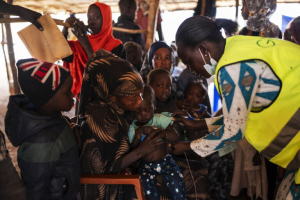
Much has been said and written of late about the linkages between conflict and hunger. There is good reason for this: 65% of the world’s acutely food-insecure people live in conflict-affected countries. Typically, two claims are made about the conflict-hunger linkage. First, that conflict breeds hunger. This claim is supported by so much evidence that in 2018 the United Nations adopted Resolution 2417 recognizing the direct impacts of armed conflict on food insecurity and strongly condemning the use of starvation of civilians as a weapon of warfare in conflict situations.

Smallholder custodians of agricultural biodiversity in two Western Kenyan counties now have the equipment and training needed to produce value-added products derived from their crops. The solar-powered dryers, winnowers, threshers, and vacuum-packing units safeguard crops and seeds from inclement weather, open new markets for products derived from local agrobiodiversity, and reduce labor demands, particularly for women and children.
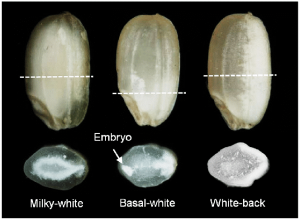
Mycotoxins such as aflatoxins (AFs), fumonisins (FBs), zearalenone (ZEN), and deoxynivalenol (DON) pose a risk to public health due to their carcinogenic potency (AFs and FBs) and anti-nutritional effects. The hazards associated with mycotoxins are accentuated where food management practices, control, and regulatory systems from farm to plate are sub-optimal. Information on the frequency of these mycotoxins in rice commercialized in markets in sub-Sahara Africa (SSA) is limited. The current study examined AF concentrations in 527 rice samples collected from 54 markets in five SSA countries.

National surveys on genetic modification conducted in China showed that scientists are more sensitive to risk-related social norms, while the lay public is more concerned with norms linked to benefits. The results are published in Risk Analysis. Communication research about scientific topics was mostly focused on the deficit model, wherein it is believed that more scientific understanding leads to public acceptance. However, many questions about this model have been raised because of the inconclusive influence of knowledge on acceptance.

Researchers at the Agricultural Research Service (ARS) led by geneticist Devinder Sandhu are addressing salinity by developing salt-tolerant crops, starting with alfalfa, a key forage crop for dairy farming and soil improvement. Sandhu's team began with 2,700 alfalfa lines, narrowing the selection to 12 with superior performance. Two lines stood out, tolerating salinity equivalent to one-third seawater. Combining their traits, the researchers created a new alfalfa line that performed well even with real seawater tests.
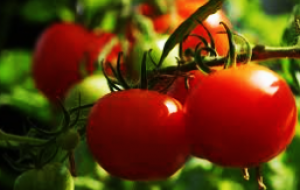
A 2°C climate-warming scenario is expected to further exacerbate average crop losses by 3%-13%, yet few heat-tolerant staple-crop varieties are available toward meeting future food demands. Here, we develop high-efficiency prime-editing tools to precisely knockin a 10-bp heat-shock element (HSE) into promoters of cell-wall-invertase genes (CWINs) in elite rice and tomato cultivars. HSE insertion endows CWINs with heat-responsive upregulation in both controlled and field environments to enhance carbon partitioning to grain and fruits, resulting in per-plot yield increases of 25% in rice cultivar Zhonghua11 and 33% in tomato cultivar Ailsa Craig over heat-stressed controls, without fruit quality penalties.
Japan requires confined field trials of genetically modified (GM) crops for environmental risk assessment. By comparing the GM crop with its non-GM counterpart in the trials, differences in growth in the local environmental settings will be considered. However, some events of GM maize and GM cotton have been exempted from such requirement and data from the trials conducted in other countries were considered.
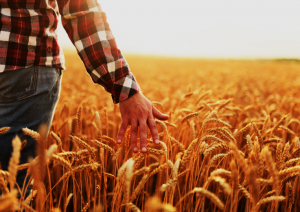
Secretary Steve Reed of the United Kingdom's Department for Environment Food and Rural Affairs (Defra) confirmed the timetable for the Genetic Technology (Precision Breeding) Act 2023 at the Oxford Farming Conference on January 9, 2025. In his speech during the Conference, Reed said, "I can today confirm we will introduce secondary legislation to Parliament by the end of March, unlocking new precision breeding technology that will allow farmers to grow crops that are more nutritious, resistant to pests and disease, resilient to climate change and benefit the environment."
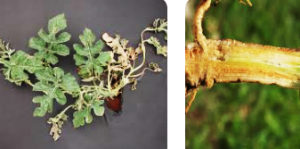
Complex traits influenced by multiple genes pose challenges for marker-assisted selection (MAS) in breeding. Genomic selection (GS) is a promising strategy for achieving higher genetic gains in quantitative traits by stacking favorable alleles into elite cultivars. Resistance to Fusarium oxysporum f. sp. niveum (Fon) race 2 in watermelon is a polygenic trait with moderate heritability. This study evaluated GS as an additional approach to quantitative trait loci (QTL) analysis/marker-assisted selection (MAS) for enhancing Fon race 2 resistance in elite watermelon cultivars.
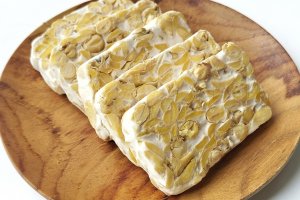
A research team from the University of Massachusetts Amherst (UMass Amherst) will be developing a tasty, nutritious, and sustainable plant-based alternative to animal meat. This product may help offset the health risks of the Western diet, such as obesity, fatty liver, hyperlipidemia, and diabetes. The new plant-based protein food uses tempeh, a fermented fungal food, that will transform the nutrients of chickpeas into a different compound.
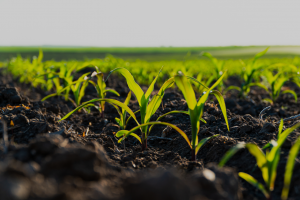
A recent study from the University of Illinois Urbana-Champaign shows that gene-edited bacteria can supply the equivalent of 35 pounds of nitrogen from the air during early corn growth, which may reduce the crop's reliance on nitrogen fertilizer. Connor Sible and his research team tested species of soil bacteria that can turn atmospheric nitrogen into plant-available forms. The edited versions boost the activity of a key gene involved in nitrogen fixation, making more of it available to plants.
The environmental risk assessment (ERA) of genetically modified (GM) crops in Japan requires collecting data from a comparative study of a GM and non-GM control in an in-country confined field trial (CFT). This in-country CFT requirement is used to address concerns that differences in the local environmental conditions may lead to differences in growth and/or risks of GM crops. However, this requirement for in-country CFT has recently been exempted for certain GM maize and GM cotton traits, and instead CFT data from other countries are used to inform the ERA of these GM events.