


News & Events
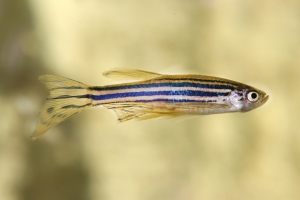
A Macquarie University-led research showed that engineered zebrafish and fruit flies can break down methylmercury and remove it from their bodies as a less harmful gas. This breakthrough highlights the great potential of genetically modified (GM) animals for pollution control. Methylmercury is one of the world's most dangerous pollutants that builds up in the environment and enters the food chain through contaminated seafood.
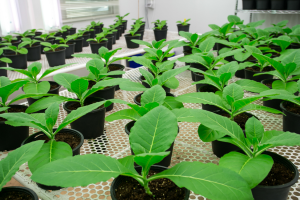
A research team at Hebei Agricultural University, China conducted a study to explore the effects of salt tolerance gene accumulation on salt tolerance of tobacco plants. Their findings are published in Transgenic Research. Salt stress is one of the major challenges in crop production, especially in plants that do not exhibit inherent salt tolerance traits.
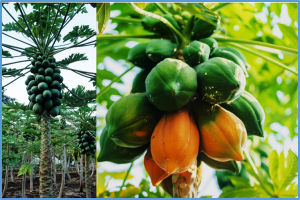
Difficulties exist in obtaining full-length, correctly folded, and soluble papain or papain-like proteases that necessitate the exploration of alternative strategies. This study describes the development of an Escherichia coli strain capable of producing soluble papain without the need for complex and time-consuming in vitro refolding steps. To enhance the production of soluble papain, engineered T7 promoters and a recombinant papain translationally fused with varying tags were constructed. The tags investigated include the maltose-binding protein, small ubiquitin modifier protein, and glutathione transferase.

Researchers at the University of Missouri (Mizzou) are on the verge of a breakthrough in fighting soybean cyst nematodes (SCN) as they identified a gene that confers a new mode of resistance to the parasite. Soybean cyst nematodes cost American farmers an estimated US$2 billion in yield losses each year. Since the pest's discovery in 1954, plant scientists have worked to combat its destructive impact.
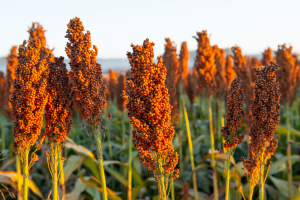
Chinese scientists have identified two specific genes in sorghum, SbSLT1 and SbSLT2, that confer resistance to Striga, a major parasitic plant responsible for major crop losses. When the two genes are knocked out, the plant's resistance to Striga, commonly known as witch-weed, significantly increases. This discovery sheds light on the natural defense mechanisms of sorghum.
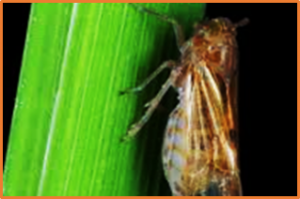
The brown planthopper (BPH) is a significant piercing-sucking pest of rice plants that causes widespread destruction globally. Discovering new germplasms and genes for BPH resistance is essential for enhancing genetic diversity in rice breeding. In this study, 4006 rice accessions from tropical and subtropical regions were screened for BPH resistance at the seedling stage, and 63 accessions with high-resistant were identified. Of these, 59 accessions exhibited high resistance to BPH at the adult stage. The 63 accessions displayed widespread variation in key agronomic traits, though most were generally unsatisfactory.

China continues to exhibit support for the commercialization of genetically modified (GM) crops to attain food security targets. This is according to a report published by Modern Diplomacy about China's agricultural priorities for 2025.“China's current Five-Year Agricultural Plan targets annual grain production exceeding 770 million tonnes, alongside a push to increase domestic soybean production to 23 million tons by 2025.
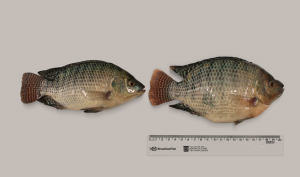
Brazilian Fish, a leading tilapia producer, announces the successful development of gene-edited tilapia in Brazil, in partnership with the Center for Aquaculture Technologies (CAT) in the United States. The initiative aims to improve the productivity and yield of tilapia by accelerating breeding efficiency from 20 years of conventional breeding program to just one year.
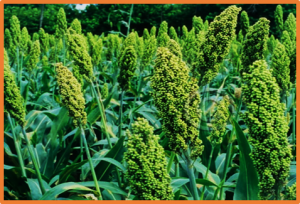
Parasitism with Striga poses a major threat to global food production. Striga germination and growth rely on strigolactones (SLs) exuded by crop roots under phosphate (Pi)-deficient conditions, although the mechanism of this host-parasite interaction remains elusive. In this study, transcriptomic and functional analyses of sorghum treated with Pi deficiency or the SL GR245DS identify two ABC transporter G (ABCG) transporters of SL, Sorghum biocolor strigolactones transporter 1 (SbSLT1) and SbSLT2.
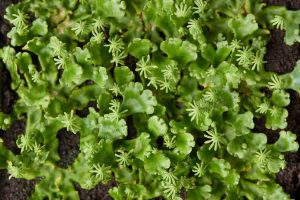
A new study by Liam Dolan and Frédéric Berger at the Gregor Mendel Institute (GMI) of Molecular Plant Biology connects climate data with genetic variation, shedding light on how plants like Marchantia polymorpha adapt to different climate conditions.Understanding how plants naturally adapt to varying environments is essential for predicting their responses to climate change, which can ultimately aid in developing more resilient crops.
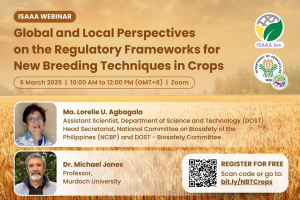
The webinar aims to provide information on the biosafety regulations and policy framework/s governing the use of New Breeding Techniques (NBTs) in improving crops and expound on the challenges and potential policy directions that can support the responsible and sustainable use of these technologies. The webinar also aims to be a venue for stakeholders to engage in meaningful discussions on harmonized regulations facilitating the responsible use of NBTs in agriculture.
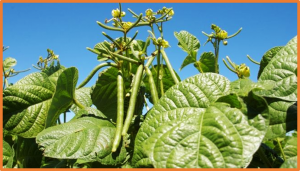
The remarkable evolutionary history of the common bean (Phaseolus vulgaris L.) has led to the emergence of three wild main gene pools corresponding to three different eco-geographical areas: Mesoamerica, the Andes and northern Peru/Ecuador. Recent works proposed novel scenarios, and the northern Peru/Ecuador population has been described as a new species called P. debouckii, rekindling the debate about the origin of P. vulgaris.