


News & Events
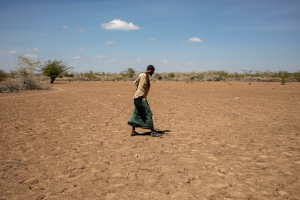
New data from Somalia shows that 4.4 million people could face hunger by April 2025, driven by worsening drought conditions, conflict and high food prices. The Federal Government of Somalia and the United Nations agencies warn that without funding for humanitarian action, the country - which in 2022 was pushed to the brink of famine by severe drought, resulting in thousands of deaths, with nearly half being children – millions could once again face deepening hunger.

Step forward in solidarity for International Women's Day (IWD) 2025 on March 8 to help #AccelerateAction. At the current rate of progress, it will take until 2158, which is roughly five generations from now, to reach full gender parity, according to data from the World Economic Forum. Focusing on the need to Accelerate Action emphasizes the importance of taking swift and decisive steps to achieve gender equality.
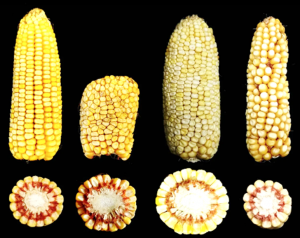
Phenomic selection (PS) is a cost-effective method proposed for predicting complex traits and enhancing genetic gain in breeding programs. The statistical procedures are similar to those utilized in genomic selection (GS) models, but molecular markers data are replaced with phenomic data, such as near-infrared spectroscopy (NIRS). However, the use of NIRS applied to PS typically utilized destructive sampling or collected data after the establishment of selection experiments in the field
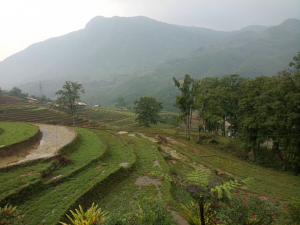
The CGIAR Research Initiative on Nature-Positive Solutions (NATURE+) aims to shift agrifood systems toward more resilient and sustainable pathways, and emphasizes sustainable agricultural practices that balance productivity with ecological stewardship. Recent quantitative data collected by the IFPRI team across Kenya, Vietnam, India, and Colombia provide a window into some of the socioeconomic, agricultural, and environmental dynamics shaping these nations’ agrifood landscapes
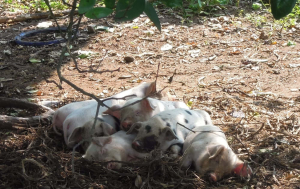
Livestock is a key sector in Uganda, contributing approximately 4.3% of the country’s gross domestic product. Nearly 60% of households depend on livestock for their livelihoods, with women and youth playing crucial roles in livestock production. However, restrictive social and gender norms limit their ability to fully benefit from business and economic opportunities in the sector.
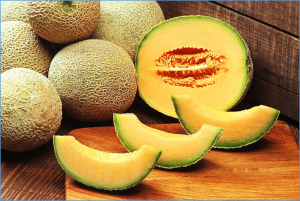
Melon (Cucumis melo L.) is an economically important fruit crop that has been cultivated for thousands of years. Fruit color, a crucial trait influencing the appearance quality and economic value of melons, is primarily determined mainly by the type and concentration of pigments such as chlorophyll, carotenoids, and flavonoids. Identifying the genetic loci that govern melon fruit color contributes to breeding efforts aimed at enhancing melon rind coloration.
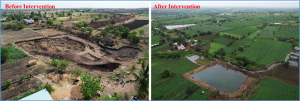
Determined to change the situation, a science-led project launched in 2023 by the International Crops Research Institute for the Semi-Arid Tropics (ICRISAT), in partnership with the Groundwater Survey and Development Agency (GSDA) of Maharashtra and the CGIAR initiative-Sustainable Intensification of Mixed Farming Systems (SI-MFS), addressed these challenges through integrated landscape management and climate-smart farming practices.

I am pleased to welcome you to FAO Headquarters for the resumed meeting of the CBD COP16. FAO is your Organization and this is your home. This is an important continuation of the discussion on biodiversity and agrifood systems. Our focus on biodiversity and agriculture is based on science. I always ask what is the real meaning of biodiversity for the consumers and the farmers – it is about food diversity.
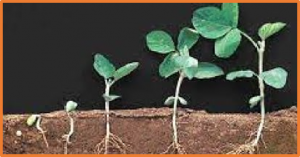
Seed germination is an essential stage in the life cycle of flowering plants, influencing the field emergence rates of seeds. Consequently, the role of GmAOC4 in soybean seed germination was investigated in the present study. Results suggested that the chloroplast-localized GmAOC4 exhibited high expression levels in the roots and young pods and during the seed germination stage in soybeans.
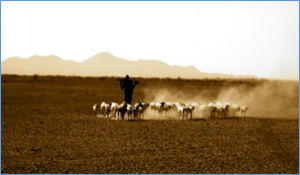
A team of scientists from the University of Zimbabwe, the International Livestock Research Institute (ILRI) in Kenya, and the African Group of Negotiators Experts Support (AGNES) conducted a literature review to develop a framework for just transition pathways for Africa’s agriculture towards low emission and climate resilient development under 1.5°C of global warming.
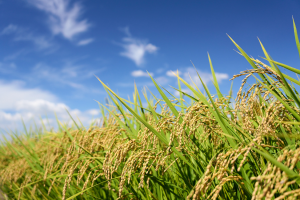
A study, conducted by researchers at Yuxi Normal University and partners in China, investigated the role of a rice protein (OsbZIP35) in response to stress, particularly drought. The preprint of their findings is available in Research Square. The research team developed rice plants lacking the OsbZIP35 protein, which were found to be more susceptible to drought at all growth stages.
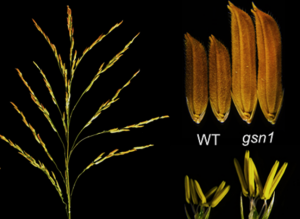
Coenzyme Q (CoQ) is essential for energy production by mitochondrial respiration, and it is a supplement most often used to promote cardiovascular health. Humans make CoQ10, but cereals and some vegetable/fruit crops synthesize CoQ9 with a side chain of nine isoprene units. Engineering CoQ10 production in crops would benefit human health, but this is hindered by the fact that the specific residues of the enzyme Coq1 that control chain length are unknown