


News & Events
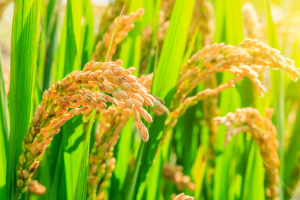
Scientists from China, led by Prof. Chen Xiaoya and Prof. Gao Caixia from the Chinese Academy of Sciences, successfully developed a new rice variety that is capable of producing coenzyme CoQ10 (CoQ10) using gene editing. These advancements offer a promising, sustainable solution for boosting dietary CoQ10 intake through widely consumed crops.
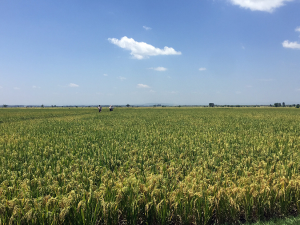
Using genome editing, the "Healthy Crops" consortium, in collaboration with the Kenya Agricultural and Livestock Research Organization (KALRO) developed an innovative strategy to combat bacterial blight (BB) in rice. If approved for use by farmers in Kenya, the BB-resistant rice varieties are expected to increase productivity and reduce yield losses associated with the disease in the affected rice-growing regions.
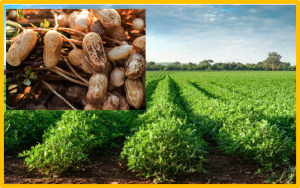
Targeted knockout of the betaine aldehyde dehydrogenase genes AhBADH1 and AhBADH2 using CRISPR/Cas9 produced peanut mutant lines with significantly elevated 2-acetyl-1-pyrroline levels and a strong aroma, marking the first creation of fragrant peanut lines.Peanut (Arachis hypogaea L.) is an important food and oil crop valued for its oil-rich kernel, high protein content, and diverse nutritional components, making it a staple raw material in the food industry.

Scientists from the Henan Academy of Agricultural Sciences and partners in China used CRISPR-Cas9 gene editing to create fragrant peanuts for the first time. They targeted two genes, AhBADH1 and AhBADH2, which normally prevent the production of 2-acetyl-1-pyrroline (2-AP), the compound responsible for the strong aroma of rice. By knocking out these genes in peanuts, they successfully produced lines with significantly higher levels of 2-AP and a strong aroma.
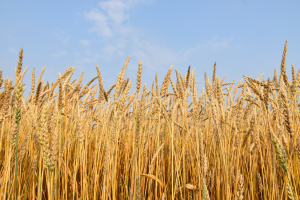
A study published in GM Crops & Food showed the development of transgenic wheat plants that can withstand salt stress conditions. The findings of the study demonstrate a promising approach for improving salt tolerance in crops. The researchers used genetic engineering to introduce MDAR1, a gene from Arabidopsis thaliana plant, to increase ascorbic acid (AsA) levels in wheat. The study developed six independent transgenic wheat lines expressing the MDAR1 gene through biolistic bombardment.
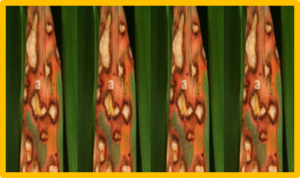
Rice blast, caused by the fungal pathogen Magnaporthe oryzae, is one of the most devastating diseases affecting rice production worldwide, resulting in significant yield losses and threatening global food security. The severity of rice blast, particularly in susceptible regions, underscores the urgent need for available effective resistance strategies. In this study, six sets of gene-specific molecular markers for the Pik locus associated with rice blast resistance were developed based on publicly available gene sequences. Experimental validation confirmed their high accuracy.
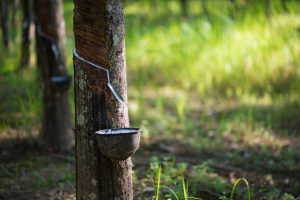
Rubber farmers in India are urging the government to allow the use of genetically modified (GM) rubber plants, which are more resistant to disease and climate change, thus, essential for modernizing plantations and encouraging farmers to continue rubber cultivation. Members of the National Consortium of Regional Federations of Rubber Producers' Societies pointed out the need for GM rubber technology because of the declining rubber prices and increased pest problems.
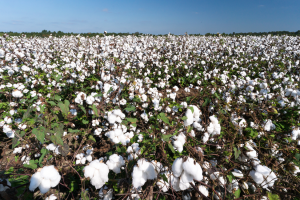
The GM cotton also contains marker genes used for selecting plants during the early stages of research. It contains introduced genes for conferring insect resistance (4), tolerance to glyphosate, glufosinate, and dicamba herbicides (3), antibiotic resistance marker genes (3), and visual reporter (1). Bayer seeks approval to commercially cultivate the GM cotton Australia-wide, subject to restrictions in some Australian States and Territories for marketing reasons.
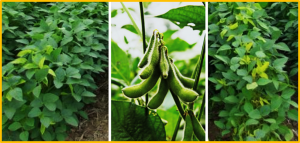
A population of wild soybean chromosome segment substitution lines (CSSLs), SojaCSSLP5, with NN1138-2 as the cultivated recurrent parent and N24852 as the wild donor parent, was used to identify drought-tolerant loci/segments from the donor. Relative shoot dry weight, a tolerance indicator, varied significantly among the parents and CSSLs. Six drought tolerance loci/segments were detected in SojaCSSLP5, including Gm14_LDB_21 with GsPP2C-51 (Glyma.14g162100) as one of the four possible genes. This gene belongs to the F1 clade of protein phosphatase 2C based on gene ontology annotation, qPCR, and previous research results.
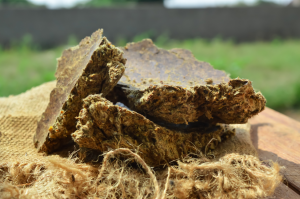
ICAR-Indian Grassland and Fodder Research Institute researchers investigated any possible long-term effects of feeding Bt cottonseed cake (CSC) to rams in a tropical setting. The results are published in Tropical Animal Health and Production. The researchers divided eighteen male rams into three treatment groups: one with no CSC, one with 35% non-Bt CSC, and one with 35% Bt CSC in their feeds. Over 320 days, they monitored the rams' growth, feed intake, blood parameters, and semen quality.

Researchers from the University of Tennessee Institute of Agriculture, Indiana University, the University of Kentucky, the U.S. Forest Service, and several other institutions have, for the first time, described the complex genome of the white oak (Quercus alba). This tree is a keystone species and one of the most abundant trees in eastern North America.
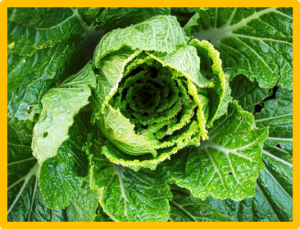
Male sterile lines are ideal for hybrid seed production in Chinese cabbage. Herein, the complete male sterile mutants M5026 and M5073 were obtained through ethyl methanesulfonate (EMS) mutagenesis in the Chinese cabbage double haploid line ‘FT’. Cytological observations revealed that M5026 exhibited an absence of the tapetum, an overabundance of microsporocytes, and abnormal exine formation in pollen.