


News & Events

The Precision Breeding Regulations 2025 is a major step in unlocking growth and innovation in new breeding technologies (NBTs), ensuring that England becomes a world leader in agri-food innovation while reinforcing food security and sustainability. Precision Breeding Regulations 2025 is based on a two-tier approach. Businesses first apply to Defra for a "marketing notice" to market the precision-bred organism (PBO).
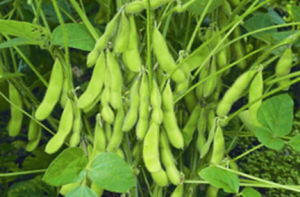
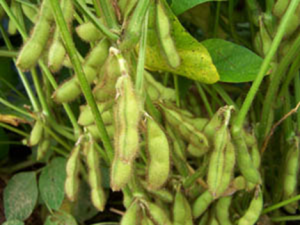
The regulation of downstream responsive genes by transcription factors (TFs) is a critical step in the stress response system of plants. While bZIP transcription factors are known to play important roles in stress reactions, their functional characterization in soybeans remains limited. Here, we identified a soybean bZIP gene, GmbZIP60, which encodes a protein containing a typical bZIP domain with a basic region and a leucine zipper region.

A research team from Kobe University found a way to precisely edit the DNA of Lactobacillus strains without using genetic material from other organisms. This method creates a strain that is capable of reducing diabetes-aggravating chemicals in yogurt. Humans have been enhancing microorganisms for thousands of years by selecting strains that improve the production of wine, yogurt, and other products.

Dr. Mariangela Hungria, a microbiologist from São Paulo, whose discoveries helped Brazil become a global agricultural powerhouse, has been named the 2025 World Food Prize Laureate. Dr. Hungria has developed dozens of biological seed and soil treatments that help crops source nutrients through soil bacteria, significantly increasing yields of major crops while also reducing the need for synthetic fertilizer.
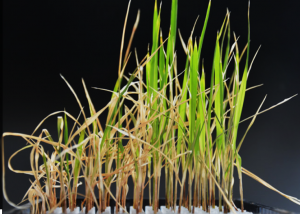
Soil salinization has emerged as a major threat affecting crop yields. Global warming leads to a massive loss of terrestrial water and makes soils saltier. Cultivating salt-tolerant crops is the major strategy adopted for utilizing these salinized soils. Sea Rice 86 (SR86) is one such elite salt-tolerant rice variety derived from ancient indica rice. However, SR86 has multiple wild traits, such as tallness and strong photoperiod sensitivity (PS), which have limited its application in agricultural production
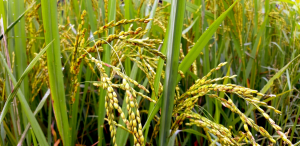
Researchers from South China Agricultural University reported the successful application of multiplex genome editing to improve the agronomic traits in salt-tolerant rice. Their findings are published in the Journal of Integrative Plant Biology. Soil salinization is considered one of the major challenges in crop production. As global warming causes loss of water in soils, it contributes to making soils saltier. Thus, developing salt-tolerant crops is a durable strategy to address the challenge of soil salinization.
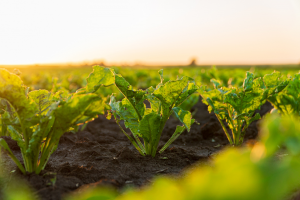
The European Food Safety Authority (EFSA) Panel on Genetically Modified Organisms (GMO Panel) released a Scientific Opinion on genetically modified (GM) sugar beet KWS20-1 for import and processing submitted within the framework of Regulation (EC) No. 1829/2003. The scope of application does not include the cultivation or the import of viable material in the EU.
Optical mapping has been widely used to improve de novo plant genome assemblies, including rice, maize, Medicago, Amborella, tomato and wheat, with more genomes in the pipeline. Optical mapping provides long-range information of the genome and can more easily identify large structural variations. The ability of optical mapping to assay long single DNA molecules nicely complements short-read sequencing which is more suitable for the identification of small and short-range variants
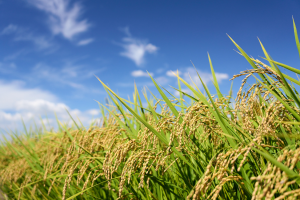
Cibus, Inc., an agricultural technology company, announced that Ecuador's Ministry of Agriculture and Livestock has determined that rice cultivars with Cibus' herbicide tolerance traits (HT1 and HT3) are equivalent to conventionally bred varieties and will be regulated as such under Ecuador's Organic Law of Agrobiodiversity, Seeds and Promotion of Sustainable Agriculture and its Regulations.
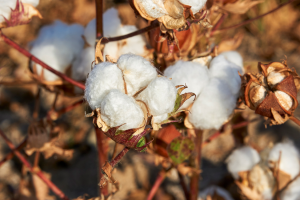
The approval for the commercial propagation of Bt cotton marks a breakthrough in revitalizing the cotton industry in the Philippines. To understand potential impact and challenges, a commentary written by Rosalyn Angeles-Shim from Texas Tech University, USA and Georgina Vergara from the University of the Philippines Los Baños (UPLB) provided a comprehensive background and discussion on Bt cotton and its adoption.
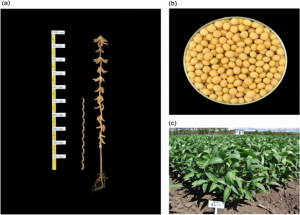
As a cornerstone in the global agricultural landscape, soybean stands as a pivotal oilseed crop, underpinning both nutritional and industrial applications. The burgeoning development of novel soybean varieties significantly propels the crop’s industrialization, offering enhanced traits that cater to diverse agricultural and commercial needs. In this study, we present the de novo assembly of the genome a high-yield Chinese soybean variety Mengdou1137,
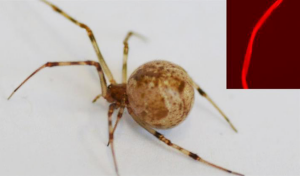
A research group in the University of Bayreuth's Biomaterials research has, for the first time, successfully applied the CRISPR-Cas9 gene editing tool to spiders. Following the genetic modification, the spiders produced red fluorescent silk. For their approach, Prof. Dr. Thomas Scheibel and his doctoral student Edgardo Santiago-Rivera developed an injection solution that included the components of the gene editing system as well as a gene sequence for a red fluorescent protein.