


News & Events

Scientists at the Institute for Sustainable Food at the University of Sheffield have found that engineering bread wheat to have fewer stomata on their leaves are better able to survive drought and use water more efficiently while maintaining their yields. On average, it takes more than 1,800 liters of water to produce one kilogram of wheat. As water supply becomes more scarce in the face of climate change, farmers will need to produce more food to feed the world's growing population.
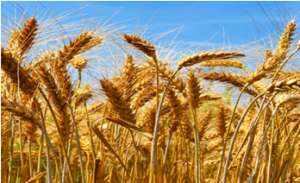
The Fusarium head blight (FHB) resistance QTL Qfhs.ifa-5A resides in the low-recombinogenic pericentromeric region of chromosome 5A making fine-mapping particularly arduous. Qfhs.ifa-5A primarily contributes resistance to fungal entry with the favorable allele descending from the highly Fusarium resistant cultivar Sumai-3. Fine-mapping a near-isogenic recombinant inbred line population partitioned the Qfhs.ifa-5A interval into 12 bins.

A Eurobarometer survey on food safety reveals that in reality, most Europeans hardly care about genetically modified organisms (GMOs). The survey reports that ‘genetically modified ingredients in food and drink' have a comparatively low level of concern associated with them (27%), being number 8 of the 15 specified concerns on the list. The Special Eurobarometer was commissioned by the European Food Safety Authority (EFSA) to get insights on Europeans' overall interest in food safety.
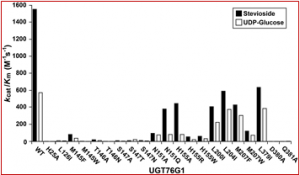
Steviol glucosides, such as stevioside and rebaudioside A, are natural products roughly 200-fold sweeter than sugar and are used as natural, noncaloric sweeteners. Biosynthesis of rebaudioside A, and other related stevia glucosides, involves formation of the steviol diterpenoid followed by a series of glycosylations catalyzed by uridine diphosphate (UDP)-dependent glucosyltransferases.

CropLife Pakistan conducted a value assessment trial of genetically modified (GM) maize seed technology to exhibit benefits of biotechnology and allow key stakeholders to observe first-hand the performance of the GM maize hybrids in the field. The event emphasized the importance of cultivating GM maize in Pakistan to move from subsistence farming practices to more technologically advanced commercial farming
The Indian farmers' fight to gain access more biotech seeds is not yet over. After over a thousand of farmersconducted a protest in Maharashtra by planting Bt brinjal and herbicide tolerant (HT) cotton seeds, which are not yet approved in the country, a farmer organization known as Shetkari Sangathana is currently collecting support from peasants to seek free access to agri-biotechnology, particularly to use herbicide tolerant seeds.
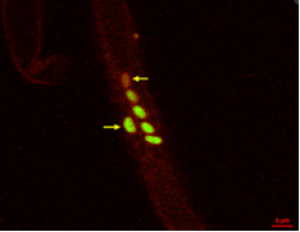
Brevibacillus laterosporus (Bl), is an insecticidal bacterium recorded as toxic to a range of invertebrates after ingestion. Isolates of Bl, which were initially recovered from surface-sterilised cabbage (Brassica oleracea var. capitata) seeds, were able to colonise brassica plants in the laboratory and field. The bacterium was recovered from surface-sterilised leaf, stem and root sections of seedlings after inoculation with Bl vegetative cells under laboratory conditions
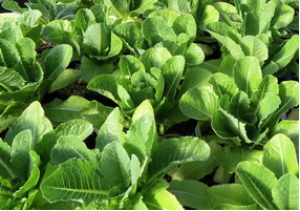
Intrexon Corporation has announced that their Non-Browning GreenVenus™ Romaine lettuce is advancing to commercial trials. Data from commercial indoor production showed that GreenVenus™ has improved shelf life up to 2 weeks and has no tip burn. GreenVenus™ has been assessed by the United States Department of Agriculture (USDA) and is not to be subject to regulation under 7CFR Part 340 for plants altered or produced through genetic engineering. GreenVenus™ will also help in reducing food waste.
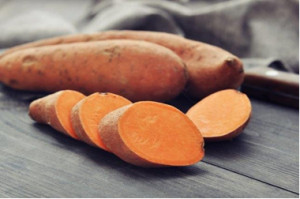
A new study on sweet potato leaves and roots have analyzed the proteome of sweet potato and has revealed new insights into the plant's genome. While sweet potato has been widely cultivated and consumed for thousands of years, scientists still do not much about its protein makeup.
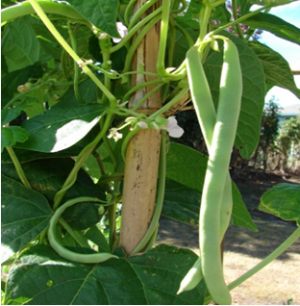
Common bean (Phaseolus vulgaris L.) is an important food legume in Latin America, Asia and Africa. It is an important source of protein, carbohydrates and micro-minerals, particularly for smallholder farmers. Common bean productivity is affected by angular leaf spot (ALS) disease caused by the pathogenic fungus Pseudocercospora griseola, resulting in significant yield losses, particularly in low-input smallholder farming systems in the tropics. The ALS resistance gene Phg-2, which was found in several highly resistant common bean genotypes, was investigated in crosses between Mesoamerican pre-breeding lines and elite Andean breeding lines.

Argentina's Minister of AgroIndustry Luis Miguel Etechevehere and Christian Monty, Head of Global Cotton from BASF have announced the release of a new GMO trait for cotton that provides herbicide and insect resistance. The new release is the fifth trait approved for cotton in Argentina after Bt (1998), Roundup Ready (2001), RRBt (2009), glyphosate and glufosinate (2009), and glyphosate and HPPD inhibitors (2019).