


News & Events
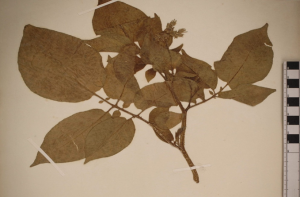
A study has unveiled the origins and adaptation of the modern European potato using plants that were collected 350 years ago, including those from by Charles Darwin's 1834 voyage on HMS Beagle. The new genetic analysis led by scientists from the Max Planck Institute for Developmental Biology in Germany settles the debate about the origins of the European potato.
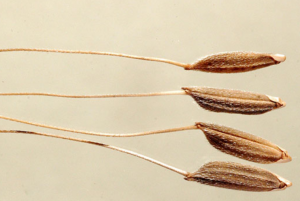
Crop domestication from wild relatives to cultivated species has encompassed significant phenotypic changes. However, little is known about the genetic changes involved in domestication. Here, we surveyed the origin of the Pi-cd locus across Oryza species with AA genomes by comparison with the genome sequences of Hoshinoyume (HS), which does not carry the Pi-cd blast resistance gene, and Kitakurin (KK), which carries the Pi-cd blast resistance gene.

Around 50 participants from different partner agencies gathered for the two-day Consultative Workshop on Strengthening Partnerships for Biotechnology Advocacy in the Philippines held last June 26-27, 2019 in Los Baños, Laguna.Ms. Ann Lopez, Director-Coordinator of the Department of Agriculture Biotechnology Program Office (DA-BPO), spoke about the need for enhanced cooperation among the institutions. "The foundation of a national IEC program is a synergistic partnership
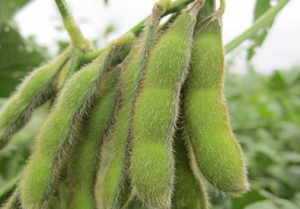
The United States Department of Agriculture's Foreign Agricultural Services (USDA FAS) released their Global Agricultural Information Network (GAIN) report for Bolivia, highlighting the country's approval of two new genetically engineered events for soybean. Soybean is an important crop in Bolivia. According to the report, soybeans are Bolivia's largest agricultural export and it accounts for 45% of the total agricultural land production,
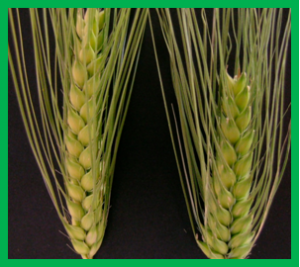
Genomic selection offers several routes for increasing the genetic gain or efficiency of plant breeding programmes. In various species of livestock, there is empirical evidence of increased rates of genetic gain from the use of genomic selection to target different aspects of the breeder’s equation. Accurate predictions of genomic breeding value are central to this, and the design of training sets is in turn central to achieving sufficient levels of accuracy.
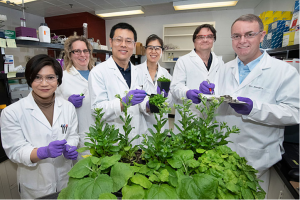
Scientists at the U.S. Department of Energy's Brookhaven National Laboratory have discovered that the protein that turns on oil synthesis also activates a protein that puts the brakes on the same process.The scientists found that a protein known as BADC exerts its braking mechanism by inserting itself into ACCase, a key enzyme involved in making fatty acids.

For six years, Ugandan policymakers and journalists have expressed frustrations about the difficulty in appreciating scientific terminologies and messages presented about biotechnology. On many occasions, non-scientists have volunteered to simplify the science with limited success. For this reason, Uganda Biosciences Information Center (UBIC)

Genetically modified (GM) maize has been grown and safely consumed on a global scale since its commercialization in 1996. However, questions have been raised about the potential impact that GM maize could have on native maize landraces in Mexico, which is the center of origin and diversity of maize. This research was conducted to evaluate potential changes to maize landraces in an unlikely event of transgene introgression.
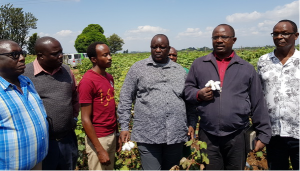
Members of Parliament from Uganda have called upon the Kenyan government to fast track the commercialization of Bt cotton so that the entire East African Community can benefit from its advantages. This was during a genetic engineering regulatory learning visit to Kenya. Uganda Biosciences Information Center (UBIC) collaborated with ISAAA AfriCenter to organize a learning visit on genetic engineering regulation for policymakers and regulators.

Scientists at The Sainsbury Laboratory, along with partners at the International Center for Tropical Agriculture (CIAT), and the John Innes Centre, warned that the world is not prepared for the next plant health emergency, including the rise in new epidemics and plant diseases.In a paper published in Science, the scientists propose the creation of a Global Surveillance System (GSS) that will extend and adapt established biosecurity practices and networking facilities
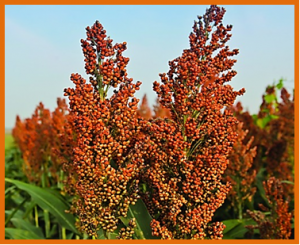
Selection based on genome-wide markers has become an active breeding strategy in crops. Genomic prediction models can make use of pedigree information to account for the residual polygenic effects not captured by markers. Our aim was to evaluate the impact of using pedigree and genomic information on prediction quality of breeding values for different traits in sorghum. We explored BLUP models that use weighted combinations of pedigree and genomic relationship matrices.
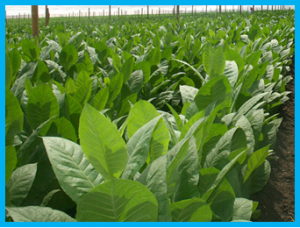
The bacterial gdhA gene encodes NADH-GDH enzyme. The gdhA-transgenic tobacco (Nicotiana tabacum) plants exhibited high growth performance and enhanced herbicide resistance as well as drought tolerance. In addition, the gdhA gene when expressed in maize plants could increase productivity because of improving stress tolerance.