


News & Events
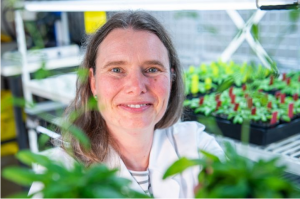
Findings of a study from La Trobe University led by Dr. Ricarda Jost have provided a deeper understanding of the mechanisms whereby plants sense how much and when to take in the essential nutrient, phosphorus, for optimal growth. The team found a protein called SPX4 senses the nutrient status – the ‘amount of fuel in the tank' of a crop – and alters gene regulation to either switch off or turn on phosphorus acquisition, and to alter growth and flowering time
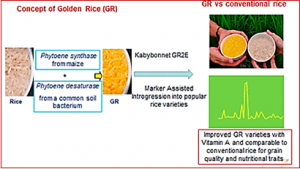
Compositional analyses were performed on samples of rice grain, straw, and derived bran obtained from golden rice event GR2E and near-isogenic control PSBRc82 rice grown at four locations in the Philippines during 2015 and 2016. Grain samples were analyzed for key nutritional components, including proximates, fiber, polysaccharides, fatty acids, amino acids, minerals, vitamins, and antinutrients
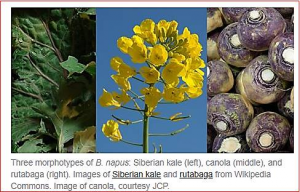
A team of scientists from different institutions led by the University of Missouri has mapped the genetic family of three vegetables — canola, rutabaga, and Siberian kale — to identify the genes selected for by early farmers.To identify the genes that were selected during domestication, J. Chris Pires, a professor of biological sciences with the Christopher S. Bond Life Sciences Center

The use of genetically modified (GM) maize could increase crop yield by up to 50 percent, according to a study conducted by the Mozambique Agricultural Research Institute (IIAM). Maize is considered to be one of the most important crops in the country.
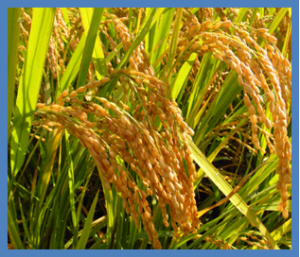
Sensing and responding to environmental water deficiency and osmotic stresses are essential for the growth, development, and survival of plants. Recently, an osmolality-sensing ion channel called OSCA1 was discovered that functions in sensing hyperosmolality in Arabidopsis. Here, we report the cryo-electron microscopy (cryo-EM) structure and function of an OSCA1 homolog from rice (Oryza sativa; OsOSCA1.2), leading to a model of how it could mediate hyperosmolality sensing and transport pathway gating.
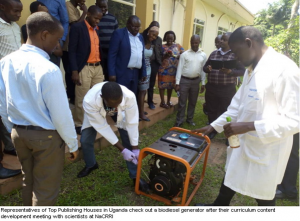
Years of relentless efforts led by Uganda Biosciences Information Center (UBIC) to integrate modern biosciences into Uganda's middle/secondary schools' curriculum were finally rewarded. Uganda's Ministry of Education and Sports endorsed a new curriculum for agriculture course unit that requires students to be trained on modern biosciences including modern biotechnology applications.
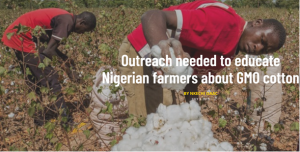
In 2018, two Bt cotton varieties have been approved for commercialization by the Nigerian federal government. The GM cotton varieties, developed by Mahyco Nigeria Private Ltd. in collaboration with the Institute for Agricultural Research (IAR) at Ahmadu Bello University in Zaria, were designed to address the major yield losses in cotton caused by the bollworm insect pest.

Increasing maize kernel starch content may not only lead to higher maize kernel yields and qualities, but also help meet industry demands. By using the intermated B73 × Mo17 population, QTLs were mapped for starch content in this study. A major QTL Qsta9.1 was detected in a 1.7 Mb interval on chromosome 9 and validated by allele frequency analysis in extreme tails of a newly constructed segregating population.
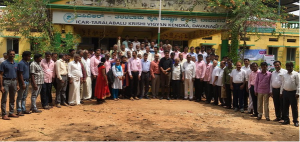
South Asia Biotechnology Centre (SABC) based in New Delhi, India, through the project Safeguarding Agriculture and Farmers against Fall Armyworm (SAFFAL), in collaboration with Taralabalu Krishi Vigyan Kendra, Davangere; Department of Agriculture, Karnataka; and University of Agriculture and Horticultural Sciences, Shivamoga met maize farmers, extension officials, retailers, and local media during a workshop on management of fall armyworm (FAW) at Taralabalu Krishi Vigyan Kendra, Davangere, Karnataka on June 29, 2019.
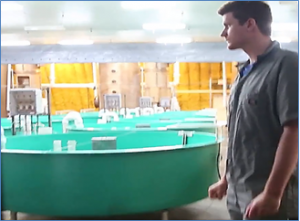
Thousands of genetically engineered salmon eggs hatched in New York, USA, which were shown to journalists who toured the AquaBounty Technologies facility just outside Albany. "We believe in transparency, because there is this concern with genetically modified. We want people to see that (our) fish look like fish and how we care for and raise those fish. So in a limited, controlled environment, we want to be able to show people what we do and how we raise the fish," said AquaBounty CEO, Sylvia Wulf.

Unraveling the genetic components involved in CLAVATA (CLV) signaling is crucial for modulating important shoot apical meristem (SAM) characteristics and ultimately regulating diverse SAM-regulated agromorphological traits in crop plants. A genome-wide scan identified 142 CLV1-, 28 CLV2- and 6 CLV3-like genes, and their comprehensive genomic constitution and phylogenetic relationships were deciphered in chickpea.

In a recent interview for IEG Policy's new special report titled Smart Solutions for Food and Farming: A Policy Perspective, EuropaBio's Secretary General, Joanna Dupont-Inglis talked about her organization's views on the European Union's policy on GM crops and genome editing. Dupont-Englis said she objects the European Court of Justice ruling in July 2018 because the ruling could cause European life science innovation to grind to a halt, citing that Europe's world-leading scientific community is also calling for change.