


News & Events
News & Events
CGIAR@COP30: Loss and Damage Negotiation Updates
Friday, 14/11/2025 | 07:33:19
For vulnerable countries and communities, climate change is already causing devastation that no amount of adaptation can prevent. These unavoidable climate impacts – from deadly heatwaves and floods to slow-onset crises like sea-level rise – are termed “Loss and Damage” (L&D). In recognition of this reality, recent UN climate summits have taken historic steps. COP27 (2022) established, and COP28 (2023) operationalized, a new Loss and Damage Fund to help vulnerable nations recover from climate-induced losses
Accelerated breeding modernization: a global blueprint for driving genetic gains, climate resilience, and food security in rice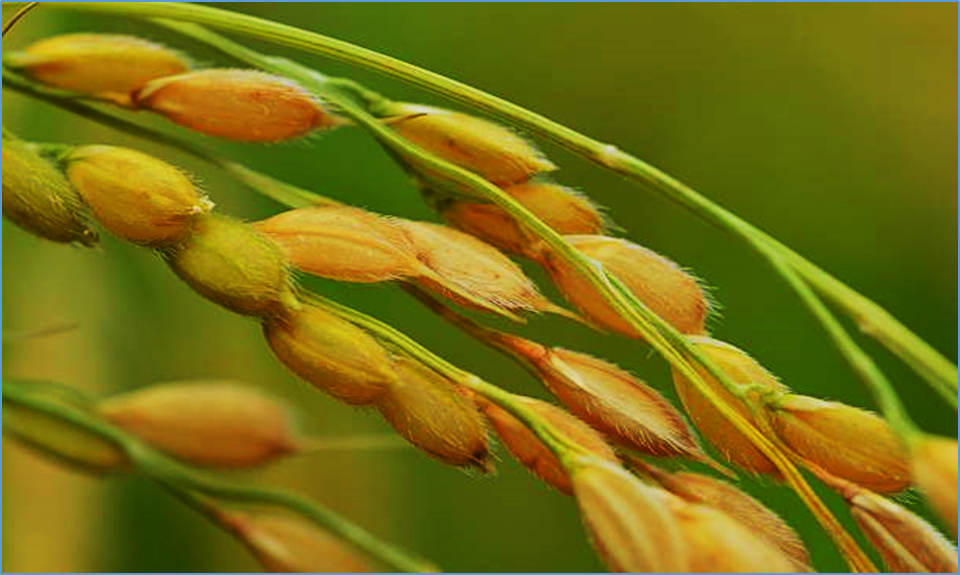
Thursday, 13/11/2025 | 08:09:39
Rice plays a central role in global food security as climate threats continue to rise. Fast-tracking genetic gains and developing climate-resilient, market-preferred varieties require a bold, system-wide transformation of rice breeding practices worldwide. Baseline diagnostics of more than 25 national rice breeding programs across the Global South revealed critical bottlenecks: obsolete breeding strategy and scheme, fragmented workflows, limited technology access, and poor integration of seed system.
Rice-specific miRNA Boosts Rice Blast Resistance
Thursday, 13/11/2025 | 08:08:30
The natural defenses of plants rely on tiny molecules called microRNAs (miRNAs), and scientists are still finding new ones that help plants fight off diseases. In a study published in The Plant Journal, Sichuan Agricultural University researchers discovered a crucial player in the defense of rice plants against a devastating fungus called rice blast (Magnaporthe oryzae). This new helper is a small molecule we named miR24584. When rice plants were naturally resistant to the fungus, they produced a lot of this molecule. However, susceptible plants produced very little.
COP30: FAO warns climate funding gap threatens agrifood systems transformation
Thursday, 13/11/2025 | 08:07:25
Transforming global agrifood systems to be more efficient, inclusive, resilient, and sustainable is critical to meeting the Paris Agreement targets on climate change. Yet, the persistent shortfall in climate finance represents “a lost opportunity” for a sector that could cut global emissions by up to one-third.
This was the message delivered by the Food and Agriculture Organization of the United Nations (FAO) on Friday at the Belém Climate summit.
A mutation of GRAS SCL14 gene confers moderate sensitivity to the herbicide bentazon in soybean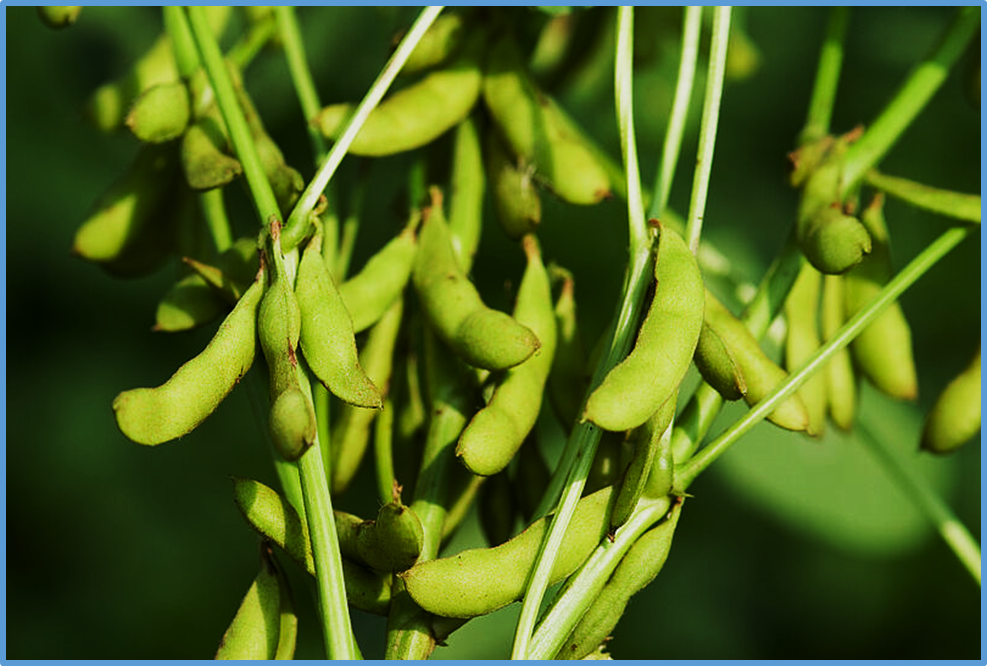
Wednesday, 12/11/2025 | 07:15:11
Bentazon is an effective post-emergence herbicide in soybean. A loss of function of cytochrome P450 hydroxylase encoded by a recessive gene, bzn-1 (Glyma.16G149300), is known to confer high sensitivity to bentazon, while there is natural variation causing moderate sensitivity to bentazon that cannot be accounted for by bzn-1. Here, we identified another recessive gene, bzn-2, that confers the moderate sensitivity to bentazon. The candidate region of bzn-2 was narrowed down to 92 kb on chromosome 11 by positional cloning using recombinant inbred lines from a cross between bentazon-tolerant and moderately sensitive varieties.
Prime Editing in Rice Leads to Broad-spectrum Bacterial Blight Resistance
Wednesday, 12/11/2025 | 07:14:13
Researchers from the Chinese Academy of Agricultural Sciences reported the successful use of a prime editing system to confer a broad-spectrum resistance to bacterial blight in rice. The findings are published in an open-access report in New Plant Protection.
Rice bacterial blight is a devastating disease caused by Xanthomonas oryzae pv. oryzae (Xoo), which can hack the rice plant's DNA to make it susceptible. While some rice strains contain a defense gene called Xa23, the particular rice variety used in the study had a non-functional Xa23 because of some errors.
QTL Profiling Now Live on EBS
Wednesday, 12/11/2025 | 07:13:01
Teams across CGIAR research Centers continue to collaborate to enhance the Enterprise Breeding System (EBS), the breeding data management platform developed and maintained by CGIAR. This joint effort ensures that EBS evolves with user needs and provides crop-agnostic support to breeders across 20 crops worldwide.
EBS is actively developing Molecular Data Analysis (MDA) support to help breeders identify quantitative trait loci (QTLs), which are specific regions of the genome associated with desirable traits.
PotatoMASH is a cost-effective marker system for genomic prediction in potato based on short-read haplotypes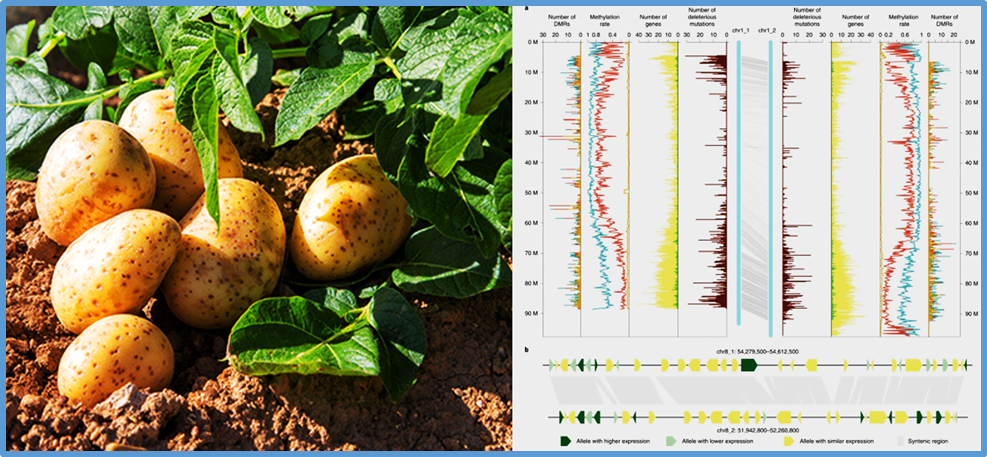
Tuesday, 11/11/2025 | 08:11:43
Genomic prediction (GP) supports plant breeding by accelerating genetic improvement; however, the high cost associated with dense genotyping platforms restricts their use in routine breeding. This study evaluates the efficacy of PotatoMASH, a cost-effective, low-density, amplicon-sequencing platform generating SNPs and short-read multi-allelic haplotypes (haplotags), for GP in potato. First, we compared the prediction ability (PA) achieved using 2,236 SNPs and 2,000–3,390 haplotags from 339 amplicon loci of PotatoMASH with previously reported PA
Tiny Zinc-Finger Protein Key to Giant Tomatoes
Tuesday, 11/11/2025 | 08:10:30
A recent study has identified a tiny zinc-finger protein, named SlKNU, that acts as the master regulator of tomato fruit size. This protein functions as a molecular "brake," directly shutting down key stem cell genes to terminate floral meristem growth at the precise moment that determines the fruit's final dimensions.
To prove its function, researchers utilized CRISPR-Cas9 gene editing to create SlKNU knockout mutants. By disabling this gene, the molecular brake was removed, resulting in enlarged floral meristems, an increased number of floral organs, and significantly larger tomatoes with more locules than normal plants.
CRISPR-based Diagnostic Platform Detects African Swine Fever in 20 Minutes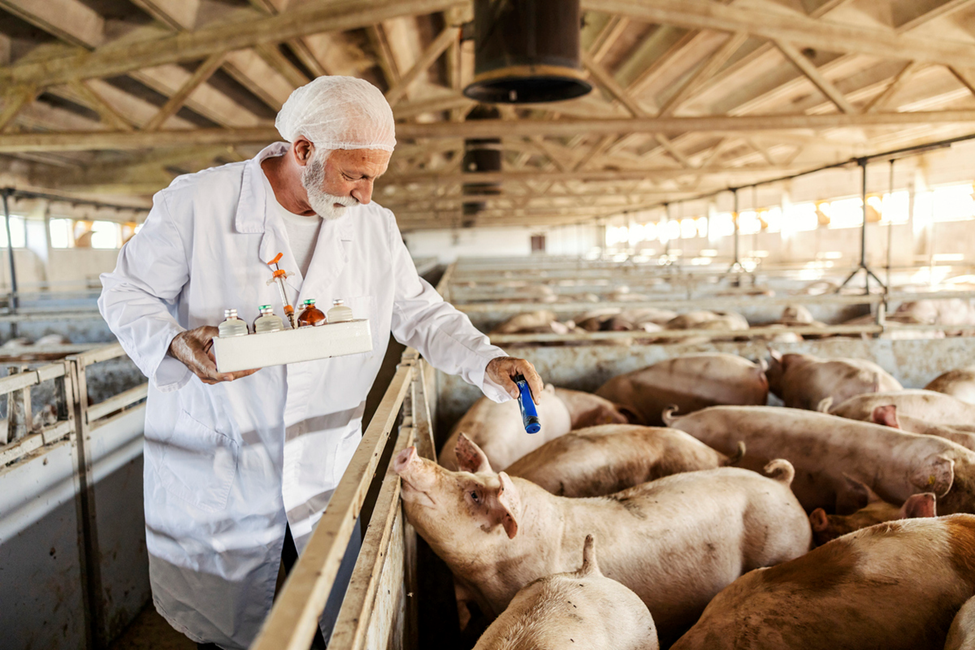
Tuesday, 11/11/2025 | 08:09:32
Researchers from Shanxi Agricultural University and Capital Medical University have developed a new CRISPR-based diagnostic tool that can detect African swine fever (ASF) in just 20 minutes. The test's simplicity and reliability make it a powerful tool for early ASF detection and rapid response to potentially help curb future outbreaks and protect the swine industry.
Versatile Genome Editing Using Type I-E CRISPR-Cas3 in Rice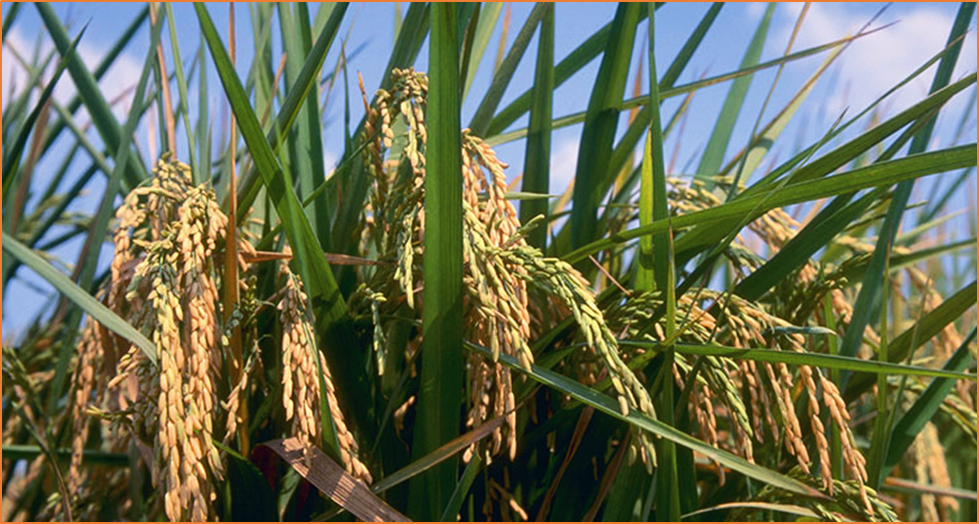
Monday, 10/11/2025 | 08:12:31
Type I-E CRISPR-Cas3 derived from Escherichia coli (Eco CRISPR-Cas3) can introduce large deletions in target sites and is available for mammalian genome editing. The use of Eco CRISPR-Cas3 in plants is challenging because 7 CRISPR-Cas3 components (6 Cas proteins and CRISPR RNA) must be expressed simultaneously in plant cells. To date, application has been limited to maize protoplasts, and no mutant plants have been produced. In this study, we developed a genome editing system in rice using Eco CRISPR-Cas3 via Agrobacterium-mediated transformation.
NARO Scientists Report Successful Use of Eco CRISPR-Cas3 in Rice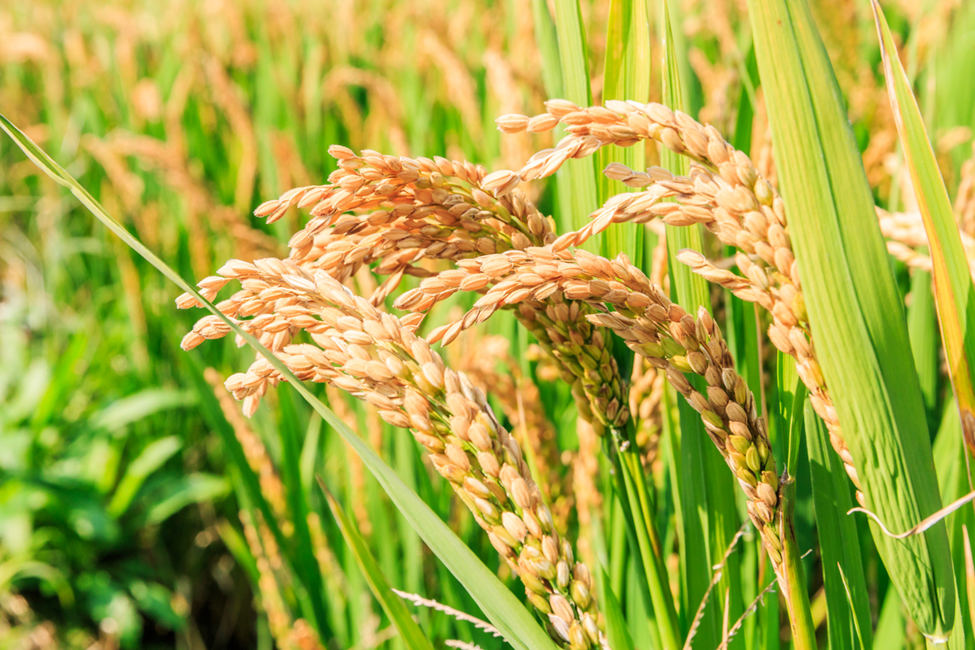
Monday, 10/11/2025 | 08:11:29
Researchers from Japan's National Agriculture and Food Research Organization (NARO) reported a powerful tool for editing rice genes that can create large deletions in target sites. The findings are published in Plant and Cell Physiology.
The gene editing tool Eco CRISPR-Cas3, which comes from Escherichia coli, has been proven to be effective in deleting large portions of DNA in mammals. However, using this tool in plants has been a challenge because it requires all seven components of the system (six proteins and one guide RNA) to be active inside the cell simultaneously.