


News & Events
Promoting a rebalancing between global and local (shorter) supply chains (more toward the latter), combined with improved storage capacity and alternative processing options near areas of production (if fresh sales become impossible) to reduce the risk of input shortages due to trade interruptions. Invest more in vertical farming near urban areas (in low labor, high capital systems).
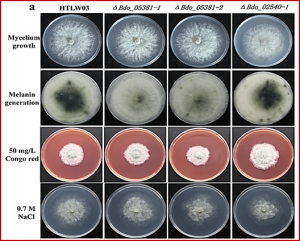
We established a gene disruption (GD) method based on gene homologous recombination (GHR) for B. dothidea using polyethylene glycol-mediated protoplast transformation. The results showed that a GHR cassette gave much higher GD efficiency than a GHR plasmid. A high GD efficiency (1.3 ± 0.14 per 106 protopasts) and low frequency of random insertions were achieved with a DNA
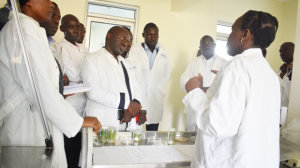
Local government officials from over 10 districts in Central Uganda warned scientists of biotech critics whose efforts they claimed were responsible for the impasse with the biotechnology bill. This was at the NARO technologies awareness workshop that was organized by the Uganda Biosciences Information Centre (UBIC) at the National Crops Resources Research Institute (NaCRRI) and the National Livestock Resources Research Institute (NaLIRRI) on Wednesday, March 18, 2020.

In its 2019 survey, the Pew Research Center reveals that while Americans have mixed views about genetically modified foods (GMOs) and their implications for society, about three-quarters (74%) of surveyed adults say it is at least fairly likely that GM foods will increase the global food supply and 62% say GM foods are very or fairly likely to lead to more affordably priced food.
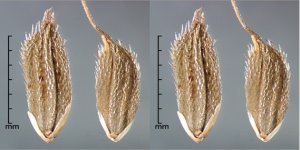
High-temperature stress at the booting stage has the potential to significantly limit rice production. An interspecific advanced backcrossed population between the Oryza sativa L. cultivar R53 and the wild Oryza rufipogon Griff accession HHT4 was used as the source material to develop a set of chromosome segment introgression lines to elucidate the genetic mechanism of the qHTB1-1 QTL in heat tolerance. A single-chromosome-segment introgression line, IL01-15, was used to develop secondary populations for the mapping of qHTB1-1 on chromosome 1 for heat tolerance at the booting stage.
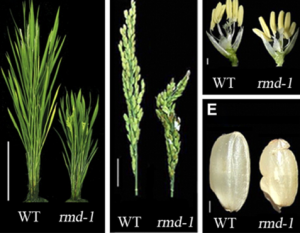
Experts from Kyoto University and partner institutions developed double mutant lines of rice to gather information on enhancing lignin deposition in grass species which are vital lignocellulose feedstocks. Their findings are reported in Plant Science. Enriching plant's lignin contributes to improved applications of lignocellulosic biomass into solid biofuels and valuable aromatic chemicals.

The novel SARS-CoV-2 coronavirus that emerged in the city of Wuhan, China, in December 2019 and has since caused the COVID-19 pandemic, spreading to 170 countries and regions, is the product of natural evolution, according to findings published by scientists from the United States, United Kingdom, and Australia in Nature Medicine. The analysis of public genome sequence data from SARS-CoV-2 and related viruses found no evidence that the virus was made in a laboratory or otherwise engineered.
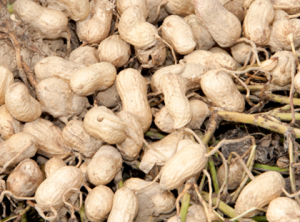
Peanut (Arachis hypogaea) is an important oilseed crop worldwide. Utilization of genetic resistance is the most economic and effective approach to control bacterial wilt, one of the most devastating plant diseases, in peanut production. To accelerate the genetic improvement of bacterial wilt resistance (BWR) in peanut breeding programs, quantitative trait locus (QTL) mapping has been conducted for two resistant varieties.

The novel coronavirus (COVID-19) continues to spread rapidly. Since its start in China in December, the outbreak has spread to more than 100 countries, endangering the health and livelihoods of millions. To contain the pandemic, many cities and regions across the world have been shut down, putting a halt to day-to-day activities.

For 25 years from 1987 to 2012, Dr. Brar worked with his fellow scientists at the institute to broaden the gene pool of cultivated rice. With his expertise in genetics, plant breeding, and molecular cytogenetics, Dr. Brar successfully transferred novel genes from wild species of Oryza to cultivated rice, an important plant breeding approach that has revolutionized rice farming around the world.

Although eutrophication and biological invasion have caused serious harm to aquatic ecosystems, exotic and even invasive plants have been used extensively in phytoremediation water systems in China. To identify native aquatic plants with excellent water restoration potential, two representative native floating aquatic plants from Guangdong Province, namely Ludwigia adscendens (PL) and Trapa natans (PT),
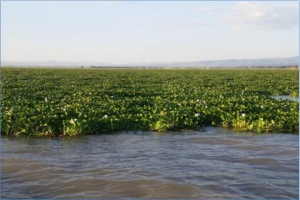
Lake Tana is the most important freshwater lake in Ethiopia, holding up to 50% of the country’s water and serving as the main source of the Blue Nile, which provides valuable ecosystem services. The lake was recognized by The United Nations Educational, Scientific and Cultural Organization (UNESCO) as a hotspot of biodiversity, an Important Bird Area and a site of global importance for agricultural genetic diversity.