


News & Events
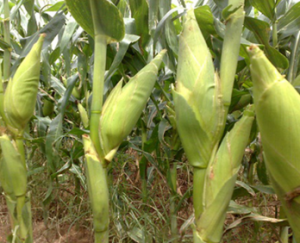
Dr Le Quy Kha’ s final report on “Maize breeding adapted to rice-based cropping pattern in Mekong Delta”; IAS March 7 2020.
Mr. Chu Trung Kien’ s final report on “Silver nano-based products to prevent from major diseases and obtain vegetable high yield in Ba Ria – Vung Tau”; IAS March 10 2020
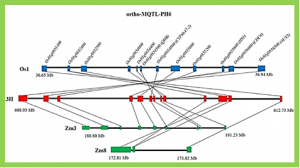
A comprehensive MQTL analysis was implemented on 1052 QTLs reported for yield (YLD), grain weight (GW), heading date (HD), plant height (PH) and tiller number (TN) in 122 rice populations evaluated under normal condition from 1996 to 2019. Consequently, these QTLs were confined into 114 MQTLs and the average CI was reduced up to 3.5 folds in compare to the mean CI of the original QTLs with an average of 4.85 cM CI in the resulted MQTLs. Among them, 27 MQTLs with at least five initial QTLs from independent studies were considered as the most stable QTLs over different field trials and genetic backgrounds.

Rothamsted Research scientists have successfully applied genetic engineering techniques developed for crop improvement to be used in weeds – allowing them, for the first time, to directly study the genetic mechanisms responsible for herbicide resistance. In a paper in Plant Physiology, the group reports that they used plant viruses to switch off weed genes, or alternatively, ramp up the production of specific proteins by weeds in the laboratory.

Food Standards Australia New Zealand (FSANZ) released the findings of their assessment for genetically modified (GM) soybeans (GMB151) and found that there are no potential public health and safety concerns. They are now inviting the public to submit comments to assist considerations of its drafted food regulatory measure as part of their evaluation process. GMB151 line was developed to be protected from parasitic nematodes and tolerant to HPPD-inhibitor herbicides like isoxaflutole.

For more than 225 million y, all seed plants were woody trees, shrubs, or vines. Shortly after the origin of angiosperms ∼140 million y ago (MYA), the Nymphaeales (water lilies) became one of the first lineages to deviate from their ancestral, woody habit by losing the vascular cambium, the meristematic population of cells that produces secondary xylem (wood) and phloem. Many of the genes and gene families that regulate differentiation of secondary tissues also regulate the differentiation of primary xylem and phloem, which are produced by apical meristems and retained in nearly all seed plants.

CRISPR-Cas9 has been the most used gene editing system used for genetic improvement of plants, animals, and other organisms. A new gene editing technology called Cas-CLOVER was presented in a webinar held by Genetic Engineering and Biotechnology News (GEN) on April 14, 2020. Cas-CLOVER, developed by Hera BioLabs, is functionally similar to CRISPR-Cas9 but uses a different nuclease protein called Clo51.

High adoption of biotech crops continued in 2018 with 26 countries planting 191.7 million hectares worldwide. This area is an increase of 1.9 million hectares or 1% from the previous year's area. The average adoption rate in the top five biotech crop-growing countries increased to reach close to saturation, with the United States at 93.3% (average for soybeans, maize, and canola), Brazil at 93%, Argentina at close to 100%, Canada at 92.5%, and India at 95%.
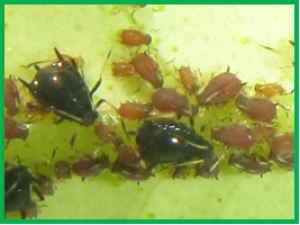
Wing dimorphism is a phenomenon of phenotypic plasticity in aphid dispersal. However, the signal transduction for perceiving environmental cues (e.g., crowding) and the regulation mechanism remain elusive. Here, we found that aci-miR-9b was the only down-regulated microRNA (miRNA) in both crowding-induced wing dimorphism and during wing development in the brown citrus aphid Aphis citricidus. We determined a targeted regulatory relationship between aci-miR-9b and an ABC transporter (AcABCG4).
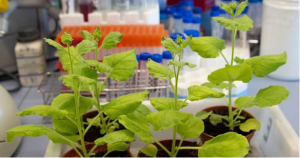
Researchers María Coca and Juan José López-Moya from the Spanish Research Council (CSIC) at the Centre for Research in Agricultural Genomics (CRAG) are using their expertise in plant biotechnology and virology to produce SARS-CoV-2 antigens to be used in vaccine development. The researchers will experiment with different expression systems from plants and have formed a team including an immunologist expert in coronavirus.
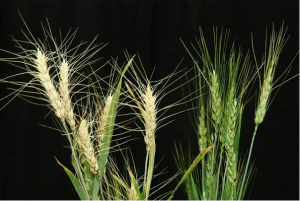
Researchers from the U.S. Department of Agriculture Agricultural Research Service (USDA ARS) and colleagues from Shandong Agricultural University in China have discovered a gene that can be used in the development of wheat varieties with more resistance to Fusarium Head Blight (FHB), a disease that is a major threat to wheat crops worldwide. FHB shrivels grain and can significantly decrease harvests of wheat and barley.
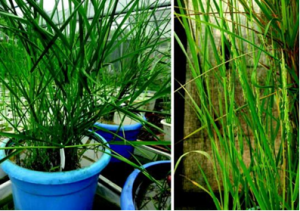
Salinity stress affects global food producing areas by limiting both crop growth and yield. Attempts to develop salinity-tolerant rice varieties have had limited success due to the complexity of the salinity tolerance trait, high variation in the stress response and a lack of available donors for candidate genes for cultivated rice. As a result, finding suitable donors of genes and traits for salinity tolerance has become a major bottleneck in breeding for salinity tolerant crops.
The human genome contains more than 3 billion base pairs, and some estimates suggest that nearly 75% of the genome may be transcribed (1), yet only a small fraction (1 to 2%) of the genome that encodes for protein coding regions has been systematically probed for function. The transcribed genome consists of both short noncoding RNAs (ncRNAs) and long ncRNAs (lncRNAs).