


News & Events

Cuba published a decree law that creates a commission to regulate the use of genetically modified organisms (GMOs). The Ministerio de Ciencia, Tecnología y Medio Ambiente (CITMA) will chair the new Commission to ensure that there is a consistent and comprehensive decision-making process in regulating GMOs while at the same time taking into consideration the interests of the state as this will apply to all activities in the Cuban agriculture sector.
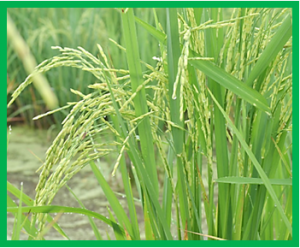
The site-specific nuclease-based CRISPR/Cas9 system has emerged as one of the most efficient genome editing tools to modify multiple genomic targets simultaneously in various organisms, including plants for both fundamental and applied researches. Screening for both on-target and off-target mutations in CRISPR/Cas9-generated mutants at the early stages is an indispensable step for functional analysis and subsequent application.
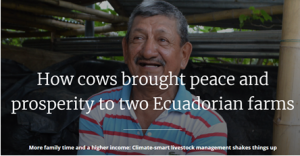
Surrounded by orange, lemon and mango trees, we find Rebeca, Fedora, Natalia, Campana and Gertrude. They are five of the 21 cows that Marlene Vacusoy and her husband, Cornelio León, own, but managing cattle is relatively new for this Ecuadorian couple.They had always been farmers but never livestock owners, so when Marlene and Cornelio’s son came home one day with a cow and the desire to start cattle farming, the couple was not pleased.
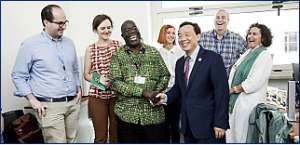
At a recent meeting, FAO Director-General QU Dongyu declared that he was “of the people, by the people, and for the people.” To all those working at FAO, invoking the phrase summed up the new boss they have come to know over the past twelve months. Everyone recalls the arrival of the newly-elected Director-General from China, but in August 2019, no one really knew what to expect.
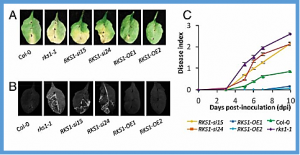
Quantitative disease resistance (QDR) represents the predominant form of resistance in natural populations and crops. Surprisingly, very limited information exists on the biomolecular network of the signaling machineries underlying this form of plant immunity. This lack of information may result from its complex and quantitative nature. Here, we used an integrative approach including genomics, network reconstruction,
The FAO Director-General QU Dongyu today met virtually with more than 120 senior managers of the UN Agency from around the world to present the next steps in implementing reforms to make the Organization more efficient, effective, inclusive, transparent and results-oriented. This was the third global meeting in which QU engaged in person with all the managers at the level of director and above.
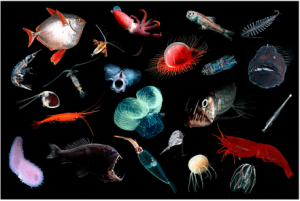
Despite rapidly growing interest in deep-sea mineral exploitation, environmental research and management have focused on impacts to seafloor environments, paying little attention to pelagic ecosystems. Nonetheless, research indicates that seafloor mining will generate sediment plumes and noise at the seabed and in the water column that may have extensive ecological effects in deep midwaters (1), which can extend from an approximate depth of 200 meters to 5 kilometers
Mr Hoàng Văn Bằng addressed his preliminary report on "Rice production in demonstration fields of ĐTM 14-258 genotype adapted to Đong Thap Muoi" at the IAS in July 7 2020.
Mr Trà Ngọc Phong preliminarily submitted his PhD Thesis, which belongs to soil science, with the title of “Soil features in Khộp forest and how to improve it for rubber plantation in Tây Nguyên” at the IAS in July 10 2020.
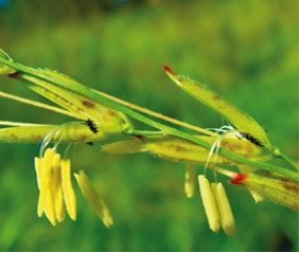
Rice (Oryza sativa L.) is generally sensitive to low temperatures, and in production systems that use direct-seeding, low-temperature germinability (LTG) is a desired trait. Previously, the QTLs, qLTG1 and qLTG3, that control LTG, were mapped using the BC4F8 population, which is a cross of Korean elite cultivar Hwaseong and O. rufipogon (IRGC 105491). We have characterized and analyzed the interaction between the two QTLs, by crossing TR20 that has O. rufipogon alleles at qLTG1 and qLTG3 in a Hwaseong background, with Hwaseong, to develop an F2 population.

The International Fund for Agricultural Development (IFAD), Mars, Incorporated and World Agroforestry (ICRAF) have agreed to collaborate on a five-year research-in-development project, Sustainable Farming in Tropical Asian Landscapes (SFITAL) to explore environmentally sustainable ways to link small-scale producers to global supply chains.
This call for proposals is to select a recipient or consortium of recipients to receive a four-year IFAD grant financing to implement the project: Rural youth employment opportunities: Support to integrated agribusiness hubs initiative, for a total amount of up to US$3.5 million. The recipient can be an inter-governmental and governmental organizations, TVET and business development institutions, a civil society organization (including NGOs), an academic/research institution or a private sector entity. In the case of a consortium, an organization can join more than one consortium but can be leading only in one of them.
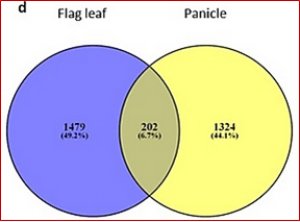
In this study, we compared genome-wide transcriptome profile of two rice hybrids, one with (test hybrid IR79156A/IL50-13) and the other without (control hybrid IR79156A/KMR3) O. rufipogon introgressions to identify candidate genes related to grain yield in the test hybrid. IL50-13 (Chinsurah Nona2 IET21943) the male parent (restorer) used in the test hybrid, is an elite BC4F8 introgression line of KMR3 with O. rufipogon introgressions. We identified 2798 differentially expressed genes (DEGs) in flag leaf and 3706 DEGs in panicle. Overall, 78 DEGs were within the major yield QTL qyld2.1 and 25 within minor QTL qyld8.2.