


News & Events
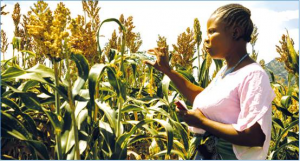
Three improved sorghum varieties with a yield potential of approximately 4 tons per hectare and tolerant to grey leaf spot, rust and other common diseases were released in Malawi early this year. These new varieties replace two varieties released in 1993, and have since been the only improved sorghum varieties available in Malawi.
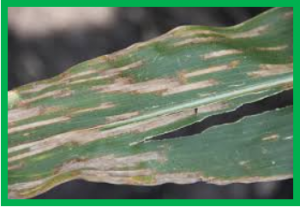
Grey leaf spot (GLS), caused by Cercospora zeae-maydis or Cercospora zeina, is a highly destructive foliar disease worldwide. However, the mechanism of resistance against GLS is not well understood. To study the inheritance of this resistance, we developed two doubled haploid (DH) populations sharing a common resistant parent. The two DH populations were grown in two locations representing the typical maize-growing mountain area in Southwest China for 2 years.
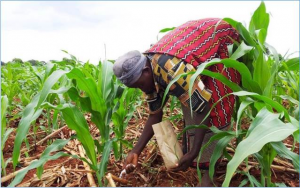
Most of the time, conversations about the impacts of climate change on crop yields focus on the resilience (or lack thereof) of the crops themselves. How does the crop react to warmer air temperatures? How does it react to longer dry seasons, or to heavier rainfalls? Often missing from these conversations is the critical role that farmers play. Farmers make decisions throughout the growth cycle, adjusting practices and inputs to changing conditions, that can have major impacts on the yield of their crops, and climate can affect these decisions.

CGIAR announced today the appointment of its inaugural CGIAR Executive Management Team (EMT), comprising three Managing Directors who are collectively charged with stewarding the creation of “One CGIAR” – a CGIAR that is a more unified and impactful partner for our funders, national research systems, the agricultural community, and global and regional agencies.
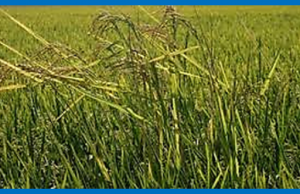
Two major types of weedy rice are recognized in the USA based on morphology: straw-hull (SH) and black-hull awned (BHA) weedy rice. We performed whole-genome resequencing of a SH weedy rice ‘PSRR-1’, a BHA weedy rice ‘BHA1115’, and a japonica cultivar ‘Cypress’ to delineate genome-wide differences and their relevance to genetics and evolution of weedy attributes. The high-quality reads were uniformly distributed with 82–88% genome coverage.

In his first year as FAO Director-General, QU Dongyu had shepherded the Organization through plagues, pests and a pandemic. Throughout the challenges that arose during his first year, he remained unwavering in his vision that food and agriculture are at the heart of solutions for many of the challenges the world currently faces. "Under my guidance," he promised prior to his election, "FAO will be further strengthened as the global centre of agricultural policy coordination."
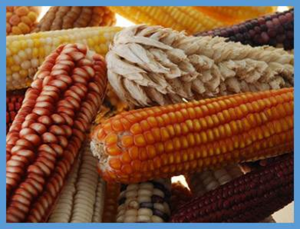
Plant genetic resources for food and agriculture (PGRFA) are essential to sustainable agriculture and food security. They are the raw materials to meet the current and future needs of crop improvement and adaptation programmes. It is therefore very important to conserve and sustainably use them. WIEWS is the information system used by FAO for the preparation of periodic, country-driven global assessments of the status of conservation and use of PGRFA. WIEWS also monitors, on the basis of country reports,
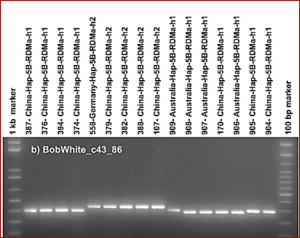
Kompetitive allele-specific PCR (KASP) markers are commonly used in marker-assisted commercial plant breeding due to their cost-effectiveness and throughput for high sample volumes. However, conversion of trait-linked SNP markers from array-based SNP detection technologies into KASP markers is particularly challenging in polyploid crop species, due to the presence of highly similar homeologous and paralogous genome sequences.
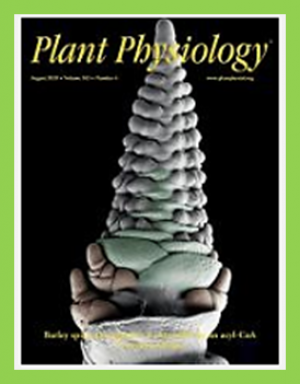
A research team from China National Rice Research Institute revealed that the OsABCI7 transporter interacts with OsHCF222 to stabilize the thylakoid membrane in rice. The results are reported in Plant Physiology. The thylakoid membrane is a highly complex membrane system in plants and has vital functions in the development of plant parts used for photosynthesis.
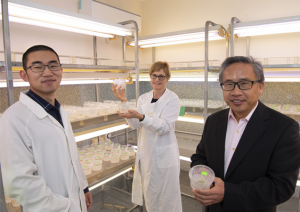
The Western Crop Genetics Alliance, a partnership between the Department of Primary Industries and Regional Development (DPIRD) and Murdoch University, has made a recent breakthrough in gene editing technology that will pave the way for barley varieties with improved yield, quality, and nitrogen-use efficiency. The new technique enables barley genes to be accurately ‘turned on and off' to create a superior trait – something that could not be achieved in Australian varieties with existing technology.
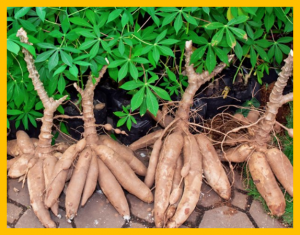
Cassava is cultivated due to its drought tolerance and high carbohydrate-containing storage roots. The lack of uniformity and irregular shape of storage roots poses constraints on harvesting and post-harvest processing. Here, we phenotyped the Genetic gain and offspring (C1) populations from the International Institute of Tropical Agriculture (IITA) breeding program using image analysis of storage root photographs taken in the field. In the genome-wide association analysis (GWAS), we detected for most shape and size-related traits, QTL on chromosomes 1 and 12. In a previous study, we found the QTL on chromosome 12 to be associated with cassava mosaic disease (CMD) resistance.

Scientists from Nagoya University have, for the first time, observed one of the natural mechanisms in the regulation of the levels of growth inhibiting hormone in plants. Previously observed in bacteria, its discovery in plants will enable novel ways of increasing crop productivity globally. Using rice plants, the research team discovered that a process called "allosteric regulation" is involved in maintaining the phytohormonal balance in plants.