


News & Events
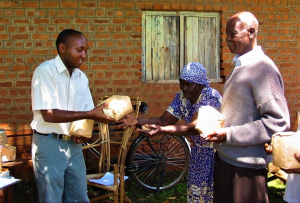
The world population is expected to rise to almost 10 billion by 2050. To feed this number of people, we need to increase food production while using fewer resources. Biofortification, the process of fortifying staple crops with micronutrients, could help to solve this problem. However, it is not that easy to identify biofortified seeds.
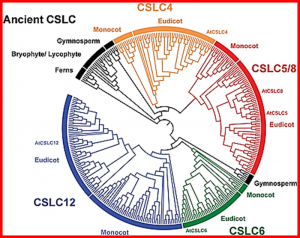
Xyloglucan (XyG) is an abundant component of the primary cell walls of most plants. While the structure of XyG has been well studied, much remains to be learned about its biosynthesis. Here we employed reverse genetics to investigate the role of Arabidopsis cellulose synthase like-C (CSLC) proteins in XyG biosynthesis. We found that single mutants containing a T-DNA in each of the five Arabidopsis CSLC genes had normal levels of XyG.
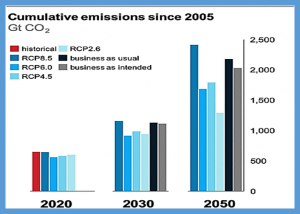
Climate simulation-based scenarios are routinely used to characterize a range of plausible climate futures. Despite some recent progress on bending the emissions curve, RCP8.5, the most aggressive scenario in assumed fossil fuel use for global climate models, will continue to serve as a useful tool for quantifying physical climate risk, especially over near- to midterm policy-relevant time horizons. Not only are the emissions consistent with RCP8.5 in close agreement with historical total cumulative CO2 emissions (within 1%), but RCP8.5 is also the best match out to midcentury under current and stated policies with still highly plausible levels of CO2 emissions in 2100.
The first known case of the novel coronavirus (COVID-19) was reported in China in November 2019; in the United States, the first reported case was on January 22.* Essential stay-at-home mandates worldwide have helped mitigate the exponential growth in hospitalizations and death and have led to gradual reopenings in China, South Korea, several European countries, and parts of the United States.
In recent years, RNA-seq has become the dominant technology for eQTL studies. However, most work has been in diploid organisms. Many species of economic and environmental importance are polyploid, and approaches for eQTL mapping in polyploids are not well developed. High similarity between duplicated genes in polyploids will cause misassignment of sequence reads and may cause false-positive results and/or lack of power to detect eQTL.
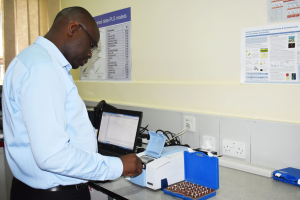
World Agroforestry (ICRAF) has been leading advances in soil spectroscopy springing from the conversion of its standard wet chemistry soil laboratory into a Soil–Plant Spectral Diagnostics Laboratory in 2000. This laboratory uses only light to measure the properties of soil rather than expensive and time-consuming chemical processes. Thanks to the rapidity of estimation provided by spectroscopy in the infrared part of the spectrum, the lab produces large volumes of spectral data daily.
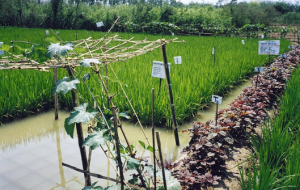
What do catfish and bananas have in common? No, this is not a riddle or the start of a bad joke. Some farmers know the answer: Bananas and catfish are a win-win when grown together in the same farming system. In fact, banana residues are a nutritious feed to enhance the growth of the catfish.New research shows that in combination they provide a complementary integrated agriculture-aquaculture (IAA) system which can add diversity to diets, provide increased economic opportunity while being good for the environment. The findings have also been published as journal article.
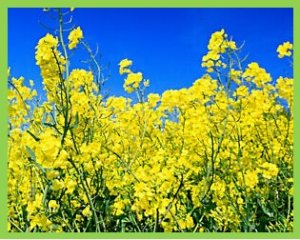
Fatty acid composition affects edible and processing quality of vegetable oil and has been one of the primary targets for genetic modification in oilseed crops including rapeseed (Brassica napus). Fatty acid desaturase 2 gene, FAD2, is a key player that affects three major fatty acids, namely oleic, linoleic and linolenic acid, in oilseed plants. Previously, we showed that there are four copies of BnaFAD2 in allotetraploid rapeseed.
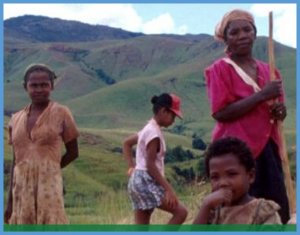
Rice plays a strategic role in food security in West Africa, but the region increasingly relies on imports, and local value chains face constraints in terms of technology, finance and coordination. In an article published in Global Food Security, scientists from CIRAD, AfricaRice, and the International Rice Research Institute (IRRI) propose different policy options to reduce the impacts of the COVID-19 pandemic on rice value chains in West Africa.
The situation that has arisen from COVID-19, with herders unable to move and competing for increasingly scarce resources, has shone a light on just how important it is to safeguard the rights of pastoralists. Although fundamental to the survival of nomadic pastoralists, corridors reserved as pastoral spaces are increasingly overlooked, particularly in times of crisis.
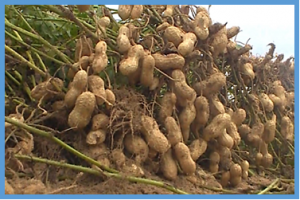
Enhancing oil content is an important breeding objective in peanut. High-resolution mapping of quantitative trait loci (QTLs) with linked markers could facilitate marker-assisted selection in breeding for target traits. In the present study, a recombined inbred line population (Xuhua 13×Zhonghua 6) was used to construct a genetic map based on double-digest restriction-site-associated DNA sequencing (ddRAD-seq).

The alarm went off a few minutes ago, before the morning call to prayer. It is now a quarter past five and still pitch-black outside. Miles Woodgate is eating breakfast and getting ready for the long day ahead fighting Desert Locusts. This Englishman is one of the pilots conducting aerial spraying in the easternmost country of the Horn of Africa -- the first time in 30 years that the security situation has allowed for this to happen in Somalia.