


News & Events
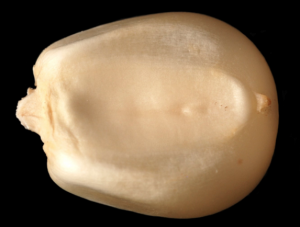
The world population is expected to rise to almost 10 billion by 2050. To feed this number of people, we need to increase food production while using fewer resources. Biofortification, the process of fortifying staple crops with micronutrients, could help to solve this problem. However, it is not that easy to identify biofortified seeds.
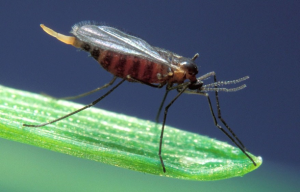
Hessian fly (HF), Mayetiola destructor (Say), is one of the most destructive pests in wheat (Triticum aestivum L.) worldwide. Growing resistant cultivars is the most effective approach to minimize Hessian fly damage. To identify new quantitative trait loci (QTLs) for HF resistance, a recombinant inbred line population was developed by crossing HF resistant wheat line SD06165 to a susceptible line OK05312.
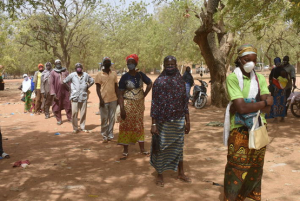
Urgent and sustained action is needed to address worsening food and nutrition insecurity in Burkina Faso, say the Food and Agriculture Organization of the United Nations (FAO) and the United Nations World Food Programme (WFP), citing alarming new data. Some 3.3 million people are estimated to be facing acute food insecurity during the current lean season, that period which precedes the harvest in September.
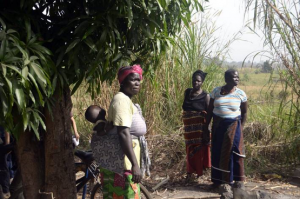
The Board of the Green Climate Fund today approved several new projects, including one for Côte d'Ivoire that marks the first time the Food and Agriculture Organization of the United Nations has helped an African country obtain a grant from the international entity. Along with the $11.8 million approval for Côte d'Ivoire, other two FAO-led projects in Armenia and Colombia, for a total amount of $58.5 million, including $10.5 million in cofinancing, received approval from the Green Climate Fund, a unique global platform mandated to invest in low-emission and climate-resilient development.
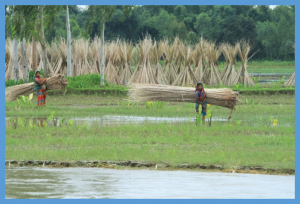
When climate disasters strike, farmers are among the first to feel the consequences. This was true before the novel coronavirus and it's certainly true now. The climate crisis compounded by the global health crisis leaves the most vulnerable even more at risk. Around 74% of natural disasters between 2001 and 2018 were water related.
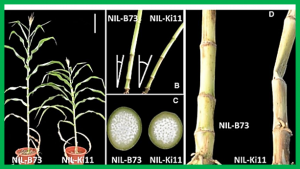
Stalk lodging, which is generally determined by stalk strength, results in considerable yield loss and has become a primary threat to maize (Zea mays) yield under high-density planting. However, the molecular genetic basis of maize stalk strength remains unclear, and improvement methods remain inefficient. Here, we combined map-based cloning and association mapping and identified the gene stiff1 underlying a major quantitative trait locus for stalk strength in maize.
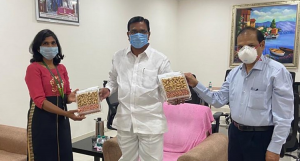
Two new groundnut varieties with high oleic acid content developed by ICRISAT in association with the Indian Council of Agricultural Research-Directorate of Groundnut Research would be made available to the farming community in Telangana from the next season. This was stated by the Minister for Agriculture, Singireddy Niranjan Reddy, after a meeting with a team of scientists from ICRISAT. The Minister stated that the new varieties known as Girnar 4 (ICGV-15083) and Girnar 5 (ICGV-15090) would be most suitable for cultivation in the erstwhile Mahabubnagar, Rangareddy and Nalgonda districts.
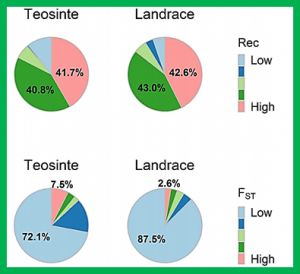
The genetics of domestication has been extensively studied ever since the rediscovery of Mendel's law of inheritance and much has been learned about the genetic control of trait differences between crops and their ancestors. Here, we ask how domestication has altered genetic architecture by comparing the genetic architecture of 18 domestication traits in maize and its ancestor teosinte using matched populations.
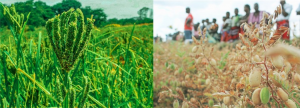
High-yielding chickpea and finger millet varieties with yield potential of up to 3 tons per hectare had their first-ever official release in Malawi. The release aligns well with the government’s crop diversification agenda for food and income security and the funding agency Irish Aid’s goal of increasing the resilience of poor households to economic, social and environmental shocks.
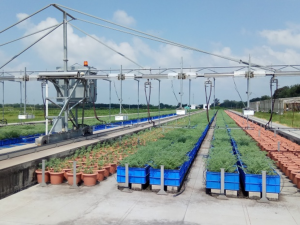
Ever-increasing emissions of greenhouse gases (GHG) is a global concern due to the association of high atmospheric GHG concentrations with global warming and climate change. A large and growing body of evidence predicts that this would further have a multifaceted impact on the human population, especially the poor and vulnerable groups, further exacerbating their vulnerabilities.
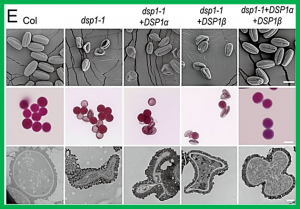
Small nuclear RNAs (snRNAs) are the basal components of the spliceosome and play crucial roles in splicing. Their biogenesis is spatiotemporally regulated. However, related mechanisms are still poorly understood. Defective in snRNA processing (DSP1) is an essential component of the DSP1 complex that catalyzes plant snRNA 3′-end maturation by cotranscriptional endonucleolytic cleavage of the primary snRNA transcripts (presnRNAs).
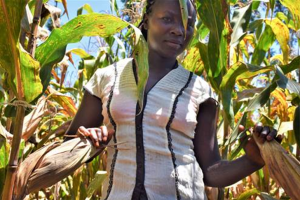
The theme for International Youth Day 2020, Youth Engagement for Global Action, highlights the various ways in which the engagement of young people at local, national and global levels enriches national and multilateral institutions and processes. Up to 60% of Africa’s youth face challenges such as limited employment opportunities, financial constraints to access land and adequate technical equipment. However, agriculture is increasingly providing options. Through it, young people are participating and leveraging on new technologies that can optimize farming systems and create employment.