


News & Events
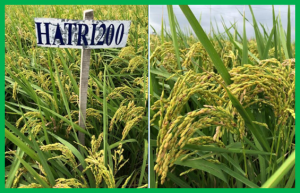
To increase productivity and improve quality, new rice varieties need to be salinity tolerance and resistant to many kinds of insects, diseases, and high levels of nutrients, resistant to disadvantageous conditions, and promises to reduce using pesticides, chemical fertilizers. Great efforts have been focused on germplasm research to discover genes resistant to disease and insect, efficient in using salinity level with good grain quality and productivity.
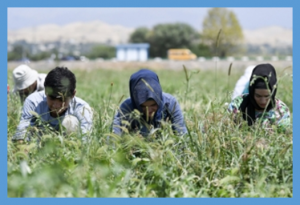
Food systems transformation; innovation and digitalization; and partnerships are central to ensure food security and improve nutrition worldwide, said FAO Director-General, QU Dongyu. He was speaking at a special event of the Committee on World Food Security (CFS), taking place on the final day of the FAO Regional Conference for Asia and the Pacific. An initiative of the Director-General, the session aimed to highlight the importance of global policy convergence, particularly Driving Food System Transformation Toward Sustainable Healthy Diets.
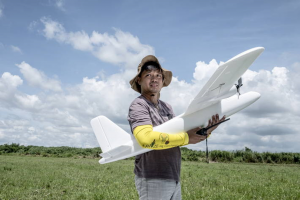
That was a call made by more than 40 member countries of the Food and Agriculture Organization of the United Nations concluding a four-day regional conference. About 750 participants, including representatives of the private sector and civil society, pledged to work to transform food systems, making them more sustainable, productive and resilient, and to feed a hungry world in a way that is profitable for farmers yet produces healthy food that is accessible to all.
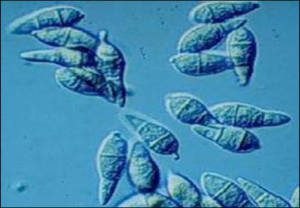
Understanding the mechanisms and timescales of plant pathogen outbreaks requires a detailed genome-scale analysis of their population history. The fungus Magnaporthe (Syn. Pyricularia) oryzae-the causal agent of blast disease of cereals- is among the most destructive plant pathogens to world agriculture and a major threat to the production of rice, wheat, and other cereals. Although M. oryzae is a multihost pathogen that infects more than 50 species of cereals and grasses,
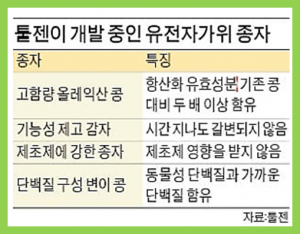
Since the U.S. Department of Agriculture (USDA) has determined that the soybeans improved using CRISPR-Cas9 are not considered as genetically modified, the Seed Project using CRISPR commences. "We received a decision from the USDA that the genome-edited soybean which contains a double amount antioxidant, anti-aging oleic acid, are not GMOs," said Ji-Hak Han, Director of the Toolgen Seed Business Division. This is the second time that Toolgen received the same decision. The first one was for a new variety of Petunia.
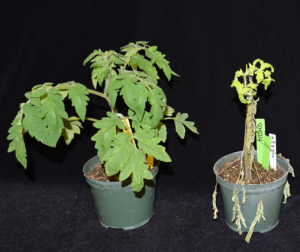
Bacterial speck disease has reduced fruit yield and quality of tomatoes over the last few years. Pseudomonas syringae, the bacterium causing the disease prefers a cool and wet climate, so crops in cold places become particularly susceptible. Researchers at the Boyce Thompson Institute (BTI) may change this as they uncovered the first known gene to impart resistance to a particular strain, called "race 1", of the bacterium causing speck disease.
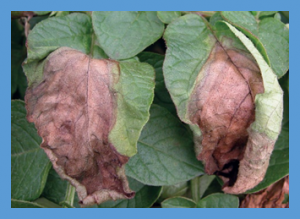
Mr Nguyen The Nhuan, Director, Da Lat Vegetable, Potato, Flower Research Centre, addressed his final report on “Potato breeding for high yielding, good quality and late blight resistance for Da Lat and its surrounding areas", in July 30 2020.
Mr Truong Quoc Anh addressed his preliminary report on “Melon cultivation under greenhouse demonstration in Ninh Kieu district, Can Tho City” in August 11 2020.
The maximized selection response and the correlation of the linear selection index (LSI) with the net genetic merit are the main criterion to compare the efficiency of any LSI. The estimator of the maximized selection response is the square root of the variance of the estimated LSI values multiplied by the selection intensity. The expectation and variance of this estimator allow the breeder to construct confidence intervals
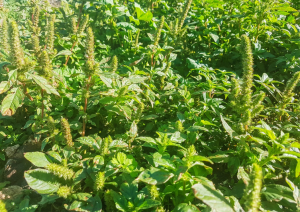
Scientists have published the most comprehensive genome information to date for all three of the most troublesome agricultural weed species, marking a new era of scientific discovery toward potential solutions. Waterhemp, smooth pigweed, and Palmer amaranth impact crop production in the United States and around the world.
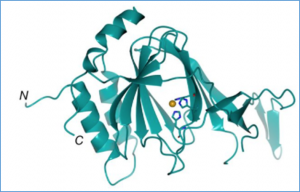
Scientists from the University of Sydney and University of Oxford discovered how a structure of a specific plant enzyme is essential to a plant's oxygen control levels. This can lead to more research towards developing flood-resistant crops.The scientists focused on plant cysteine oxidases, or PCOs, which are plant oxygen sensors found to be a vital component of the plant oxygen signaling system that connects environmental stimulus with a cellular and physiological response.
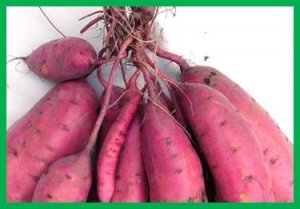
Dissecting the genetic regulation of gene expression is critical for understanding phenotypic variation and species evolution. However, our understanding of the transcriptional variability in sweet potato remains limited. Here, we analyzed two publicly available datasets to explore the landscape of transcriptomic variations and its genetic basis in the storage roots of sweet potato. The comprehensive analysis identified a total of 724,438 high-confidence single nucleotide polymorphisms (SNPs) and 26,026 expressed genes.

A study published in BMJ Medical Journal reported that pregnant and post-partum women who were diagnosed with COVID-19 seem to have fewer symptoms of fever and muscle pain, but have higher chances of getting admitted to the intensive care unit. The study also found that pregnant women with COVID-19 have increased chances of delivering preterm, though the preterm birth rates were not high. The findings are based on 77 studies that involved 13,118 pregnant and post-partum women and 83,486 non-pregnant women.