


News & Events
Accurately estimating human mobility and gauging its relationship with virus transmission is critical for the control of COVID-19 spreading. Using mobile device location data of over 100 million monthly active samples, we compute origin–destination travel demand and aggregate mobility inflow at each US county from March 1 to June 9, 2020. Then, we quantify the change of mobility inflow across the nation and statistically model the time-varying relationship between inflow and the infections
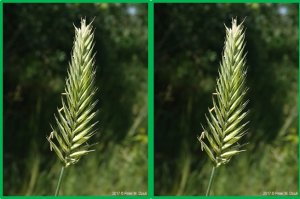
In outcrossing species such as intermediate wheatgrass (IWG, Thinopyrum intermedium), polycrossing is often used to generate novel recombinants through each cycle of selection, but it cannot track pollen-parent pedigrees and it is unknown how self-incompatibility (SI) genes may limit the number of unique crosses obtained. This study investigated the potential of using next-generation sequencing to assign paternity and identify putative SI loci in IWG.
The CGIAR is going through a dynamic reformulation that advances integration of its partnerships, knowledge, assets, and global presence to transform progress in key areas where innovation is needed to deliver on the Sustainable Development Goals by 2030. Moving forward, the One CGIAR will implement a phased approach to research delivery with the imperative of seeking multiple benefits across CGIAR’s impact areas
Rice plays a strategic role in food security in West Africa, but the region increasingly relies on imports, and local value chains face constraints in terms of technology, finance and coordination. In an article published in Global Food Security, scientists from CIRAD, AfricaRice, and the International Rice Research Institute (IRRI) propose different policy options to reduce the impacts of the COVID-19 pandemic on rice value chains in West Africa.
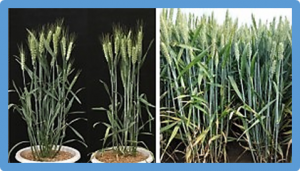
An ideal plant architecture is important for achieving high grain yield in crops. Tiller angle (TA) is an important factor influencing yield. In the present study, 266 recombinant inbred lines (RILs) derived from a cross between Zhongmai 871 (ZM871) and its sister line Zhongmai 895 (ZM895) was used to map TA by extreme pool-genotyping and inclusive composite interval mapping (ICIM).
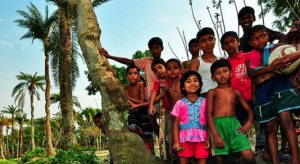
The COVID-19 pandemic is more than a health crisis. Over the last six months, we have witnessed its extreme socio-economic consequences, including grave threats to food security and nutrition. As the pandemic continues to take its toll and make an indelible mark on agri-food systems, organizations like the International Rice Research Institute (IRRI), a member of CGIAR, are aligning their efforts to ensure a relevant, timely, and well-coordinated response to safeguard the health and livelihoods of the poorest and most vulnerable.

In a Joint Press Statement of the 42nd Meeting of the Association of Southeast Asian Nations (ASEAN) Ministers on Agriculture and Forestry (AMAF), the ministers stressed the importance of the sustained significant investment in rice research-for-development by One CGIAR and its partner donors in view of the significant challenges in nutrition, sustainability, livelihoods, and climate-change resilience in the region. The statement, released on October 21, 2020 , also cited the importance of rice as a backbone of food security in Southeast Asia and other regions of the world.
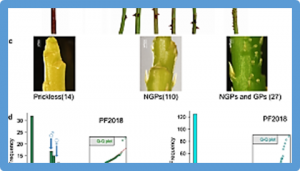
Rose is one of the major ornamental plants. The selection of glabrous cultivars is an important breeding target but remains a difficult task due to our limited genetic knowledge. Our objective was to understand the genetic and molecular determinism of prickles. Using a segregating diploid rose F1 population, we detected two types of prickles (glandular and non-glandular) in the progeny. We scored the number of non-glandular prickles on the floral and main stems for three years
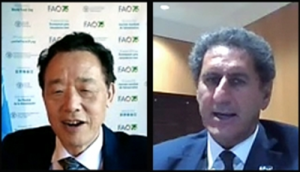
The Director-General of the Food and Agriculture Organization (FAO), QU Dongyu, and the Director-General of the International Renewable Energy Agency (IRENA), Francesco La Camera, have agreed to benefit from potential synergies and focus on concrete joint action to give farmers greater access to renewable energy and to support food system transformation in rural communities.
The 32nd Session of the FAO Regional Conference for Europe started today as FAO Members from Europe and Central Asia will discuss several challenges facing the region on food and agriculture, particularly how to promote sustainable agri-food systems and healthy diets as well as solutions for youth, employment and developing rural areas.
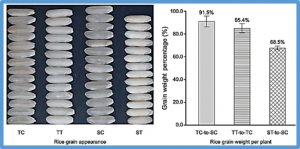
High temperatures, particularly at night, decrease rice yield and quality. As high nighttime temperatures (HNTs) become increasingly frequent due to climate change, it is imperative to develop rice crops that tolerate HNTs. DNA methylation may represent a potential avenue for HNT-tolerant rice strain development, as this mechanism regulates gene activity and cellular phenotype in response to adverse environmental conditions without changing the nucleotide sequence.
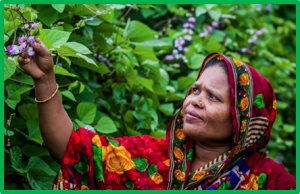
For rural people, especially low-income rural people, land and livelihood are one and the same. Access to land means the opportunity to earn a decent income and achieve food and nutrition security, and it can also pave the way for access to social benefits such as health care and education. A lack of secure land access, on the other hand, can disempower rural people and expose them to the combined threats of poverty, hunger and conflict.