


News & Events
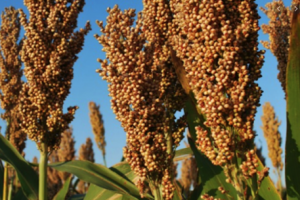
Host-parasite coevolution can maintain high levels of genetic diversity in traits involved in species interactions. In many systems, host traits exploited by parasites are constrained by use in other functions, leading to complex selective pressures across space and time. Here, we study genome-wide variation in the staple crop Sorghum bicolor (L.) Moench and its association with the parasitic weed Striga hermonthica (Delile) Benth.
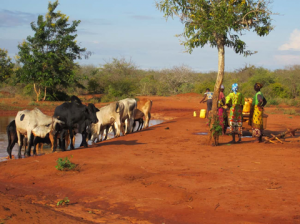
People in industrialized regions like the United States of America or Europe are generally urged to eat less meat and animal-source foods as part of a healthier and lower-emissions diet. But such recommendations are not universal solutions in low- or middle-income countries, where livestock are critical to incomes and diets, argue scientists in recently published research in Environmental Research Letters.
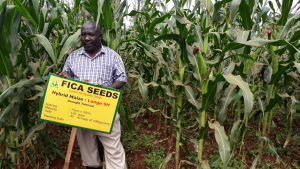
As one of the pioneer homegrown seed companies in Uganda, Farm Inputs Care Centre (FICA) has become one of the leading players in the seed sector value chain. Since its inception in 1999, it has played a significant role in variety development and maintenance, seed production, and processing, packaging and marketing. The close linkages it has maintained with partners such as National Agriculture Research Organization (NARO)’s National Crops Resources Research Institute (NaCCRI) and the International Maize and Wheat Improvement Center (CIMMYT) have seen it acquire new hybrids for commercialization and production of early generation seed.
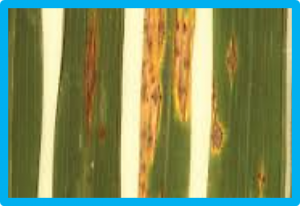
In the present investigation, phenotypic evaluation of blast disease reaction was conducted at Ponnampet and Mandya districts of Karnataka, India, which indicated that the rice varieties such as IR64, Jaya, KMP153, IR30864, Mandya Sona-1, Mandya Sona-2, KCP-1, Dodda Byra, and Malgudi Sanna were susceptible to both leaf and neck blasts. Further, the rice varieties that were resistant to leaf blast such as KMP200, DHMAS70Q164-1b, Karibatta, Coimbatore Sanna and others showed susceptible reaction to neck blast only.
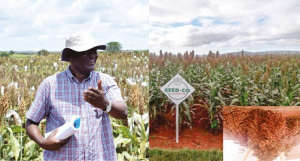
A new disease-resistant sorghum hybrid with 23-34% higher yield, best suited for brewing, food and forage and adaptable to diverse agro-ecologies in Zimbabwe and southern Africa was developed in partnership with Seed Co, a private seed company. The development and use of the new hybrid is a forerunner of the ICRISAT-led Sorghum and Pearl Millet Hybrid Parents Research Consortium that fosters public-private partnerships.
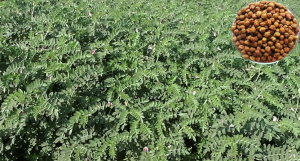
To meet the growing global market demand for protein-rich chickpea, scientists have created new varieties that would contribute to greater nutrition security, health and climate resilience and replace existing obsolete varieties. In 2020, despite pandemic constraints, 10 new varieties (6 desi and 4 kabuli) were released through effective collaborations with National Agricultural Research Systems in Africa and Asia.
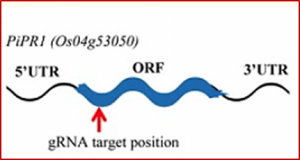
Because of the frequent breakdown of major resistance (R) genes, identification of new partial R genes against rice blast disease is an important goal of rice breeding. In this study, we used a core collection of the Rice Diversity Panel II (C-RDP-II), which contains 584 rice accessions and are genotyped with 700 000 single-nucleotide polymorphism (SNP) markers. The C-RDP-II accessions were inoculated with three blast strains collected from different rice-growing regions in China.

The COVID-19 pandemic is more than a health crisis. Over the last six months, we have witnessed its extreme socio-economic consequences, including grave threats to food security and nutrition. As the pandemic continues to take its toll and make an indelible mark on agri-food systems, organizations like the International Rice Research Institute (IRRI), a member of CGIAR, are aligning their efforts to ensure a relevant, timely, and well-coordinated response to safeguard the health and livelihoods of the poorest and most vulnerable.

Since the early 2000s, West Africa imports around half of the rice consumed. Nevertheless, this figure hides a wide range of situations: some countries such as Mali are almost self-sufficient, while others such as Niger import more than three quarters of their rice. The deficit is growing because rice consumption is increasing under the triple effect of population growth, urbanisation and rapid changes in West African diets.
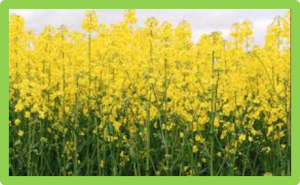
The functional importance of lobed leaves in rapeseed (Brassica napus L.) has been identified with potential advantages for high-density planting and hybrid production. Our previous studies indicated that the tandemly duplicated LMI1-like genes BnA10. RCO and BnA10.LMI1 are candidate genes of an incompletely dominant locus, which is responsible for the lobed-leaf shape in rapeseed.
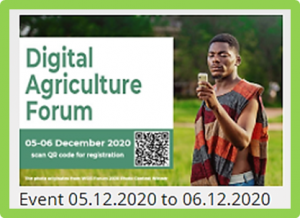
FAO harnesses the power of digital technologies to pilot, accelerate and scale innovative ideas with high potential for impact in food and agriculture, transforming digital solutions and services into global public goods. It aims to explore the responsible application and adoption of existing and frontier technologies, design and scale new services, tools and approaches to empower rural households and inspire youth entrepreneurship in food and agriculture.
The International Year of Fruits and Vegetables 2021 (IYFV), as declared by the UN General Assembly in Resolution A/RES/74/244, aims at raising awareness of, directing policy attention to, and sharing good practices on the nutritional and health benefits of fruit and vegetable consumption, the contribution of fruit and vegetable consumption to the promotion of diversified, balanced and healthy diets and lifestyles, and reducing loss and waste of fruits and vegetables.