


News & Events
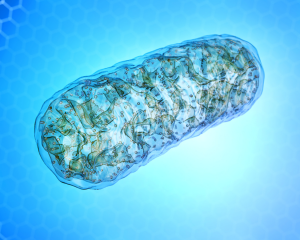
Researchers have elucidated some undefined mechanisms and characteristics of flowering plants using mitochondria-targeted transcription activator-like effector nucleases (mitoTALENs). The impact of mitoTALENs-directed double-strand breaks on plant mitochondrial genomes was compiled by Shin-ichi Arimura from the University of Tokyo in an article published in Genes.
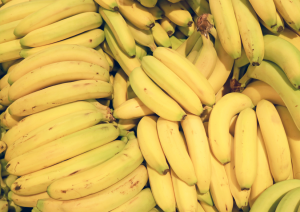
Queensland University of Technology (QUT) researcher Distinguished Professor James Dale and his team have successfully developed a line of Cavendish bananas resistant to Panama disease tropical race 4 (TR4). Professor Dale said the field trials showed that high expression of the gene RGA2 derived from a wild banana provides resistance to TR4 disease. RGA2 is also present in Cavendish but it is not expressed.
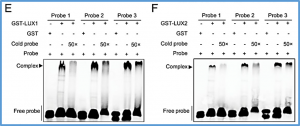
Photoperiod sensitivity is a key factor in plant adaptation and crop production. In the short-day plant soybean, adaptation to low latitude environments is provided by mutations at the J locus, which confer extended flowering phase and thereby improve yield. The identity of J as an ortholog of Arabidopsis ELF3, a component of the circadian evening complex (EC), implies that orthologs of other EC components may have similar roles.
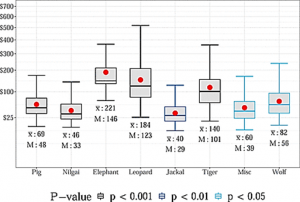
Successful conservation of our dwindling wildlife involves a reduction in human costs—including human casualties, crops, livestock, and other property—from interactions with wild species. We analyze survey data from households incurring wildlife damage in India to illustrate that the cost from human casualties overwhelms all other property losses. Our results imply the following:
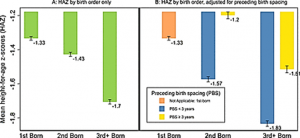
The question of whether firstborn children have a height advantage over later-born children is important, given the persistently poor height outcomes in developing countries. Using data on young Indian children, we show that later-born children lag behind firstborns in stunting outcomes. This is only true, though, if higher birth-order children were born within 3 y of the birth of their elder siblings.
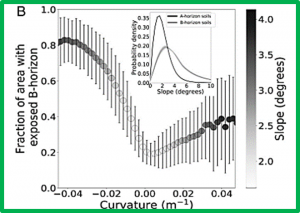
Soil erosion in agricultural landscapes reduces crop yields, leads to loss of ecosystem services, and influences the global carbon cycle. Despite decades of soil erosion research, the magnitude of historical soil loss remains poorly quantified across large agricultural regions because preagricultural soil data are rare, and it is challenging to extrapolate local-scale erosion observations across time and space.
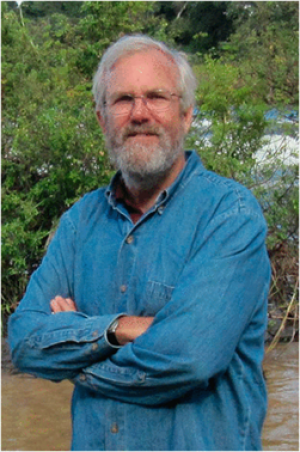
Molecular anthropologist Mark Stoneking’s contributions to the field of human evolution began in the mid-1980s. As a graduate student at the University of California, Berkeley, Stoneking helped to identify the first genetic evidence supporting the African origin of modern humans. Since then, Stoneking, now a Group Leader at the Max Planck Institute for Evolutionary Anthropology, has used innovative genetic methods to investigate human migrations, demographic histories, genetic introgression from archaic to modern humans, human cultural practices, and more

Harold Abraham Scheraga, an eminent Professor of chemistry and biophysics at Cornell University for 73 years, died on August 1, 2020 at the age of 98. Scheraga (known to his colleagues as Harold) has been a pioneer in the general field of macromolecules (polymers, proteins, DNA, and so forth). He started his own research in 1947 (when proteins were viewed just as ellipsoids of colloidal assemblies of amino acids),
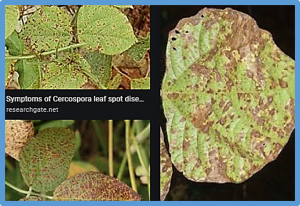
Cercospora leaf spot (CLS) caused by the fungus Cercospora canescens is an important disease of mungbean. A QTL mapping using mungbean F2 and BC1F1 populations developed from the “V4718” (resistant) and “Kamphaeng Saen 1” (KPS1; susceptible) has identified a major QTL controlling CLS resistance (qCLS). In this study, we finely mapped the qCLS and identified candidate genes at this locus.

We need to get to zero emissions, and we’re going to need a lot of innovation to do it. But innovation doesn’t happen overnight, and it will take decades for green products to reach a big enough scale to make a significant difference. In the meantime, people all over the world, at every income level, are already being affected in one way or another by climate change. Just about everyone who’s alive now will have to adapt to a warmer world.
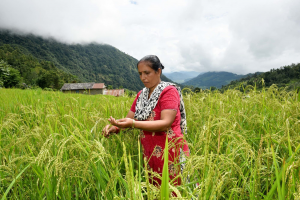
Several solutions are now being trialed in Climate-Smart Villages across Africa, Asia, and Latin America, led by the CGIAR Research Program on Climate Change, Agriculture and Food Security (CCAFS). Established in high-risk areas that are likely to suffer most under a changing climate, the villages function as real-life laboratories for cutting-edge climate-smart technologies, information services, development and adaptation plans, and supportive institutions and policies.
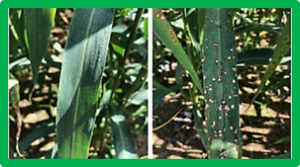
Leaf blast disease of foxtail millet (Setaria italica) is caused by Pyricularia spp., can infect all the aboveground parts of plants, and is the most frequently observed blast disease in China. Lack of information on genetic control of disease resistance impedes developing leaf blast-resistant cultivars. An F6 recombinant inbred line (RIL) population from the cross Yugu 5 × Jigu 31 was phenotyped for its reactions to leaf blast in six field trials in the naturally diseased nurseries.