


News & Events

Over the last few decades, social scientists have experienced the causal revolution, the replication crisis, and, now in just a matter of months, another epoch: the era of coronavirus disease 2019 (COVID-19) research. According to Google Scholar, roughly 3.55 million COVID-19–related articles have appeared to date. That amounts to about 9,726 articles per day, or, roughly, one article every 9 seconds. Many of these articles are in the social sciences—that is, concerned not directly with medical outcomes but rather with COVID-19’s impact on social, behavioral, and economic outcomes.
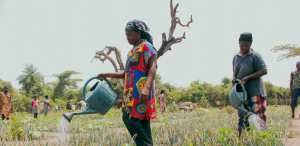
Irrigated crops, livestock, fisheries, aquaculture and forestry, account for roughly 70 per cent of total freshwater withdrawals globally and for over 90 per cent in the majority of Least Developed Countries, of which almost 67 per cent is estimated to be used by irrigation. Nevertheless, enhancing irrigation efficiency is not a priority in policy agendas, being overshadowed by the global issue of access to drinking water and sanitation.
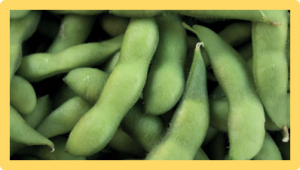
Soybean grown at latitudes of ~20° or lower can produce lower grain yields due to the short days. This limitation can be overcome by using the long juvenile trait (LJ) which delays flowering under short day conditions. Two LJ loci have been mapped to the same location on Gm04, J and E6. The objective of this research was to investigate the e6 allele in ‘Paranagoiana’ and determine if E6 and J are the same locus or linked loci.
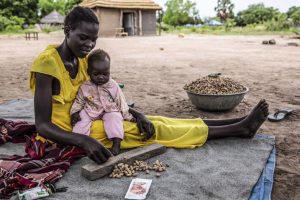
Acute hunger is set to soar in over 20 countries in the coming months without urgent and scaled-up assistance, warn the UN's Food and Agriculture Organization (FAO) and World Food Programme (WFP) in a new report issued today. Yemen, South Sudan and northern Nigeria top the list and face catastrophic levels of acute hunger, with families in pockets of South Sudan and Yemen already in the grip of or at risk of starvation and death according to the Hunger Hotspots report.
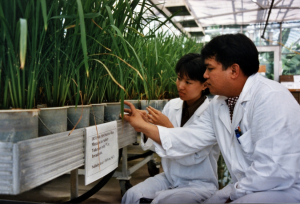
Some of the most innovative ways of improving agricultural practices involve nuclear technology. Using isotopes or radiation techniques in agriculture can control pests and diseases, increase crop production, protect land and water resources and ensure food safety. FAO and the International Atomic Energy Agency (IAEA) have been expanding knowledge and enhancing capacity in this area for more than 50 years and recently strengthened this partnership, creating a Joint FAO/IAEA Centre of Nuclear Techniques in Food and Agriculture.
Serological rapid diagnostic tests (RDTs) are widely used across pathologies, often providing users a simple, binary result (positive or negative) in as little as 5 to 20 min. Since the beginning of the COVID-19 pandemic, new RDTs for identifying SARS-CoV-2 have rapidly proliferated. However, these seemingly easy-to-read tests can be highly subjective, and interpretations of the visible “bands” of color that appear (or not) in a test window may vary between users, test models, and brands
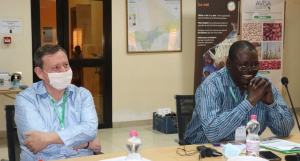
More than 80,000 farmers, seed and grain producers, agro dealers and processors in Mali were reached through radio and TV messaging during 2020. This complemented 145 demonstrations of new varieties of sorghum, pearl millet, groundnut and cowpea for 3,300 producers. Even during times of a pandemic, assistance to farmers must continue, as was aptly shown in the first year of the UE-APSAN-Mali project. Modernization of breeding programs using RapidGen and capacity building of young scientists were other important components of the work.
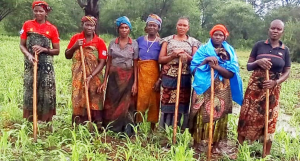
Working with private seed companies, ICRISAT is helping integrate more women and youth into seed production enterprises in Tanzania. Recently we supported the efforts of the seed company Mbozi Highlands (MHEG), to enhance the production, promotion, marketing and adoption of new high-yielding varieties of groundnut and sorghum in the country. This was by designing and developing training manuals to train farmers, identifying and contracting 92 new seed producer groups (women and youth); facilitating inputs for 100 seed producer groups; and identifying suitable areas for establishing 300 variety demonstration plots.
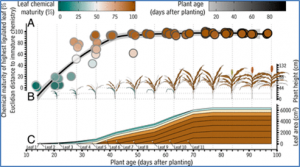
Virtually all land plants are coated in a cuticle, a waxy polyester that prevents nonstomatal water loss and is important for heat and drought tolerance. Here, we describe a likely genetic basis for a divergence in cuticular wax chemistry between Sorghum bicolor, a drought tolerant crop widely cultivated in hot climates, and its close relative Zea mays (maize). Combining chemical analyses, heterologous expression,
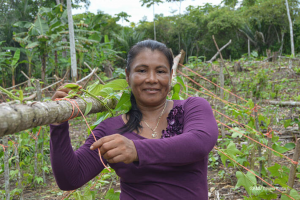
Deforestation rates are significantly lower in Indigenous and Tribal territories where governments have formally recognized collective land rights, according to a new report launched today. Jointly published by the Food and Agriculture Organization of the United Nations (FAO) and the Fund for the Development of Indigenous Peoples of Latin America and the Caribbean (FILAC), Forest Governance by Indigenous and Tribal Peoples also shows that improving the tenure security of these territories is an efficient and cost-effective way to reduce carbon emissions.
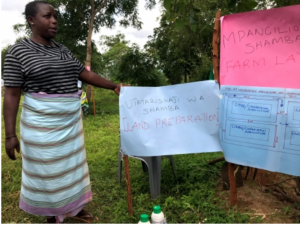
Farmer Field Schools (FFS), or ‘schools without walls’, were introduced by FAO and partners more than 30 years ago as an alternative to the prevailing top-down extension approach. The schools are a way to promote field-based experimentation, group organization and local decision-making through discovery-based learning.
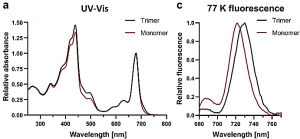
A high-resolution structure of trimeric cyanobacterial Photosystem I (PSI) from Thermosynechococcus elongatus was reported as the first atomic model of PSI almost 20 years ago. However, the monomeric PSI structure has not yet been reported despite long-standing interest in its structure and extensive spectroscopic characterization of the loss of red chlorophylls upon monomerization. Here, we describe the structure of monomeric PSI from Thermosynechococcus elongatus BP-1. Comparison with the trimer structure gave detailed insights into monomerization-induced changes in both the central trimerization domain and the peripheral regions of the complex.