


News & Events
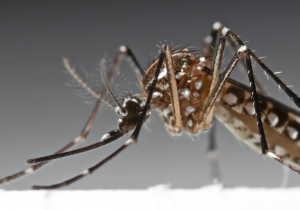
Scientists from the Imperial College of London used CRISPR-Cas9 technology to develop gene-edited mosquitoes that could possibly reduce their ability to spread Malaria. Though only a preliminary study has been done, the breakthrough could be used for a gene drive that can provide a new way to reduce illnesses and deaths caused by Malaria. The researchers used CRISPR-Cas9 technology to insert a gene that encodes an antimalarial protein among genes that are turned on after the mosquito (Anopheles gambiae) consumes a blood meal.
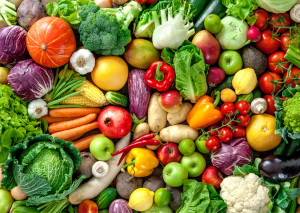
The European Food Safety Authority (EFSA) has published the latest report on pesticide residues in food in the European Union, providing insights into the levels of residue found in a selection of products consumed in the region. Of the total 96,302 samples analyzed in 2019, 96.1% fell within legally permitted levels. For the subset of 12,579 samples analyzed as part of the EU-coordinated control program (EUCP), 98% were within legal limits.
- Mr. Nguyen The Nhuan officially submitted his PhD Thesis on “Study on N, P, K, pH and photoperiod affecting to potato G0 mini tubers'' growth, development and yield in Da Lat”, Feb 2, 2021.
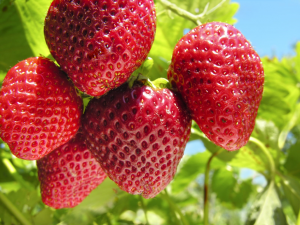
- Ms Cao Thi Lan preliminarily submitted her PhD Thesis on: “Nutrient and support treatments affecting to strawberry growth, development, yield and quality of the hybrid (Fragaria x ananassa) under Da Lat green house”, March 22, 2021.

Drought stress is one of the main problems for the rice crop, as it reduces the production and productivity of the grain yield significantly. In Egypt, many restrictions were made on the cultivation of rice due to its high-water demand. Producing promising drought-tolerant rice cultivars combined with high yielding is one of the main targets for rice breeders. A set of 22 highly diverse rice genotypes were evaluated under normal and drought conditions.
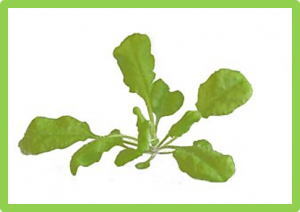
A study conducted by researchers from John Innes Centre (JIC) has found that compact growth in plants is imposed by two different types of genes, called ATH1 and DELLA, which work in parallel. Some plants grow close to the soil while others reach high. The JIC study addressed the architecture and growth habits of plants. Using genetic analysis, microscopy, and the technique called ChIP-sequencing, they found the two types of genes.
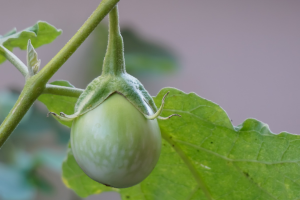
The Genetic Engineering Appraisal Committee (GEAC) has ceased the field trials of Bt brinjal and other transgenic crops in India due to the unwillingness of some states to cooperate and with the pressure of some non-governmental organizations. "We are disappointed by the Ministry of Environment, Forest and Climate Change's regressive decision to not go ahead with the Bt Brinjal field trials or any other GM crop trials without considering the recommendations from States and Union Territories.

The rice leaffolder, Cnaphalocrocis medinalis Guenée (Crambidae, Lepidoptera), is an important agricultural pest that causes serious losses to rice production in rice-growing regions with high humidity and temperature. However, a lack of genomic resources limits in-depth understanding of its biological characteristics and ecological adaptation. Here, we sequenced the genome of rice leaffolder using the Illumina and PacBio platforms, yielding a genome assembly of 528.3 Mb with a contig N50 of 524.6 kb

CTNBio, Brazil's biosafety regulatory agency, has approved Oxitec's Friendly™ fall armyworm technology on March 9, 2021 for application on farmers' fields. The approval follows an in-depth, independent evaluation of scientific data by CTNBio, permitting the deployment of this solution on commercial crops across Brazil, and validating it as a safe, environmentally friendly, and sustainable crop protection solution.
Researchers from McGill University in Canada conducted a study to determine the role of individuals' expectations and emotions in critical thinking towards socio-scientific issues. They tested the respondents' knowledge of genetically modified foods (GM) and were able to identify the effects of cognition on critical thinking when encountering conflicting information about it.
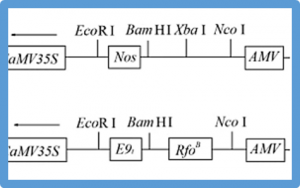
Brassica oleracea vegetables including cabbage, cauliflower, kohlrabi, Brussels sprouts and Chinese kale are morphologically very different despite being members of the same species. The Ogura cytoplasmic male sterility (CMS) system is the most stable strategy for the hybrid breeding of these species. However, this limits the utilization of some excellent genes due to the lack of fertile restorer genes in the system.

Two independent studies conducted by researchers from Graz University (TU Graz) found that the composition of microbiome of apples and oil pumpkins depends on its geographical location which can affect its fruit quality, adaptability, storability, and food safety to human health. The researchers used high-throughput amplicon sequencing to target the 16SrRNA and the TS1 genes to assess the bacterial and fungal microbiomes in oil pumpkins.
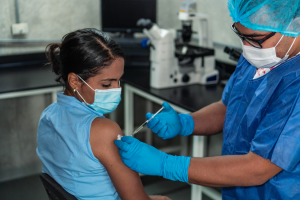
The US National Academies of Sciences, Engineering, and Medicine (NASEM) released a guidebook for communicating about COVID-19 vaccine efficacy, effectiveness, and efficacy. According to NASEM, effective communication on COVID-19 vaccines is necessary to ensure a shared understanding of how they work and whether they are being equitable distributed.