


News & Events
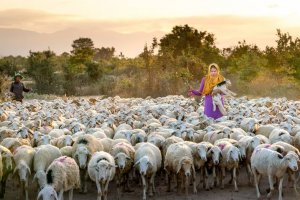
Antimicrobial resistance (AMR) is becoming an increasing threat to global health, food safety and security, potentially also leading to substantial socio-economic damage, and to turn this around, the Director-General of the Food and Agriculture Organization of the United Nations (FAO), QU Dongyu, today called for coherent, swift and decisive action.

The 166th Session of the FAO Council, the third session held entirely virtually, ended today with its Members praising the Organization's main actions and initiatives to address the impacts of the COVID-19 pandemic and to foster sustainable development, as well as supporting the proposed documents to guide the Organization's work over the next years. The Council is the executive organ of the FAO Conference. It has 49 Members and meets between Conference sessions which bring all 194 FAO Members together every two years.
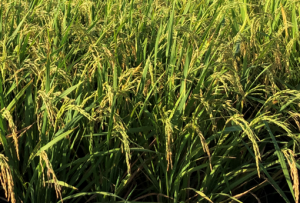
Rice cultivars from japonica and indica lineage possess differential resistance against blast fungus as a result of genetic divergence. Whether different rice cultivars also show distinct metabolomic changes in response to P. oryzae, and their role in host resistance, are poorly understood. Here, we examine the responses of six different rice cultivars from japonica and indica lineage challenged with P. oryzae. Both susceptible and resistant rice cultivars expressed several metabolites exclusively during P. oryzae infection, including the saponin Bayogenin 3-O-cellobioside. Bayogenin 3-O-cellobioside level in infected rice directly correlated with their resistant attributes. These findings reveal, for the first time to our knowledge that besides oat, other grass plants including rice produces protective saponins.
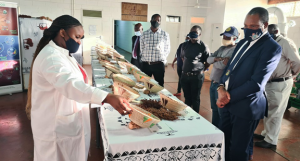
Dr Anxious Masuka, Zimbabwe’s Minister of Lands, Agriculture, Fisheries, Water and Rural Resettlement, during a recent visit to the ICRISAT Matopos Research Center, called for continued close collaboration between the Government of Zimbabwe and ICRISAT to ensure the benefits of research quickly reach poorly-resourced communal farmers and help Zimbabwe achieve a middle income economy by 2030.
Today, 21 April 2021, the FAO Director-General, QU Dongyu, and the UK Special Envoy for Famine Prevention and Humanitarian Affairs, Nick Dyer, had a virtual meeting to discuss FAO-UK collaboration to address acute food security and FAO’s vision and work on the prevention of food crises by addressing their root causes, bridging humanitarian and development response through protecting agriculture-based livelihood and promoting science-based approaches.

Vegetative growth and the timing of the vegetative-to-reproductive transition are critical to a plant’s fitness, directly and indirectly determining when and how a plant lives, grows and reproduces. We describe quantitative trait analysis of plant height and flowering time in the naturally occurring tetraploid Sorghum halepense, using two novel BC1F2 populations totaling 246 genotypes derived from backcrossing two tetraploid Sorghum bicolor x S. halepense F1 plants to a tetraploidized S. bicolor.
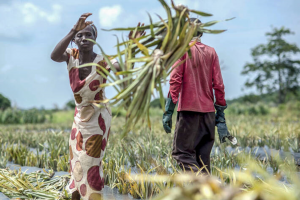
The world's smallholder farmers produce around a third of the world's food, according to detailed new research by the Food and Agriculture Organization of the United Nations (FAO). Five of every six farms in the world consist of less than two hectares, operate only around 12 percent of all agricultural land, and produce roughly 35 percent of the world's food, according to a study published in World Development.
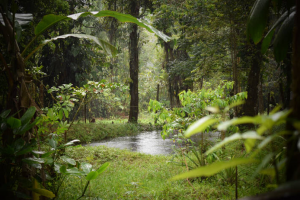
In his remarks, the Director-General extolled the many virtues of forests, including ensuring people's food security and income, storing carbon, providing energy and clean water as well as hosting most of the Earth's terrestrial biodiversity. In particular, he emphasized a major role of forests at a time of unprecedented climate, health and economic crises, giving hope to people, environment and economy.

Grain mold is the most important disease of sorghum [Sorghum bicolor (L.) Moench]. It starts at the early stages of grain development due to concurrent infection by multiple fungal species. The genetic architecture of resistance to grain mold is poorly understood. Using a diverse set of 635 Ethiopian sorghum accessions, we conducted a multi-stage disease rating for resistance to grain mold under natural infestation in the field.

Addressing the 166th Session of the FAO Council today, Director-General QU Dongyu highlighted the ways the Food and Agriculture Organization of the United Nations (FAO) has been providing constant support to Members, including to overcome the challenges posed by the COVID-19 pandemic. Each of the decisions, activities and results shared with Council today are "not an isolated exercise, but part of an interlinked chain of progress," he said.
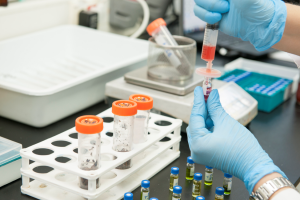
Researchers from the Centre of Biotechnology of Borj Cedria in Tunisia established a standard direct PCR workflow for timely gene detection assay and screening of genetically engineered (GE) plants. The results are published in Transgenic Research. GE plants are widely developed for various practical and fundamental purposes. Thus, several methods have been developed for the detection and quantification of GE crops, but are still labor-intensive and expensive.

Drought is the major abiotic factors that limit crop productivity worldwide. To withstand stress conditions, plants alter numerous mechanisms for adaption and tolerance. Therefore, in the present study, 106 rice varieties were screened for drought tolerance phenotype via exposing different concentrations of polyethylene glycol 6000 (PEG) in the hydroponic nutrient medium at the time interval of 1, 3, and 7 days to evaluate the changes in their root system architecture.