


News & Events

Farmers in New South Wales (NSW), Australia can now access all the approved GM crops in the country as of July 1, 2021, which marks the expiry of the 18-year GM crop moratorium implemented in NSW. CropLife Australia CEO Matthew Cossey expressed his appreciation for the end of the moratorium, which opens more opportunities for farmers to avail of GM crop innovations approved by the Federal Gene Technology Regulator. "Farmers should be the ones to make their own choices about what crops to grow that best fit their farming environment and business model.

The World Health Organization released two technical documents on human genome editing including a framework for governance and recommendations from its global, multidisciplinary expert advisory committee. Genome editing tools, such as CRISPR-Cas9, have been used to edit the human genome to treat or prevent diseases. However, ethical issues are raised against the technology due to gaps in scientific understanding.
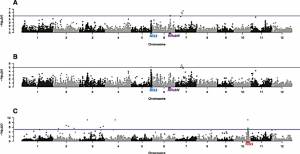
Nitrogen fertilization is known to increase disease susceptibility, a phenomenon called Nitrogen-Induced Susceptibility (NIS). In rice, this phenomenon has been observed in infections with the blast fungus Magnaporthe oryzae. A previous classical genetic study revealed a locus (NIS1) that enhances susceptibility to rice blast under high nitrogen fertilization. In order to further address the underlying genetics of plasticity in susceptibility to rice blast after fertilization, we analyzed NIS under greenhouse-controlled conditions in a panel of 139 temperate japonica rice strains.

Researchers from the University of Göttingen in Germany and the University of British Columbia in Vancouver, Canada examined how citizens in five countries react to different applications of genome editing in agriculture, which applications are accepted, and how the risks and benefits of the new breeding technologies are assessed.
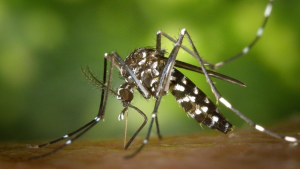
The webinar Can gene drive eliminate vector-borne diseases? was live-streamed via Zoom on July 8, 2021. It was hosted by ISAAA, in partnership with the Biotechnology Information Centers and the Outreach Network for Gene Drive Research. Experts from Singapore, Taiwan, and Italy were invited to speak about gene drive as a means to mitigate vector-borne diseases and their limitations.
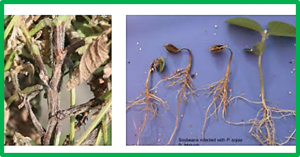
Phytophthora sansomeana is a recently recognized species that contributes to root rot in soybean. Previous studies indicated that P. sansomeana is widely distributed among soybean growing regions and has a much wider host range than P. sojae, a well-known pathogen of soybean. Unlike P. sojae, no known disease resistance genes have been documented that can effectively control P. sansomeana.

Researchers from India and Canada documented the trends linked to genetically modified (GM) foods, policies, and consumer acceptance after analyzing hundreds of publications in the past 20 years. Their analyses led to the conclusion that consumer perception is affected by factors such as government decisions, how benefits are communicated, and the media.

The potential uses and impacts of gene drive technologies are a topic of growing interest at the international and national levels in many countries. The Gene Drive Webinar Series aims to help promote a productive and balanced conversation on the benefits and risks of possible gene drive applications, providing factual and accurate information that can help place the discussion under the Convention on Biological Diversity in context.
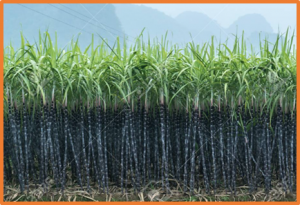
In the recent decade, genetic progress has been slow in sugarcane. One reason might be that non-additive genetic effects contribute substantially to complex traits. Dense marker information provides the opportunity to exploit non-additive effects in genomic prediction. In this study, a series of genomic best linear unbiased prediction (GBLUP) models that account for additive and non-additive effects were assessed to improve the accuracy of clonal prediction.

FAO Director-General, QU Dongyu, and the Minister of Foreign Affairs of Andorra, Maria Ubach Font, had a meeting today to exchange views on areas of ongoing and future cooperation between FAO and Andorra.The Director-General thanked Minister Ubach Font for being a longstanding and active member of the UN Mountain Partnership.

There was a dramatic worsening of world hunger in 2020, the United Nations said today - much of it likely related to the fallout of COVID-19. While the pandemic's impact has yet to be fully mapped*, a multi-agency report estimates that around a tenth of the global population - up to 811 million people - were undernourished last year.
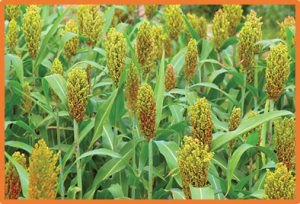
Sorghum, a historically vital staple food source and currently the fifth most important major cereal, is emerging as a crop with diverse end-uses as food, feed, fuel and forage and a model for functional genetics and genomics of tropical grasses. Rapid development in high-throughput experimental and data processing technologies has significantly speeded up sorghum genomic researches in the past few years. The genomes of three sorghum lines are available, thousands of genetic stocks accessible and various genetic populations, including NAM, MAGIC, and mutagenised populations released.