


News & Events
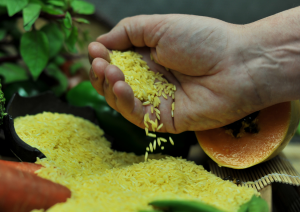
The Philippines has approved Golden Rice, a rice variety genetically engineered to contain additional levels of beta-carotene, which the body converts into vitamin A. The Philippine Department of Agriculture-Bureau of Plant Industry (DA-BPI) announced that a biosafety permit for propagating the Golden Rice has been issued on July 21, 2021. Golden Rice is engineered to provide up to 50 percent of the estimated average requirement (EAR) for vitamin A of young children, the age group most susceptible to VAD in the Philippines.
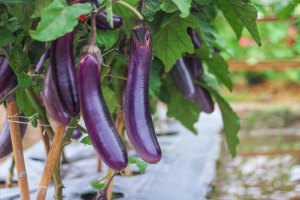
Bt eggplant event EE-1 is resistant to eggplant fruit and shoot borer, the most destructive pest of eggplant. It was developed by experts from the Institute of Plant Breeding of the University of the Philippines Los Baños, making it the first Filipino biotech product. A commercial planting approval is necessary before farmers in the Philippines can avail themselves of the benefits of the Bt crop. These benefits include less dependence and exposure to insecticides, improved marketable yield, better income, and peace of mind for farmers.
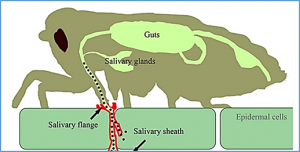
The importin α family belongs to the conserved nuclear transport pathway in eukaryotes. However, the biological functions of importin α in the plasma membrane are still elusive. Here, we report that importin α, as a plasma membrane–associated protein, is exploited by the rice stripe virus (RSV) to enter vector insect cells, especially salivary gland cells. When the expression of three importin α genes was simultaneously knocked down, few virions entered the salivary glands of the small brown planthopper, Laodelphax striatellus. Through hemocoel inoculation of virions, only importin α2 was found to efficiently regulate viral entry into insect salivary-gland cells. Importin α2 bound the nucleocapsid protein of RSV with a relatively high affinity through its importin β–binding (IBB) domain, with a dissociation constant KD of 9.1 μM.
The Pre-Summit of the UN Food Systems Summit will set the stage for the culminating global event in September by bringing together diverse actors from around the world to leverage the power of food systems to deliver progress on all 17 Sustainable Development Goals (SDGs). In partnership with the Government of Italy, the Pre-Summit will take place in Rome from 26–28 July 2021.

The Director-General of the Food and Agriculture Organization of the United Nations (FAO), QU Dongyu, today reiterated his call for more investment in rural areas and actions to end hunger and poverty at the Pre-Summit of the UN Food Systems Summit. He made the appeal at one the Pre-Summit's special events organised by FAO and Italy "From the G20 Matera Declaration to the Food Systems Summit: A Framework for Emerging Coalitions of Action",
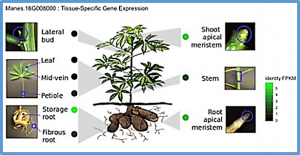
Manihot esculenta (cassava) is a root crop originating from South America that is a major staple in the tropics, including in marginal environments. This study focused on South American and African germplasm and investigated the genetic architecture of hydrogen cyanide (HCN), a major component of root quality. HCN, representing total cyanogenic glucosides, is a plant defense component against herbivory but is also toxic for human consumption. We genotyped 3354 landraces and modern breeding lines originating from 26 Brazilian states and 1389 individuals were phenotypically characterized across multi-year trials for HCN. All plant material was subjected to high-density genotyping using genotyping by sequencing.
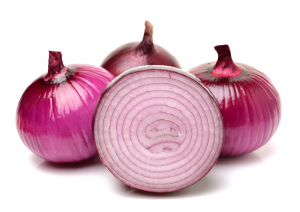
Researchers from Wageningen University & Research (WUR) have unraveled the onion genome, a breakthrough that will help speed up the development of new onion varieties that are resistant to various stresses such as drought and meet the world's growing demand for onions. Onion is one of the most widely grown vegetables in the world and an important part of people's diet and many countries' cuisines.

Researchers from The University of Western Australia (UWA) and The UWA Institute of Agriculture in collaboration with the University of Melbourne have developed tools to identify plant genes that are resistant to disease-causing fungi and deploy them to create more resistant crops.The researchers looked at the evolution of the resistance genes against blackleg to develop a durable resistance mechanism to the disease.
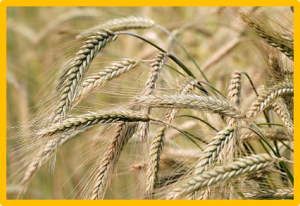
Phenotypic information of crop genetic resources is a prerequisite for an informed selection that aims to broaden the genetic base of the elite breeding pools. We investigated the potential of genomic prediction based on historical screening data of plant responses against the Barley yellow mosaic viruses for populating the bio-digital resource center of barley.
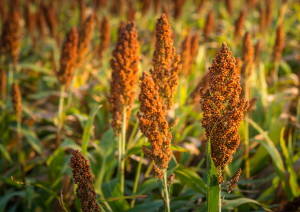
A study by a research group in Australia used recent advances in gene sequencing and mapping to develop new sorghum populations using crop wild relatives and local varieties collected from a range of environments across Africa. The different traits of these wild relatives offer potential adaptability to climate change. This new, expansive set of genes and traits from different environments will accelerate and improve the development of new, resilient sorghum varieties adapted to a range of localities and conditions.
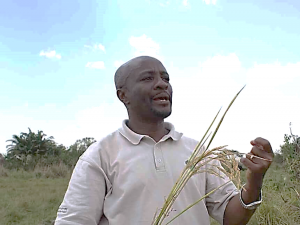
Nigerian scientists and partners met in Abuja to commence compiling a dossier for the national performance trial on genetically engineered (GE) rice called nitrogen-efficient, water-efficient, salt-tolerant (NEWEST) rice. The final dossier will be submitted to the National Biosafety Management Agency, which is tasked to regulate GE crops in the country.
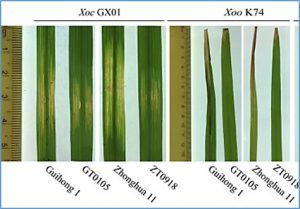
Xanthomonas oryzae (Xo) is one of the important pathogenic bacterial groups affecting rice production. Its pathovars Xanthomonas oryzae pv. oryzae (Xoo) and Xanthomonas oryzae pv. oryzicola (Xoc) cause bacterial blight and bacterial leaf streak in rice, respectively. Xo infects host plants by relying mainly on its transcription activator-like effectors (TALEs) that bind to host DNA targets, named effector binding elements (EBEs), and induce the expression of downstream major susceptibility genes. Blocking TALE binding to EBE could increase rice resistance to the corresponding Xo.