


News & Events

Just days after the UN Food Systems Summit in New York (September 23), the youth led World Food Forum (WFF) holds its first flagship event in Rome on October 1-5, bringing together people from diverse sectors around the world to galvanize global action following up to the Summit.The five-day flagship event aims to spur actions by youth to help shape the future of food and agriculture.
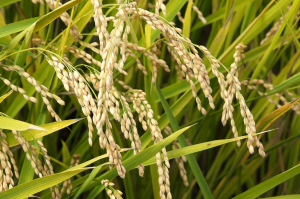
Experts from the Colombian Corporation of Agricultural Research and partners identified the genes linked to abiotic stress tolerance in upland rice cultivars (Llanura11 and Porvenir12) adapted to acid soils using CRISPR-Cas9. Their findings are published in Research Square.Five candidate stress tolerance genes were selected to know more about the allelic variation in commercial Colombian tropical japonica upland rice cultivars adapted to drought-prone acid soil environments.
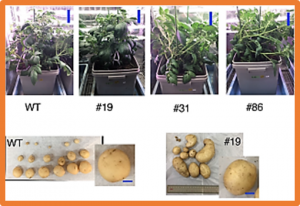
The potato tuber starch trait is changed depending on the composition of amylose and amylopectin. The amount of amylopectin is determined by the activity of the starch branching enzymes SBE1, SBE2, and SBE3 in potato. SBE3, a homolog of rice BEI, is a major gene that is abundant in tubers. In this study, we created mutants of the potato SBE3 gene using CRISPR/Cas9 attached to the translation enhancer dMac3. Potato has a tetraploid genome, and a four-allele mutant of the SBE3 gene is desired. Mutations in the SBE3 gene were found in 89 of 126 transformants of potato plants.
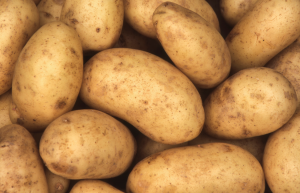
Tokyo University of Science researchers explored the potato tuber starch trait by developing potato mutants lacking a starch branching enzyme gene using CRISPR-Cas9 attached to the translation enhancer dMac3. Their findings are published in J-stage Plant Biotechnology journal.The potato tuber starch trait can be altered based on the composition of amylose and amylopectin. The amount of amylopectin depends on the activity of starch branching enzymes, and one of which is abundant in tubers is SBE3.

In a press release, the group seeks President Macron's support to a major initiative to reduce EU dependence on synthetic pesticides, during the next presidency of the EU Council of Ministers beginning January 1, 2022. The AFBV points out that this goal can only be achieved if there are alternatives with the same efficiency characteristics. Among these, AFBV highlights the value of creating plant varieties that are genetically resistant to diseases or predators and which require fewer pesticides to be protected.
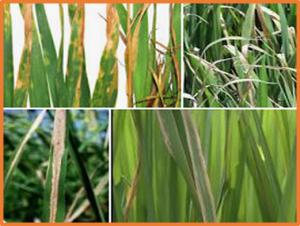
In autumn 2020, leaf blight was observed on rice (Oryza sativa L., variety Zhongzao39, Yongyou9, Yongyou12, Yongyou15, Yongyou18, Yongyou1540, Zhongzheyou8, Jiafengyou2, Xiangliangyou900 and Jiyou351) in the fields of 17 towns in Zhejiang and Jiangxi Provinces, China. The disease incidence was 45%-60%. Initially, water-soaked, linear, light brown lesions emerged in the upper blades of the leaves, and then spread down to leaf margins, which ultimately caused leaf curling and blight during the booting-harvest stage (Fig. S1)
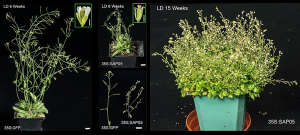
Researchers from the Hogenhout group at the John Innes Centre and their collaborators have identified a manipulation molecule produced by Phytoplasma bacteria to hijack plant development. Inside a plant, this protein causes the breakdown of key growth regulators, triggering abnormal growth.Phytoplasma are microbes that are notorious for their ability to reprogram their host plants' development. This group of bacteria is often responsible for the excessive number of branches in trees grown close together called ‘witches' brooms'.
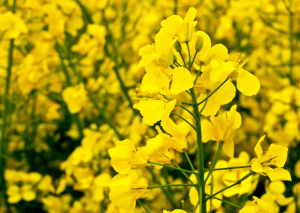
Australia's Office of the Gene Technology Regulator (OGTR) has issued license DIR 178 to BASF Australia Ltd., authorizing the commercial release of canola genetically modified (GM) for herbicide tolerance and a hybrid breeding system. The GM canola will be released throughout Australia. The GM canola and products derived from it may enter general commerce, including use in human food and animal feed.

The concept of genetically modified foods is becoming increasingly popular. Consumer attitude towards GMOs is influenced by various factors, including food safety, quality, and taste. This shows the dire need to understand current consumer attitudes towards GMO (genetically modified organism) products, especially since there are growing concerns locally and globally related to their health, finance, and environmental safety. Hence, the study's objective is to determine the extent to which government information influences and changes current consumer attitude of GMOs. Once consumers were “forced” to read a trusted scientific statement on the safety of GMOs, their concerns about whether is bad for your health or caused cancer decreased significantly.

Consumer attitudes towards genetically modified organisms (GMOs) and their products require continuous research to help address local and international concerns about consumer health and environmental safety. In a recent study, it was found that consumers' concerns are decreased significantly when they are continuously exposed to a science-based message by a trusted organizational body.
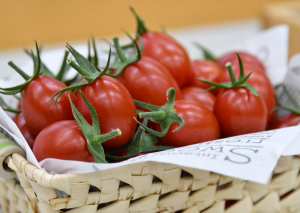
Sanatech Seed Co., Ltd., together with its partner for sales Pioneer EcoScience Co, Ltd., has announced that the commercial sales of Sicilian Rouge High GABA, their genome-edited tomatoes with increased gamma-aminobutyric acid (GABA) will begin on September 15, 2021.Developed in collaboration with the University of Tsukuba, the genome-edited high-GABA tomato was launched in seedling gardening kits in May 2021 and was received positively by their home gardener consumer panel.
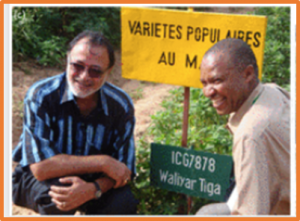
The narrow genetics of most crops is a fundamental vulnerability to food security. This makes wild crop relatives a strategic resource of genetic diversity that can be used for crop improvement and adaptation to new agricultural challenges. Here, we uncover the contribution of one wild species accession, Arachis cardenasii GKP 10017, to the peanut crop (Arachis hypogaea) that was initiated by complex hybridizations in the 1960s and propagated by international seed exchange. However, until this study, the global scale of the dispersal of genetic contributions from this wild accession had been obscured by the multiple germplasm transfers, breeding cycles, and unrecorded genetic mixing between lineages that had occurred over the years.