


News & Events
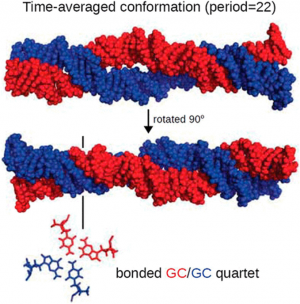
How homologous DNA duplexes in chromosomes are checked for correct alignment prior to exchange of genetic information during meiosis in Eukaryotes is a longstanding puzzle, a gap in our knowledge of the molecular processes essential for evolution in the more complex cellular organisms that include fungi, plants, and primates. A mechanism to check correct alignment of homologous DNA duplexes prior to committing to irreversible recombination is essential to limit the usually disastrous consequences of scrambling DNA sequences at random.
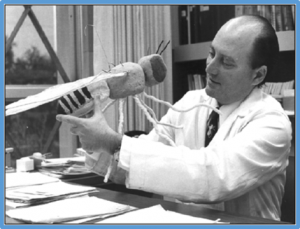
For most life on Earth, the rising and setting of the sun coincides with daily patterns of activity. However, biological organisms have internal clocks that orchestrate their daily rhythms even in the absence of sunlight. These circadian rhythms, which set the schedule for the sleep–wake cycle, are the reason people feel jetlag when crossing time zones. On a cellular level, circadian rhythms control patterns in metabolism and other biological processes that fluctuate throughout the course of a day.
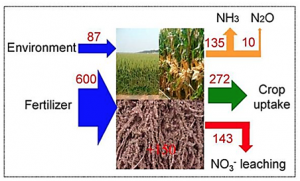
Hundreds of millions of smallholders in emerging countries substantially overuse nitrogen (N) fertilizers, driving local environmental pollution and global climate change. Despite local demonstration-scale successes, widespread mobilization of smallholders to adopt precise N management practices remains a challenge, largely due to associated high costs and complicated sampling and calculations. Here, we propose a long-term steady-state N balance (SSNB) approach without these complications that is suitable for sustainable smallholder farming. The hypothesis underpinning the concept of SSNB is that an intensively cultivated soil–crop system with excessive N inputs and high N losses can be transformed into a steady-state system with minimal losses while maintaining high yields.
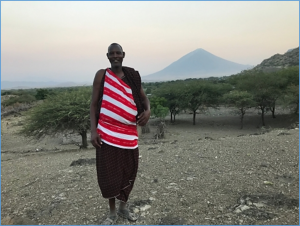
All seems at peace. Just the sound of bleating goats and clanging tin cooking pots ring out over the land as the sun sets between Tanzania’s Lake Natron and the mountain of Ol Doinyo Lengai, meaning ‘Mountain of God’ in the Maasai language. These two powerful symbols of nature make the village of Engaresero spectacularly unique. The Maasai pastoralists who have occupied the land for over two hundred years lead a semi-nomadic existence following a strict pattern of land rotation that ensures certain areas are left fallow for several months at a time.
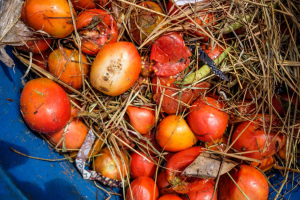
Transforming agri-food systems to make them more efficient, inclusive and sustainable is key to prevent food loss and waste from continuing to undermine efforts to eradicate hunger, improve nutrition and reduce the strain on natural resources and the environment. This was the message that resonated today from an event during which the Food and Agriculture Organization of the United Nations (FAO), and the United Nations Environment Programme (UNEP), together with partners, marked International Day of Awareness of Food Loss and Waste.
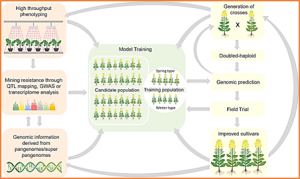
Quantitative resistance (QR) has long been utilized to manage blackleg in Brassica napus (canola, oilseed rape), even before major resistance genes (R-genes) were extensively explored in breeding programmes. In contrast to R-gene-mediated qualitative resistance, QR reduces blackleg symptoms rather than completely eliminating the disease. As a polygenic trait, QR is controlled by numerous genes with modest effects, which exerts less pressure on the pathogen to evolve; hence, its effectiveness is more durable compared to R-gene-mediated resistance. Furthermore, combining QR with major R-genes has been shown to enhance resistance against diseases in important crops, including oilseed rape.
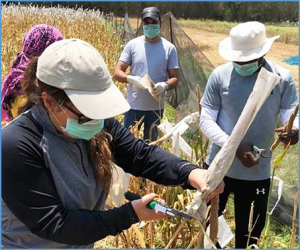
Efforts to curtail the COVID-19 pandemic have sent shockwaves across the globe. The immediate measures to preserve human life and bring the health crisis under control have been wholly necessary, but as restrictions on modern life remain in place for months to come, disruptions to food systems will inevitably become more acute. The number of hungry people, already at 800 million, could double as part of the wider fallout from the pandemic.
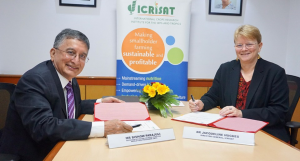
The United Nations World Food Programme (WFP) and the International Crops Research Institute for the Semi-Arid Tropics (ICRISAT) will partner on programs and research to improve food, nutrition security and livelihoods in India against the impacts of climate change.A Memorandum of Understanding (MoU) was signed today between Mr. Bishow Parajuli, WFP India Representative and Country Director, and Dr. Jacqueline Hughes, Director General, ICRISAT.
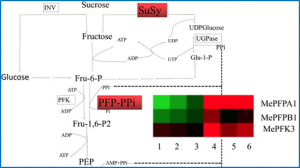
We identified 13 MePFK genes and characterised their sequence structure. The phylogenetic tree divided the 13 genes into two groups: nine were MePFKs and four were pyrophosphate-fructose-6-phosphate phosphotransferase (MePFPs). We confirmed by green fluorescent protein fusion protein expression that MePFK03 and MePFPA1 were localised in the chloroplast and cytoplasm, respectively.
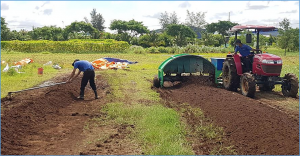
The Council for Partnership on Rice Research in Asia (CORRA) recently hosted an online science webinar entitled “Rice Straw Management: Scaling GHG Emission-Reducing Technologies and Practices” that presented different options for repurposing the rice byproduct, as an alternative to the practice of rice straw burning.Every year, over 600 million tonnes of rice straw is produced after rice harvesting globally.
Emphasizing the need to "produce more with less", QU Dongyu, Director-General of the Food and Agriculture Organization of the United Nations (FAO), today urged all stakeholders in agri-food systems to upscale science and innovation and find "effective and long-lasting solutions" to support biodiversity.The agri-food sector is a key player in the management of biodiversity as well as its custodian, he said in his opening remarks at the 18th Regular Session of the Commission on Genetic Resources for Food and Agriculture (CGRFA).
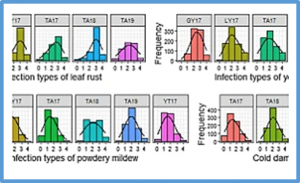
Wheat is a major staple food crop and provides more than one-fifth of the daily calories and dietary proteins for humans. Genome-wide association study (GWAS) and genomic selection (GS) for wheat stress resistance and tolerance related traits are critical to understanding their genetic architecture for improvement of breeding selection efficiency. However, the insufficient marker density in previous studies limited the utility of GWAS and GS in wheat genomic breeding. Here, we conducted a high-resolution GWAS for wheat leaf rust (LR), yellow rust (YR), powdery mildew (PM), and cold tolerance (CT) by genotyping a panel of 768 wheat cultivars using genotyping-by-sequencing.