


News & Events
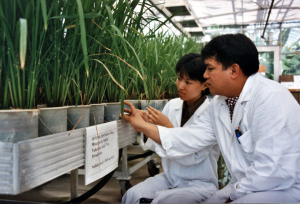
Eliminating world hunger by the end of the decade requires urgent action and innovative solutions to the way we produce, distribute and consume food, QU Dongyu, the Director-General of the Food and Agriculture Organization (FAO), said today in a message to the UN’s Climate Change Conference (COP26). The number of undernourished people rose to 811 million last year, and the climate crisis is just another major driver of malnutrition and poverty along with conflict and other humanitarian emergencies.
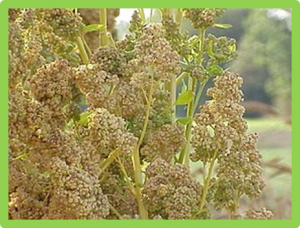
Quinoa (Chenopodium quinoa) has been under cultivation in Latin America for more than 7500 years. Recently, quinoa has gained increasing attention due to its stress resistance and its nutritional value. We generated a novel quinoa genome assembly for the Bolivian accession CHEN125 using PacBio long-read sequencing data (assembly size 1.32 Gbp, initial N50 size 608 kbp). Next, we re-sequenced 50 quinoa accessions from Peru and Bolivia. This set of accessions differed at 4.4 million single-nucleotide variant (SNV) positions compared to CHEN125 (1.4 million SNV positions on average per accession). We show how to exploit variation in accessions that are distantly related to establish a genome-wide ordered set of contigs for guided scaffolding of a reference assembly.
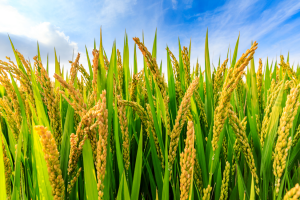
Researchers from Jiangsu University and Jiangsu Academy of Agricultural Sciences found a hydrothermal approach that is effective in improving a novel rice with potential benefits to patients with diabetes and kidney diseases. The results are reported in Foods journal. The researchers used heat-moisture treatment (HMT) as a simple and effective method in reinforcing the nutritional benefits of sbeIIb/Lgc1 rice, which has grains rich in resistant starch but low in glutelin.

The FAO Director-General, QU Dongyu, today addressed the Joint Meeting of the 132nd Session of the Programme Committee and the 188th Session of the Finance Committee, two of FAO’s governing bodies that report to the FAO Council, which will meet from 29 November to 3 December. In his opening remarks, the Director-General showed his satisfaction by the fact that the two committees resumed their in-person meetings, in a hybrid format which also includes online participation.
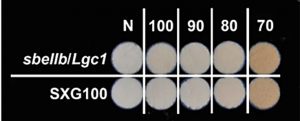
A novel rice germplasm sbeIIb/Lgc1 producing grains rich in resistant starch (RS) but low in glutelin has been developed through CRISPR/Cas9-mediated targeted mutagenesis for its potential benefits to patients with diabetes and kidney diseases. In this study, a hydrothermal approach known as heat-moisture treatment (HMT) was identified as a simple and effective method in reinforcing the nutritional benefits of sbeIIb/Lgc1 rice. As a result of HMT treatment at 120 °C for 2 h, significant reductions in in vitro digestibility and enhancements in RS content were observed in sbeIIb/Lgc1 rice flour when the rice flour mass fraction was 80% and 90%.
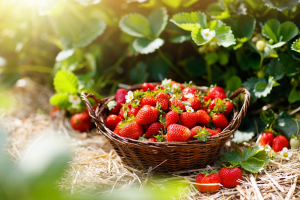
A combined team of researchers from the private sector has teamed up with the intention of launching the first commercially available, gene-edited strawberry in the near future. The product is expected to reduce fresh strawberry waste by consumers due to poor storage.The venture will use gene editing technologies like CRISPR-Cas9 and other tools in strawberry development to improve the fruit's shelf life.
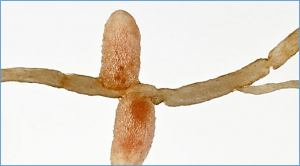
Scientists have discovered the genetics of how legumes control the production of an oxygen-carrying molecule that is crucial to the plant's close relationship with nitrogen-fixing bacteria.The roots of legumes are home to symbiotic bacteria that fix nitrogen from the air, turning it into ammonia, a key nutrient for plants. In return, the plants house the bacteria in root nodules, providing sugars and oxygen.
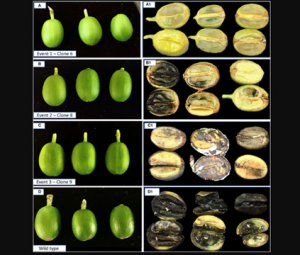
Coffea spp. are tropical plants used for brewing beverages from roasted and grounded seeds, the favorite drink in the world. It is the most important commercial crop plant and the second most valuable international commodity after oil. Global coffee trade relies on two Coffea species: C. arabica L. (arabica coffee) comprising 60% and C. canephora (robusta) comprising the remaining 40%.Arabica coffee has lower productivity and better market price than robusta. Arabica coffee is threatened by disease (i.e., coffee leaf rust), pests [i.e., Hypothenemus hampei or coffee berry borer (CBB) and nematodes]
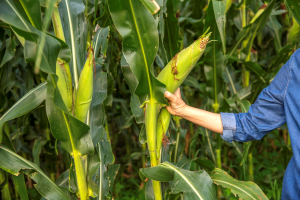
Most Filipino farmers think that implementing a ban on biotech crops is incorrect due to their long history of safe use. This is according to the results of a survey on the perception of Filipino farmers on the banning of biotech crops implemented by the Philippine Supreme Court in 2015. The study used a standardized questionnaire, which was administered through face-to-face interviews with 111 biotech corn farmers in Pampanga.
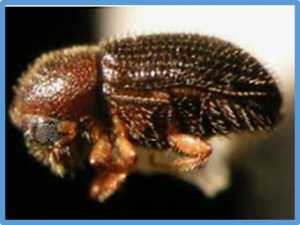
Coffee is the second most valuable international crop commodity after oil, and the coffee berry borer (CBB) is one of the main factors that threaten its global trade. Now for the first time, scientists reported the stable transformation and expression of the Cry10Aa protein in Arabica coffee plants with the potential to control the CBB.The study is a continuation of a protocol that was previously developed for the stable genetic transformation and successful plant regeneration of the Arabica coffee trees with Cry10Aa Bt toxin expression to induce CBB resistance.
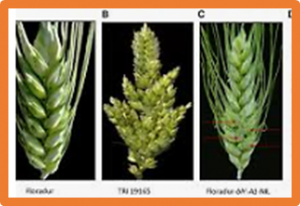
Wheat grain protein content (GPC) is an important quality indicator. The GPC of wheat grown in the middle and lower reaches of the Yangtze River is often low. Marker-assisted selection (MAS) is an effective tool for improving quantitative traits; however, most markers have not been effectively applied in GPC improvement except Gpc-B1, although many loci associated with GPC were identified. In this study, linkage analysis using a recombinant inbred line population from the cross of core parents of Ningmai 9 and Yangmai 158 and association mapping using the local cultivated varieties were performed and nine candidate intervals were identified.
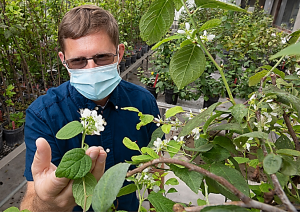
Scientists at the U.S. Department of Agriculture's Agricultural Research Service (ARS) have worked with NASA to develop a continuous flowering plum plant to help astronauts maintain healthy diets during those extended voyages. According to Chris Dardick, lead scientist and plant molecular biologist at the ARS Appalachian Fruit Research Station, most fruits that are key components of our diet.