


News & Events
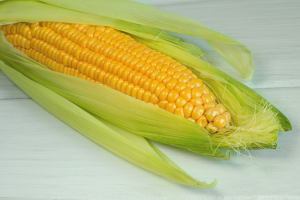
A maize transporter responsible for the regulation of iron and zinc in balance in maize was identified by a team of Chinese scientists. The discovery provides opportunities for genetic resources and a theoretical basis for developing iron-fortified corn varieties. Scientists from the Biotechnology Research Institute and Qingdao Agricultural University were responsible for identifying the novel iron-regulated transporter ZmIRT2
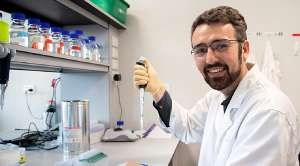
A scientist from the University of Western Australia was awarded the 2022 Science and Innovation Award by the Australian government, which will provide funds for his research on preventing crop frost damage using bacteria. The research aims to alleviate frost damage in Australian crops, which costs farmers AU$400 million each year. Jaco Zandberg is a molecular biologist who helped identify Pseudomonas, a bacteria linked to severe frost damage in grain crops.
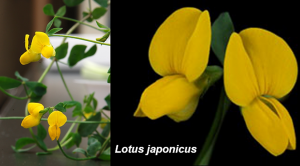
Legumes attract symbiotic bacteria and create de novo root organs called nodules. Nodule development consists of bacterial infection of root epidermis and subsequent primordium formation in root cortex, steps that need to be spatiotemporally coordinated. The Lotus japonicus mutant “daphne” has uncoupled symbiotic events in epidermis and cortex, in that it promotes excessive bacterial infection in epidermis but does not produce nodule primordia in cortex.
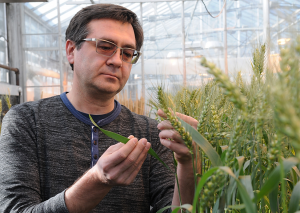
Researchers from Kansas State University (K-State) have published the results of their work that characterized numerous wheat genes duplicated thousands of years ago to understand how they control the crop's yield and other desirable traits.Led by Eduard Akhunov, wheat geneticist and director of K-State's Wheat Genetic Resources Center, said his team's research may lead to greater opportunities for breeders to perform “targeted breeding” that can increase grain size and number – ultimately increasing yields.
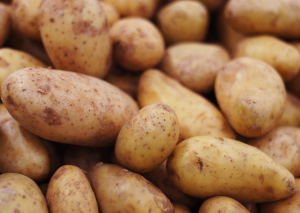
For the first time, researchers from the Ludwig Maximilian University in Munich and the Max Planck Institute for Plant Breeding Research in Cologne have completely decoded the highly complex genome of the potato. The researchers, led by geneticist Korbinian Schneeberger from the Max Planck Institute for Plant Breeding Research have now succeeded in assembling the first complete genome of the potato, a breakthrough that paves the way for breeding new and robust varieties
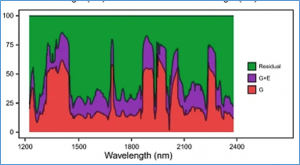
Genomic selection is a powerful tool to assist breeding of complex traits, but a limitation is the costs required for genotyping. Recently, phenomic selection has been suggested, which uses spectral data instead of molecular markers as predictors. It was shown to be competitive with genomic prediction, as it achieved predictive abilities as high or even higher than its genomic counterpart. The objective of this study was to evaluate the performance of phenomic prediction for triticale and the dependency of the predictive ability on the genetic architecture of the target trait
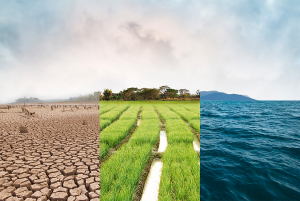
The latest report from the United Nations Intergovernmental Panel on Climate Change (IPCC) reveals that despite efforts to reduce the risks, human-induced climate change is causing dangerous and widespread disruption in nature and affecting the lives of billions of people around the world. People and ecosystems least able to cope are being hardest hit, said scientists in the IPCC report.
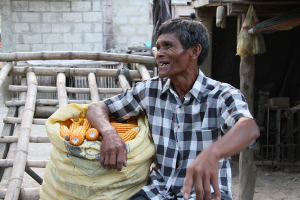
The amendments in the Joint Department Circular No. 01 of 2021 by the Department of Science and Technology (DOST), Department of Agriculture (DA), Department of Environment and Natural Resources (DENR), Department of Health (DOH), and the Department of Interior and Local Government (DILG) were completed last year, after careful review of the JDC of 2016 that replaced the DA Administrative Order No. 8.
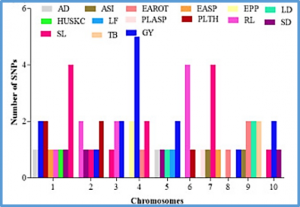
Maize (Zea mays L.) production is constrained by drought and heat stresses. The combination of these two stresses is likely to be more detrimental. To breed for maize cultivars tolerant of these stresses, 162 tropical maize inbred lines were evaluated under combined heat and drought (CHD) and terminal drought (TD) conditions. The mixed linear model was employed for the genome-wide association study using 7834 SNP markers and several phenotypic data including, days to 50% anthesis (AD) and silking (SD)
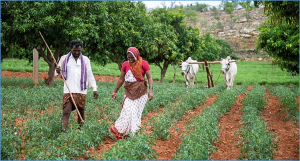
“A recently published study highlighted Integrated Farming System (IFS) as most profitable and resilient amongst the four major farming systems viz. Black gram-based (BFS), Paddy-based (PFS), Dryland Farming System (DFS) and Integrated Farming Systems (IFS). Whole-farm Integrated Assessment Tool, a rule-based dynamic simulation model, was used to study the performance of these major farming systems in the state of Tamil Nadu, India.
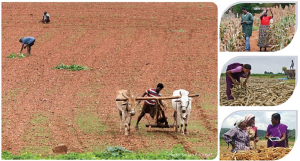
ICRISAT News: Anyone familiar with the combination of ‘biological material’ (high yielding varieties and hybrids), ‘water’ (assured irrigation), and ‘chemical inputs’ (fertilizers and plant protection chemicals) as the key to success in irrigated agriculture will be gullible to use the same principles for improving farming in the dryland ecosystems. The solutions to improving livelihoods in drylands, however, are far more complex and multifaceted.
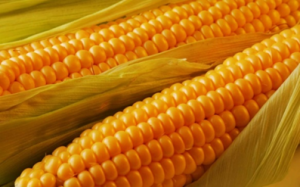
Water shortage caused by long-term drought is one of the most serious abiotic stress factors in maize. Different drought conditions lead to differences in growth, development, and metabolism of maize. In previous studies, proteomics and genomics methods have been widely used to explain the response mechanism of maize to long-term drought, but there are only a few articles related to metabolomics. In this study, we used transcriptome and metabolomics analysis to characterize the differential effects of drought stress imposed at seedling or flowering stages on maize.