


News & Events
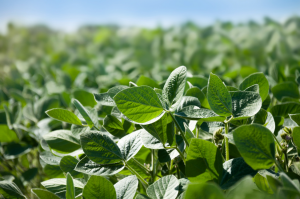
Plants cannot speak up to ask for water when they are thirsty. They only show signs of water loss when they are almost dried up. A study reported in ACS Applied Materials & Interfaces presents a new wearable technology that can be used to detect water loss earlier before plants show signs of thirst. Plant-wearable technology could be used by farmers to monitor their plants' health, particularly the leaf water content, which is an indicator of metabolism and drought stress.

The World Food Prize Foundation has named former farmer and NASA climate scientist Dr. Cynthia Rosenzweig the 2022 World Food Prize Laureate for her pioneering work in modeling the impact of climate change on food production worldwide.The award announcement was made during a ceremony hosted by the U.S. Department of State on May 5, 2022. Barbara Stinson, President of the World Food Prize Foundation, made the announcement of the 2022 Laureate
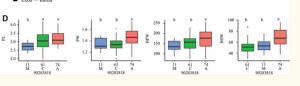
Cystathionine γ-synthase (CGS), methionine γ-lyase (MGL), cystathionine β-lyase (CBL) and cystathionine γ-lyase (CGL) share the Cys_Met_Meta_PP domain and play important roles in plant stress response and development. In this study, we defined the genes containing the Cys_Met_Meta_PP domain (PF01053.20) as CBL-like genes (CBLL). Twenty-nine CBLL genes were identified in the peanut genome, including 12 from cultivated peanut and 17 from wild species.
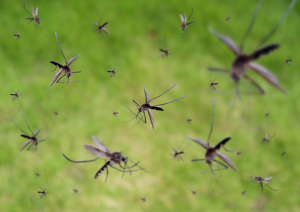
Oxitec has announced the approval from the Florida Department of Agriculture and Consumer Services (FDACS), including reviews from seven state agencies to continue the pilot project for its safe Aedes aegypti just-add-water mosquito control technology in the Florida Keys. In March this year, the U.S. Environmental Protection Agency (EPA) approved the continuation of the pilot project as an extension of the Experimental Use Permit (EUP) granted in 2020.
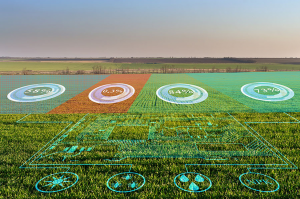
A team led by researchers from the University of Minnesota's Digital Agriculture Group has significantly improved the performance of numerical predictions for agricultural nitrous oxide emissions. The researchers developed the first-of-its-kind knowledge-guided machine learning model for agroecosystem called KGML-ag. KGML-ag was constructed using a special procedure that incorporates knowledge from an advanced agroecosystem computational model, called ecosys.
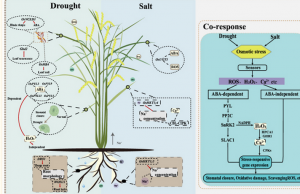
Drought and salinity stresses are significant abiotic factors that limit rice yield. Exploring the co-response mechanism to drought and salt stress will be conducive to future rice breeding. A total of 1748 drought and salt co-responsive genes were screened, most of which are enriched in plant hormone signal transduction, protein processing in the endoplasmic reticulum, and the MAPK signaling pathways.
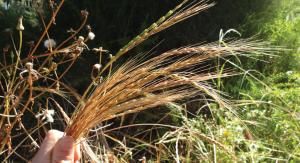
An international team including scientists from the King Abdullah University of Science and Technology (KAUST) has identified a stem rust resistance gene in a wild relative and transferred it to common wheat. The scientists found the gene in Aegilops sharonensis, a wild relative of wheat found in Israel and southern Lebanon. The new transgenic wheat lines show high levels of resistance to the stem rust pathogen.
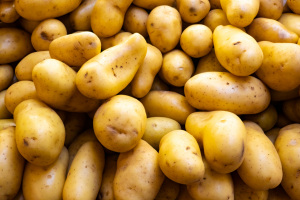
Scientists at Texas A&M University explored the ability of the CRISPR-Cas9 system to knock out four copies of a gene in the tetraploid potato. The results of this two-part study are published in the International Journal of Molecular Sciences and Plant Cell, Tissue and Organ Culture. Potato is an important crop and ranks fourth worldwide among all the food crops, only behind maize, rice, and wheat in terms of global production tonnage. In addition to its use as food, potato starch has many applications in processed food, paper, adhesive, and textile industries.
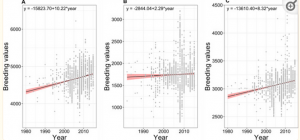
Estimating genetic trends using historical data is an important parameter to check the success of the breeding programs. The estimated genetic trends can act as a guideline to target the appropriate breeding strategies and optimize the breeding program for improved genetic gains. In this study, 17 years of historical data from IRRI's rice drought breeding program was used to estimate the genetic trends and assess the breeding program's success.

The National Institute of Agricultural Botany (NIAB) welcomed the announcement that the UK Government will bring forward new primary legislation, The Genetic Technology (Precision Breeding) Bill. This Bill will ease the application of particular precision breeding techniques that will not need to go through the restrictive rules for genetically modified crops since the resulting plants could have been a product of natural selection or conventional breeding.
Following a thorough safety assessment, Food Standards Australia New Zealand (FSANZ) granted the approval for foods derived from HB4® Wheat to enter the market as imported food products. In their approval report released on May 6, 2022, FSANZ stated that no public health and safety concerns were identified, and that food derived from wheat line IND-00412-7 is considered to be as safe for human consumption as food derived from conventional non-GM wheat cultivars.
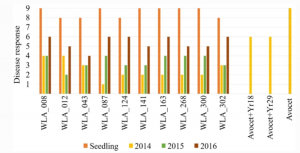
Wheat stripe rust (YR) caused by Puccinia striiformis f. sp. tritici (Pst) poses a significant threat to global food security. Resistance genes commonly found in many wheat varieties have been rendered ineffective due to the rapid evolution of the pathogen. To identify novel sources of adult plant resistance (APR), 292 accessions from the N.I. Vavilov Institute of Plant Genetic Resources, Saint Petersburg, Russia, were screened for known APR genes (i.e. Yr18, Yr29, Yr46, Yr33, Yr39 and Yr59) using linked polymerase chain reaction (PCR) molecular markers.