


News & Events
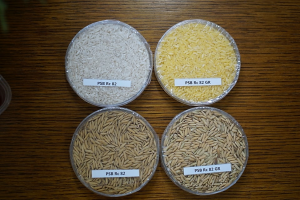
The Philippine Rice Research Institute (PhilRice) announced that it has chosen the province of Lanao del Norte to identify a farmer cooperative that will plant Golden Rice as part of the seed production in preparation for the distribution to households in the Philippines. In the media briefing Talakayan sa PIA held on May 17, 2022, broadcasted by the Philippine Information Agency (PIA) Region 10, Dr. Ronan Zagado, Program Leader of Golden Rice-Project Management Office of the Department of Agriculture-PhilRice,

The European Commission has authorized two genetically modified (GM) crops for food and animal feed. The Commission's authorization decision does not allow for the cultivation of the two GM crops, maize, and soybeans, for cultivation in the EU. The GM crops have gone through a comprehensive and stringent authorization procedure, which ensures a high level of protection of human and animal health, and of the environment. The European Food Safety Authority (EFSA) has issued a favorable scientific assessment concluding that these GM crops are as safe as their conventional counterparts.
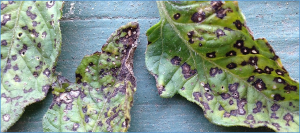
Tomato (Solanum Lycopersicum) is widely consumed and cultivated in the world. Gray leaf spot (GLS), caused by Stemphylium lycopersici (S. lycopersici), is one of the most devastating diseases in tomato production. To date, only one resistance gene, Sm, which confers high resistance against GLS disease, has been identified in the wild tomato species Solanum pimpinellifolium. This resistance locus (comprising the Sm gene) has been transferred into the cultivated variety ‘Motelle’.
Health Canada released the much-awaited clarification on the regulation of plant breeding innovations, including gene editing. The new policy is based on public consultations held in 2021. On May 18, 2022, Health Canada published the new guidance indicating that gene-edited crops that meet the categories set for food that is not considered novel food can be treated like conventional crops, and would not be required to go through the pre-market safety evaluation applied for genetically engineered crops.

The Philippine Department of Agriculture (DA) published the rules and procedures for the evaluation of products of plant breeding innovations (PBI). The regulations, marked as Memorandum Circular No. 8, Series of 2022 (MC8), provide a science-based and efficient process for assessment and determination of gene-edited plants if they are to be considered genetically engineered (GE) or not.
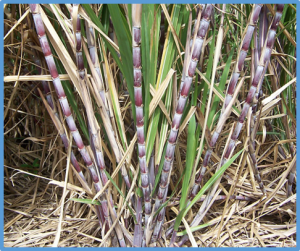
Sugarcane, with its exceptional carbon dioxide assimilation, biomass and sugar yield, has a high potential for the production of bio-energy, bio-plastics and high-value products in the food and pharmaceutical industries. A crucial challenge for long-term economic viability and environmental sustainability is also to optimize the production of biomass composition and carbon sequestration. Sugarcane varieties such as KQ228 and Q253 are highly utilized in the industry.

Scientists at Georgia State University have created gene-edited hamsters using CRISPR-Cas9 gene editing technology to study social neuroscience and found that the biology behind social behavior may be more complex than previously thought. The research team led by Regents' Professor of Neuroscience H. Elliott Albers and Distinguished University Professor Kim Huhman used CRISPR-Cas9 technology to eliminate the actions of a neurochemical signaling pathway that plays a critical role in regulating social behaviors in mammals.

The global CRISPR technology market is estimated at US$2,251.21 million in 2021 and is projected to reach US$6,453.96 million by 2027. A compound annual growth rate of 19.45% is expected from 2022 to 2027, according to the latest report on the CRISPR technology market released by ReportLinker.
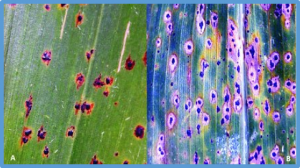
Tar spot complex (TSC) is a major foliar disease of maize in many Central and Latin American countries and leads to severe yield loss. To dissect the genetic architecture of TSC resistance, a genome-wide association study (GWAS) panel and a bi-parental doubled haploid population were used for GWAS and selective genotyping analysis, respectively. A total of 115 SNPs in bin 8.03 were detected by GWAS and three QTL in bins 6.05, 6.07, and 8.03 were detected by selective genotyping.

The Framework for Responsible Use of Gene Editing in Agriculture was developed by the Coalition for Responsible Gene Editing in Agriculture. It is meant to increase transparency and stakeholder engagement to build trust in the products derived through gene editing and those using them and is continuously getting the support of organizations in the biotech field.
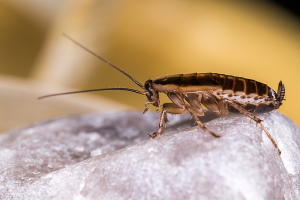
Kyoto University and Institute of Evolutionary Biology (CSIC-Universitat Pompeu Fabra) scientists presented a simple and efficient technique for gene editing in insects. Their study is detailed in Cell Reports Methods. Insects provide diversity and limitless possibilities for research tools that can help provide answers to fundamental questions about life. Gene editing of insects usually requires microinjection of materials into embryos, which is challenging in most species
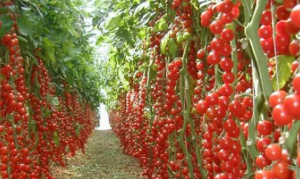
Meiotic recombination is a biological process of key importance in breeding, to generate genetic diversity and develop novel or agronomically relevant haplotypes. In crop tomato, recombination is curtailed as manifested by linkage disequilibrium decay over a longer distance and reduced diversity compared with wild relatives. Here, we compared domesticated and wild populations of tomato and found an overall conserved recombination landscape, with local changes in effective recombination rate in specific genomic regions.