


News & Events

The online event is the second of three webinars and aims to orient the public in contextualizing the need for additional guidance materials on risk assessment within ongoing debates about gene drives. It will feature Dr. Heidi Mitchell of the Office of the Gene Technology Regulator in Australia, Dr. Vibha Ahuja of the Biotech Consortium Ltd. in India, and Dr. Hector Quemada of the Western Michigan University. Dr. Saturnina C. Halos of the Biotechnology Coalition of the Philippines will moderate the discussions.
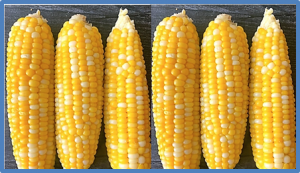
Kernel size and weight are key traits that contribute greatly to grain yield per year in maize (Zea mays). Here, we developed the chromosome segment substitution line (CSSL), H15-6-2, with smaller kernel size and lower kernel weight across environments compared to the background line Ye478. Histological analysis suggested that a slower kernel filling rate of H15-6-2 contributes to its small-kernel size and reduced hundred-kernel weight. We identified a quantitative trait locus (QTL) explaining 23% of the phenotypic variation in hundred-kernel weight.
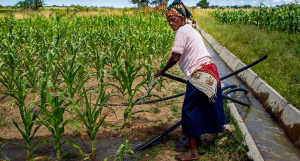
The International Crops Research Institute for the Semi-Arid Tropics (ICRISAT) project, 'Transforming Irrigation systems in Southern Africa (TISA)', has won the 2022 EFMD Excellence in Practice Gold Award in the Ecosystem Development category. The project is funded by the Australian Centre for International Agricultural Research (ACIAR) and in collaboration with the University of South Australia (UniSA) and the Australian National University
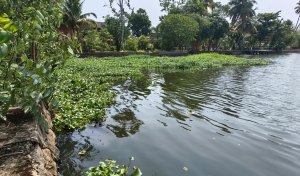
The World Environment Day 2022 calls for living sustainably in harmony with nature, where efficient use of resources leads to development. At the International Crops Research Institute for the Semi-Arid Tropics (ICRISAT), researchers have taken this as a challenge and come up with many solutions. One interesting solution is the potential of the proliferating weed named Water Hyacinth and how this waste can be transformed into wealth.
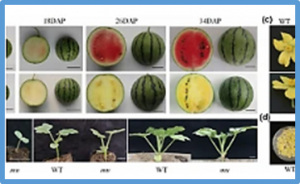
Watermelon (Citrullus lanatus) has a colorful flesh that attracts consumers and benefits human health. We developed an ethyl-methanesulfonate mutation library in red-fleshed line ‘302’ to create new flesh color lines and found a yellow-fleshed mutant which accumulated ζ-carotene. The initial yellow color of this mutant can be photobleached within 10 min under intense sunlight. A long-term light-emitting diode (LED) light treatment turned flesh color from yellow to pink. We identified this unique variation as photosensitive flesh mutant (‘psf’). Using bulked segregant analysis, we fine-mapped an EMS-induced G-A transversion in ‘psf’ which leads to a premature stop codon in 15-cis-ζ-carotene isomerase (ClZISO) gene.
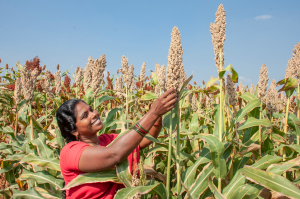
Our food production, processing and distribution systems are intricately linked with the environment. Sunlight, water, nutrients and a diversity of plants, animals and microbes all have fundamental roles in agricultural production and global food security. Agricultural biodiversity comprises the diversity of genetic resources and species used in agriculture directly or indirectly, including species that support production (e.g., soil organisms and pollinators) and broader ecosystems within which agriculture takes place

To commemorate this year’s World Food Safety Day (7 June) under the theme Safer food, better health, the International Livestock Research Institute (ILRI) has launched an online food safety campaign and landing page to showcase its collaborative research on risk-based approaches to improving food safety in low- and middle-income countries. Visit the landing page to read key food safety messages as well as the latest food safety news from ILRI and information on projects and selected publications.
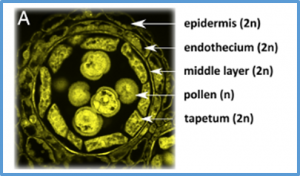
The surface of pollen grains is reinforced by pollen wall components produced noncell autonomously by tapetum cells that surround developing pollen within the male floral organ, the anther. Here, we show that tapetum activity is regulated by the GASSHO (GSO) receptor-like kinase pathway, controlled by two sulfated peptides, CASPARIAN STRIP INTEGRITY FACTOR 3 (CIF3) and CIF4, the precursors of which are expressed in the tapetum itself.
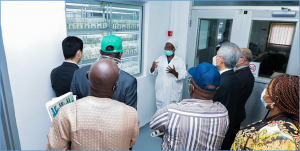
Representatives from the Japan and Kano office of Sasakawa Africa Association (SAA) visited IITA headquarters on 18 May. The team, led by SAA President and General Manager Dr Makoto Kitanaka, came to strengthen the relationship between IITA and SAA. To achieve this, SAA decided to identify new areas of partnership and extend the existing partnership to other countries where SSA and IITA hubs are located.
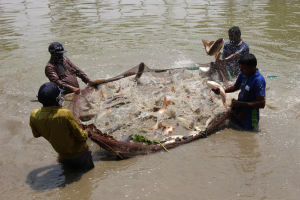
Aquatic food systems have transformative potential for sustainable development. They offer diverse solutions for tackling malnutrition, lowering the environmental footprint of our food systems and lifting millions of people out of poverty. Ultimately, a sustainable and equitable transition to aquatic food-based diets can deliver better outcomes for both people and planet.
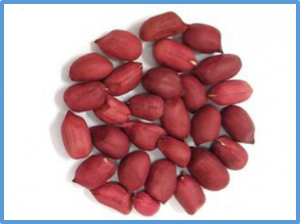
The testa color of peanuts (Arachis hypogaea L.) is an important trait, and those with red testa are particularly popular owing to the high-anthocyanin content. However, the identification of genes underlying the regulation of the red testa trait in peanut are rarely reported. In order to fine map red testa gene, two F2:4 populations were constructed through the cross of YZ9102 (pink testa) with ZH12 (red testa) and ZH2 (red testa).

Fisheries and aquaculture still face sustainability challenges, but as trade in the sector continues to grow, its contribution to food security and the safeguarding of livelihoods remains critical, QU Dongyu, Director-General of the Food and Agriculture Organization of the United Nations (FAO), said today. He made the remarks at a virtual meeting of the 18th Session of the Committee on Fisheries (COFI) Sub-Committee on Fish Trade, the world's primary forum for fisheries and aquaculture trade discussions and decisions. More than 300 delegates registered from 65 Members and Observers for the meeting of this Sub-Committee, the first since the pandemic outbreak.