


News & Events
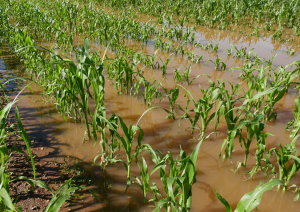
Frequent droughts, fires, and floodings have been on the rise worldwide as consequences of climate change. Floods cause major losses in agriculture with 15 percent of global crop losses being due to flooding. A collaboration between researchers from the University of Freiburg, Utrecht University, Rothamsted Research, and the University of California, Riverside have discovered a signaling molecule that can make plants more resistant to flooding.
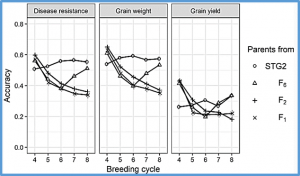
Using a stochastic computer simulation, we investigated the benefit of optimization strategies in the context of genomic selection (GS) for pulse breeding programs. We simulated GS for moderately complex to highly complex traits such as disease resistance, grain weight and grain yield in multiple environments with a high level of genotype-by-environment interaction for grain yield. GS led to higher genetic gain per unit of time and higher genetic diversity loss than phenotypic selection by shortening the breeding cycle time.
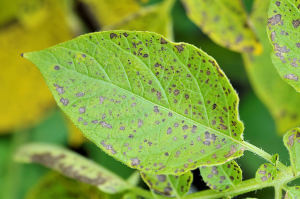
Scientists at Wageningen University & Research discovered in 2021 how cells of Phytophthora infestans attack the plant by slicing open its skin. In another study, it has been revealed how the microscopic attackers sharpen its weapons. The results are published in Science Advances. Phytophthora infestans causes the potato blight disease by hitchhiking on water droplets during rainfall. Then the single-celled water mold lands on the leaf and activates an ingenious mechanism.
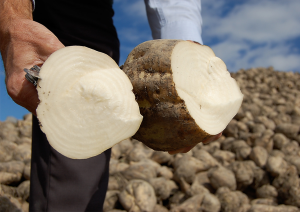
The European Food Safety Authority (EFSA) Panel on genetically modified organisms (GMO Panel) has published their risk assessment of new sequencing information for genetically modified (GM) herbicide tolerant sugar beet H7-1. The GMO Panel has previously assessed GM sugar beet H7-1 in applications EFSA-GMO-UK-2004-08 (EFSA, 2006) and EFSA-GMO-RX-006 (EFSA GMO Panel, 2017).
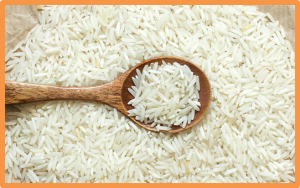
Grain chalkiness reduces the quality of rice (Oryza sativa) and is a highly undesirable trait for breeding and marketing. However, the underlying molecular cause of chalkiness remains largely unknown. Here, we cloned the F-box gene WHITE-CORE RATE 1 (WCR1), which negatively regulates grain chalkiness and improves grain quality in rice. A functional A/G variation in the promoter region of WCR1 generates the alleles WCR1A and WCR1G, which originated from tropical japonica and wild rice Oryza rufipogon, respectively.
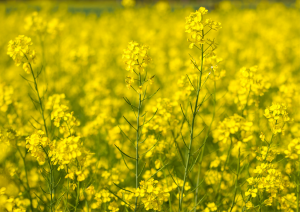
The Australian Office of the Gene Technology Regulator (OGTR) invites comments from the public to assess an application from BASF Australia Ltd. for the commercial cultivation of Indian mustard genetically modified (GM) for herbicide tolerance in all agricultural cropping areas of Australia. The GM Indian mustard and its products would enter general commerce, including use in human food and animal feed.

Cold Spring Harbor Laboratory (CSHL) researchers discovered how specific plant proteins control a photoreceptor in plants. This discovery might lead to new strategies to control growth in both agriculture and cancer research. Understanding how plants process light is vital in enhancing crop yields. Light dictates when the plant would grow or flower. Plants search for light using proteins called photoreceptors. CSHL Assistant Professor Ullas Pedmale and team revealed how proteins UBP12 and UBP13 regulate photoreceptor CRY2.
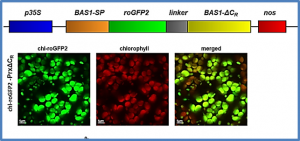
Transmission of reductive and oxidative cues from the photosynthetic electron transport chain to redox regulatory protein networks plays a crucial role in coordinating photosynthetic activities. The tight balance between these two signals dictates the cellular response to changing light conditions. While the role of reductive signals in activating chloroplast metabolism is well established, the role of their counterbalanced oxidative signals is still unclear, mainly due to monitoring difficulties

With the rising hunger figures and increasing threats to food security worldwide, the Council of the Food and Agriculture Organization of the United Nations (FAO) presented two thematic strategies. These strategies aim to steer efforts that will transform agrifood systems and promote a food secure world for all, as envisioned by the 2030 Agenda on Sustainable Development.

In a Gazette Notice exempting duty on imported raw materials used to manufacture animal and chicken feeds, Treasurer Cabinet Secretary Ukur Yatani has allowed eight manufacturers to import up to 28,000 metric tons of GM cotton seed cake from Bt cotton. “The imported cottonseed cake shall be either GM or non-GMO in accordance with the laws of Kenya and Kenyan standards applicable under the laws of Kenya and implemented by the Kenya Bureau of Standards and the National Biosafety Authority,” reads the notice.
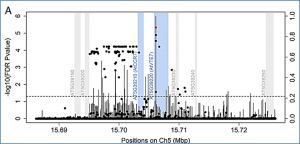
The tocopherol biosynthetic pathway, encoded by VTE genes 1 through 6, is highly conserved in plants but most large effect quantitative trait loci for seed total tocopherols (totalT) lack VTE genes, indicating other activities are involved. A genome-wide association study of Arabidopsis seed tocopherols showed five of seven significant intervals lacked VTE genes, including the most significant, which mapped to an uncharacterized, seed-specific, envelope-localized,

The Innovative Genomics Institute, founded by CRISPR co-inventor Jennifer Doudna, launched a research program that will use gene editing on crops to make them capture more carbon and help slow down climate change. Carbon capture is often associated with trees because of the long lifetimes that allow them to lock away carbon for long periods of time.