


News & Events
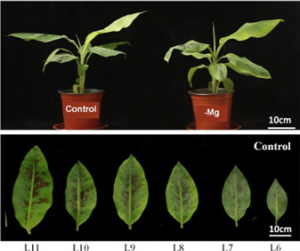
Magnesium (Mg) is an essential macronutrient for plant growth and development. Physiological and transcriptome analyses were conducted to elucidate the adaptive mechanisms to long-term Mg deficiency (MD) in banana seedlings at the 6-leaf stage. Banana seedlings were irrigated with a Mg-free nutrient solution for 42 days, and a mock control was treated with an optimum Mg supply. Leaf edge chlorosis was observed on the 9th leaf, which gradually turned yellow from the edge to the interior region.
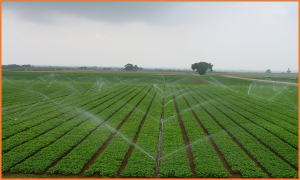
An ICRISAT-led study reveals that climate-induced risks to farmers’ income can be reduced by up to 25% when context-specific climate-smart agriculture (CSA) technologies are implemented. Researchers at the International Crops Research Institute for the Semi-Arid Tropics (ICRISAT), in partnership with the International Food Policy Research Institute (IFPRI), have developed an investment planning tool for the prioritization and upscaling of CSA technologies across districts in the Telangana state of India.
Worldwide global food losses and waste affect the sustainability and efficacy of food and nutrition systems, especially in the developing world. The 2021 Global Hunger Index paints a picture of the world, which is not on track to meet UN SDG 2 – ‘End hunger, achieve food security and improved nutrition and promote sustainable agriculture’. The reasons are varied – climate crisis, the COVID-19 pandemic, and increasingly severe and protracted violent conflicts.
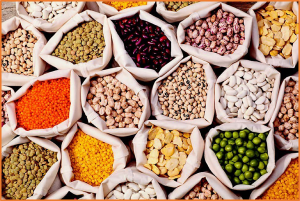
Recent advances in next generation sequencing (NGS) technologies have led the surge of genomic resources for the improvement legume crops. Advances in high throughput genotyping (HTG) and high throughput phenotyping (HTP) enable legume breeders to improve legume crops more precisely and efficiently. Now, the legume breeder can reshuffle the natural gene combinations of their choice to enhance the genetic potential of crops.
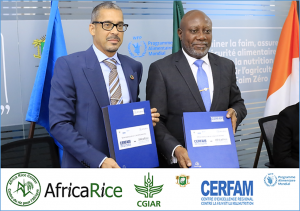
The Africa Rice Center (AfricaRice) and the Regional Center of Excellence against Hunger and Malnutrition (CERFAM) signed a memorandum of understanding (MoU) in Abidjan, Cote d’Ivoire, on 30 September 2022, that aims to foster collaboration for the promotion of policies, strategies, and actions to end hunger, poverty, and malnutrition in Africa. Through this cooperation, AfricaRice and CERFAM intend to work on programs that seek to enhance food security and nutrition and improve the livelihoods of vulnerable communities.
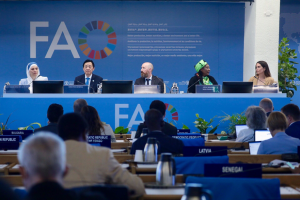
The world must halt deforestation, plant trees to make the planet greener and restore productive capacities, and use forests and trees sustainably, QU Dongyu, the Director-General of the Food and Agriculture Organization of the United Nations (FAO), today told the opening of the 26th Session of the Committee on Forestry (COFO). COFO26 is being held in hybrid format from 3 to 7 October at FAO’s Rome headquarters and will provide a platform for exchange and dialogue among participants and provide suggestions for FAO’s work in forestry.
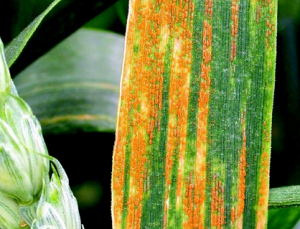
Stripe or yellow rust, caused by the fungus Puccinia striiformis Westend f. sp. tritici, is one of the most destructive wheat diseases. Sustainable management of wheat stripe rust can be achieved through the deployment of rust resistant cultivars. To detect effective resistance loci for use in breeding programs, an association mapping panel of 230 winter wheat cultivars and breeding lines from Northern and Central Europe was employed.
A video released by the Outreach Network for Gene Drive Research answers the question of who should be responsible for overseeing gene drive research. Two experts express that national biosafety authorities should take responsibility to satisfy the national and international requirements, which include certifications, provisions, and safety assessments around the research, use, and release of gene drives.
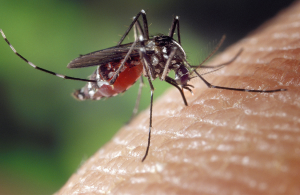
British doctor Ronald Ross discovered that female mosquitoes transmitted malaria to humans more than a hundred years ago. Today, millions of lives are still lost due to malaria and the mosquitoes that spread it. Since 2000, global partnerships have saved more than 10.6 million lives from malaria. However, progress has recently been stalled in malaria-burdened countries, with 627,000 malaria deaths recorded in 2020, mostly among African children under five years of age.
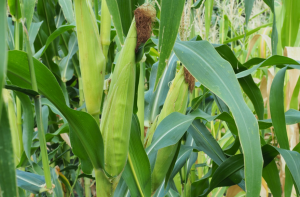
- The workshop with the title of "Technological knowledge sharing and data base accessing" was conducted in September 6 2022,
- Mr DOAN VINH PHUC officially submitted his PhD Thesis on "Studying on maize genotypes and suitable practices on transforming rice land in Long An and Dong Thap", at the IAS, September 24 2022.
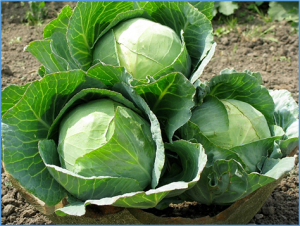
Cabbage (Brassica oleracea var. capitata) is an economically important vegetable crop cultivated worldwide. Cabbage plants go through four vegetative stages: seedling, rosette, folding and heading. Rosette leaves are the largest leaves of cabbage plants and provide most of the energy needed to produce the leafy head. To understand the relationship and the genetic basis of leaf development and leafy head formation, 308 cabbage accessions were scored for rosette leaf and head traits in three-year field trials
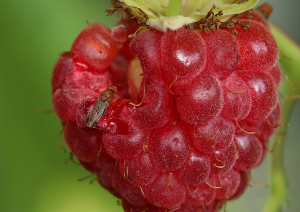
An article recently published in GEN Biotechnology reports the development of a programmable CRISPR-based method that could potentially replace fertile male D. suzukii with sterile counterparts, and safely curb this pest population. The researchers at the University of California San Diego, including Nikolay Kandul, Junru Liu, Anna Buchman, and Omar Akbari, use a temperature-inducible, precision-guided, sterile insect technique (pgSIT),