


News & Events
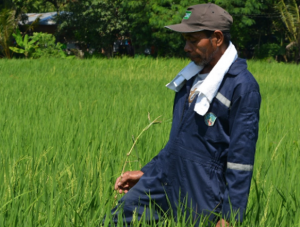
The International Rice Research Institute (IRRI) and Philippine Rice Research Institute (PhilRice), through the Water-efficient and risk-mitigation technologies for enhancing rice production in irrigated and rainfed environments (WateRice) project with the support of the Philippine Department of Agriculture (DA) - Bureau of Agricultural Research (BAR), conducted a virtual webinar on laser land leveling and mechanical transplanting on Zoom.

To form a learning alliance that has an interest to address climate-related issues in the Mekong Delta of Cambodia, the CGIAR Initiative on Securing the Food Systems of Asian Mega-Deltas for Climate and Livelihood Resilience (AMD) conducted a workshop to build a network of diverse stakeholders in the provinces of Takeo and Prey Veng in Cambodia.
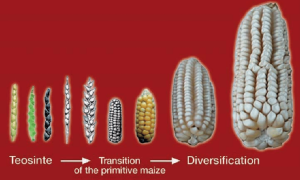
Maize is a major cereal crop with a narrow germplasm that has limited its production and breeding progress. Teosinte, an ancestor of maize, provides valuable genetic resources for maize breeding. To identify the favorable alien alleles in teosinte and its yield potential for maize breeding, 4 backcrossed maize-teosinte recombinant inbred line (RIL) populations were cultivated under five conditions. A North Carolina mating design II experiment was conducted on inbred lines with B73 and Mo17 pedigree backgrounds to analyze their combining ability.
The Economist examines the implications of the Black Sea Grain Deal suspension, looking at how Putin's attempt at grain blackmail highlights a wider problem: food supplies are often disrupted by men with guns. “Indeed, of the 828m people who do not get enough food, nearly 60% live in countries racked by conflict. Armed violence is the single greatest obstacle to ending hunger, says the UN’s World Food Programme.”
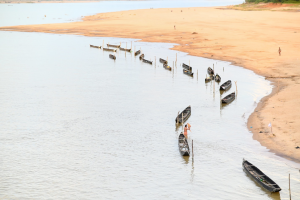
The transition to a green economy may be fundamental to the survival of people and planet, but it is the realisation of blue prosperity – from oceans, rivers and lakes – that will determine the future well-being of billions of the world’s most vulnerable people. Fish and other aquatic foods provide an essential source of protein and other nutrients for some three billion people worldwide. But if greenhouse gas emissions remain high, fisheries and aquaculture in every country will face high or very high climate hazards by 2100.
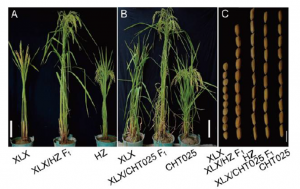
Semi-dwarfing improves the lodging resistance and yield of rice, and the vast majority of modern rice varieties harbor the sd1 allele to decrease plant height, resulting in reduced genetic diversity and negative agronomic traits. Thus, exploring alternative sources of dwarfism is imperative for rice breeding. Here, we identified a novel RGA1 allele, d1-w, from a local indica variety Xiaolixiang (XLX) using a map-based cloning approach. Compared with other rice varieties, RGA1 in XLX contained a unique single nucleotide polymorphism that resulted in an additional transcript and reduced functional RGA1 transcript level.

FAO Director-General QU Dongyu today conveyed his deep appreciation to HM King Charles III for his long-standing commitment to tackling the climate crisis and global hunger at a pre-COP 27 Reception, hosted by His Majesty the King at Buckingham Palace. The United Nations Climate Change Conference (COP27) will be held from 6 to 18 November 2022 in Sharm El Sheikh, Egypt.
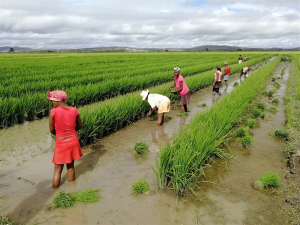
The benchmark for world food commodity prices was broadly stable in October, with rising cereal prices more than offset by declines in quotations for other staples, the Food and Agriculture Organization of the United Nations (FAO) reported Friday. The FAO Food Price Index, which tracks monthly changes in the international prices of a basket of commonly traded food commodities, averaged 135.9 points during the month of October, negligibly below its level in September
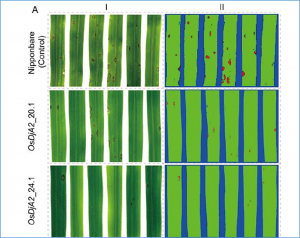
Rice genes OsDjA2 and OsERF104, encoding a chaperone protein and an APETELA2/ ethylene-responsive factor, respectively, are strongly induced in a compatible interaction with blast fungus, and also have function in plant susceptibility validated through gene silencing. Here, we reported the CRISPR/Cas9 knockout of OsDjA2 and OsERF104 genes resulting in considerable improvement of blast resistance.
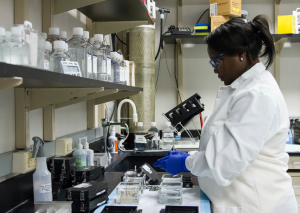
Population suppression is an effective way to control insect pests and disease vectors that cause significant damage to crops and spread contagious diseases to plants, animals, and humans. A recent study available in the Bulletin of Entomological Research explores the advantages and limitations of using gene drive mechanisms for this purpose.
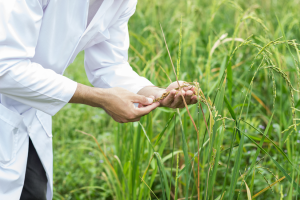
Researchers from Embrapa Genetic Resources and Biotechnology in Brazil reported two susceptibility genes that could be alternative sources of resistance to rice blast pathogen Pyricularia oryzae. Their findings are published in Rice Science. Rice blast is one of the most ubiquitous and destructive diseases affecting rice production worldwide.
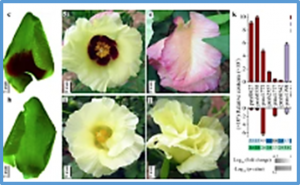
Colored petal spots are correlated with insect pollination efficiency in Gossypium species. However, molecular mechanisms concerning the formation of red spots on Gossypium arboreum flowers remain elusive. In the current study, the Shixiya1-R (SxyR, with red spots) × Shixiya1-W (SxyW, without red spots) segregating population was utilized to determine that the red-spot-petal phenotype was levered by a single dominant locus.