


News & Events
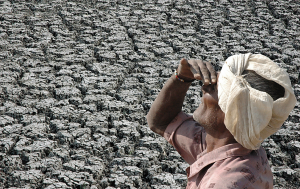
Hosted by the United Nations Development Programme (UNDP) in collaboration with the Telangana Government, the panel discussion was at the outset of a Digital Public Good on Climate Resilient Agriculture: Data in Climate Resilient Agriculture (DiCRA), an open-source platform. Using data insights from the platform at the farm level, a suite of knowledge products developed by various partner organizations was released during the program.
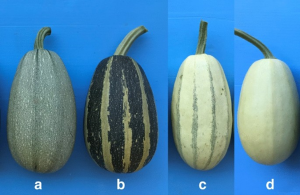
Stem color is an important agronomic trait in zucchini (Cucurbita pepo) for robust seeding and high yield. However, the gene controlling the stem color has not been characterized. In this study, we identified a single locus accounting for the dark green stem color of C. pepo (CpDsc-1). Genetic analysis of this trait in segregated populations derived from two parental lines (line 296 with dark green stems and line 274 with light green stems)

The International Rice Congress is a scientific platform for rice-based food systems innovators to work towards shaping a food- and nutrition-secure future. Convened by the International Rice Research Institute (IRRI) every four years, the Congress brings together scientists, experts, and decision makers from the government, private, and public sectors to formulate evidence-based solutions to some of the biggest challenges of the global rice sector.
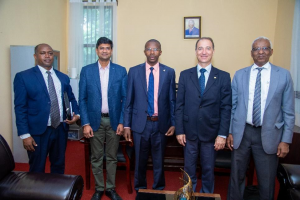
To strengthen the partnership between the International Rice Research Institute (IRRI) and Burundi, IRRI Director General Dr. Jean Balié visited the IRRI-Burundi office from December 10-11, 2022. The visit underscores IRRI’s active role in the development of the rice sector of the country, and of the Sub-Saharan African region.
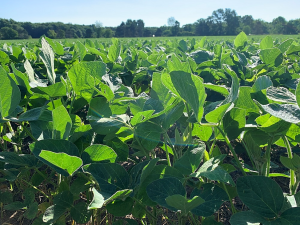
As the main part of the plant canopy structure, leaf/leaflet size and shape affect the plant architecture and yield. To explore the leaflet trait QTL system, a population composed of 199 recombinant inbred lines derived from Changling (annual wild, narrow leaflet) and Yiqianli (landrace, broad leaflet) with their parents was tested for leaflet length (LL), width (LW) and length to width (LLW). The population was genotyped with specific-locus amplified fragment sequencing (SLAF-seq) and applied for linkage mapping of the leaflet traits.
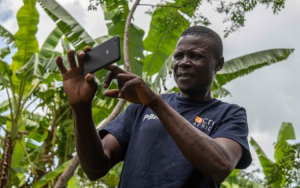
IFPRI’s picture-based insurance (PBI) initiative, recognized as a CGIAR@50 Innovation and active since 2016, relies on participating farmers to upload smartphone pictures of their fields at intervals throughout the growing season. In the event of bad weather, pests, disease, or other problems that harm the crops, the photos are used to assess the damage and trigger insurance payouts.
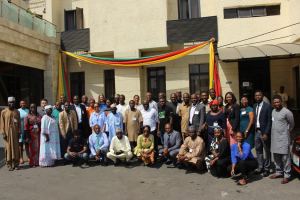
The CGIAR Initiative on ‘Rethinking Food Markets1 led by the International Food Policy Research Institute (IFPRI), organized a two-day (12-13 Dec. 2022) stakeholders workshop in Abuja, Nigeria. The workshop aims to engage with key stakeholders to kick-start the co-designing of innovations and interventions in ‘Food Markets and Value Chains’ to enhance employment opportunities and increase income for smallholders and SMEs along the agri-food value chains in Nigeria.
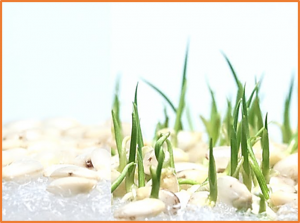
Seed germination is a complex biological process that is affected by many factors. Although a number of germination-related genes have been reported, the molecular mechanism of germination regulation has not yet been fully elucidated. Here, we reported that the rice OsCEN2 gene can negatively regulate seed germination. The germination speed of OsCEN2-RNAi seeds was significantly faster while that of OsCEN2-overexpression (OE) seeds was slower than that of the wild type (WT).

FAO’s new fish recipe book features worldly recipes, like this Japanese cured mackerel dish featured above. It also helps consumers recognize various types of fish and presents interesting food and fish facts to reiterate that there can be no global food security without fish. ©FAO/Nik Neves
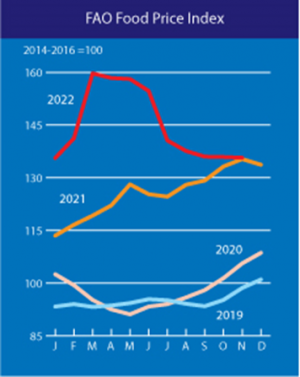
The FAO Food Price Index (FFPI) is a measure of the monthly change in international prices of a basket of food commodities. It consists of the average of five commodity group price indices weighted by the average export shares of each of the groups over 2014-2016. A feature article published in the June 2020 edition of the Food Outlook presents the revision of the base period for the calculation of the FFPI and the expansion of its price coverage, to be introduced from July 2020. A November 2013 article contains technical background on the previous construction of the FFPI.
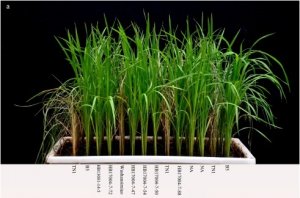
The brown planthopper (BPH, Nilaparvata lugens Stål) is still considered a major threat to rice farmers. Exploring novel resistance genes that relate to the BPH population in the targeted rice-growing area might be a suitable solution. We identified and mapped the gene locus using 175 lines of F2:3 populations derived from Balamawee × PD601. Genomic analysis was then used to identify the candidate gene governing the resistance toward BPH.
The United Nations General Assembly at its 75th session in March 2021 declared 2023 the International Year of Millets (IYM 2023). FAO is the lead agency for celebrating the Year in collaboration with other relevant stakeholders. Millets can grow on arid lands with minimal inputs and are resilient to changes in climate.