


News & Events
The economic shock caused by the war in Ukraine - nearly 85% of wheat imports came to Egypt from Russia and Ukraine before the war - added to two years of turbulence associated with the Covid-19 pandemic, says the article. Since March 2022, 85% of households [in Egypt] have reduced the consumption of meat, 75% -- consumption of chicken and eggs, 61% -- consumption of fish and milk, says the article with reference to IFPRI.
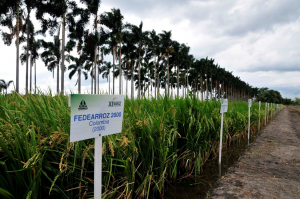
Researchers from the Alliance of Bioversity-CIAT evaluated two groups of rice farmers: one group included those that received and adopted advice from Fedearroz to improve farm management, through climate forecasts or workshops, while the other group neither received nor adopted such advice. What was interesting about the former group of farmers was that by following the advice, not only did they see an increase in yield but also a reduction in greenhouse gas emissions due to using a lower amount of inputs
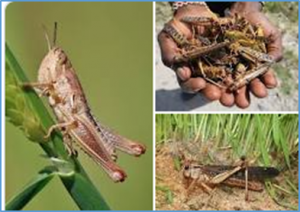
The phase transition from solitary to gregarious locusts is crucial in outbreaks of locust plague, which threaten agricultural yield and food security. Research on the regulatory mechanisms of phase transition in locusts has focused primarily on the transcriptional or posttranslational level. However, the translational regulation of phase transition is unexplored. Here, we show a phase-dependent pattern at the translation level, which exhibits different polysome profiles between gregarious and solitary locusts.

Elected to the National Academy of Sciences in 2019, Ronald has received numerous honors, including the 2019 American Society of Plant Biologists Leadership in Science Policy Public Service Award, the Global Confederation of Higher Education Associations for Agricultural and Life Sciences World Agriculture Prize in 2020, the 2022 Wolf Prize in Agriculture, and the 2022 Vinfuture Prize for Innovative Female Scientist, which recognized her pioneering work on disease resistance and environmental stress tolerance in rice.

When illustrator Lonni Sue Johnson contracted viral encephalitis in late 2007, the infection attacked her hippocampus and almost killed her. Johnson had been a professional illustrator for 31 years, made many New Yorker covers, and painted pieces for the White House. With her hippocampus suddenly destroyed, Johnson couldn’t form new memories, let alone recall many old ones.
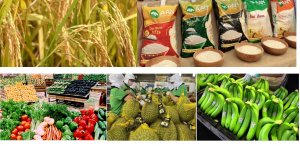
Vietnam Economic Pulse (VEP) has sustained the recovery from Covid-19 to create the prospects for growth in 2023. Finally, the real GDP growth in 2022 reached 8.02% (General Statistics Office of Vietnam). It is the highest among major countries in the Asia Pacific region. Vietnam economic conditions have improved dramatically. The GDP per capita obtained $US 4,110. Thanks are due to an effective and universal Covid-19 vaccination program, and a flexible policy response, the domestic economy has rebounded strongly from the last quarter of 2021.
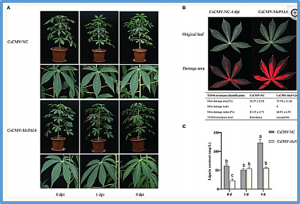
The two-spotted spider mite (TSSM) is a devastating pest of cassava production in China. Lignin is considered as an important defensive barrier against pests and diseases, several genes participate in lignin biosynthesis, however, how these genes modulate lignin accumulation in cassava and shape TSSM-resistance is largely unknown.

Millets encompass a diverse group of small-grained, dryland cereals including foxtail, barnyard and fonio, among others. As whole grains, millets are a good source of essential nutrients. Millets are primarily grown in Asia and Africa, with India being the top producer followed by Nigeria, Niger and China. They were among the first plants to be domesticated and still serve as a traditional staple crop in parts of Sub-Saharan Africa and Asia.
ISAAA Inc., in partnership with the Outreach Network for Gene Drive Research, launched a new policy brief that discusses the environmental, socio-economic, and health impact assessment (ESHIA) for gene drive organisms. The policy brief, titled Environmental, Socio-economic, and Health Impact Assessment (ESHIA) for Gene Drive Organisms, is the second release in a series that aims to present proposed policy options and impacts that address issues relating to gene drive technology. The following questions were answered in the second policy brief:
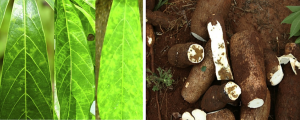
As one of the most important food crops, cassava (Manihot esculenta) is the main dietary source of micronutrients for about 1 billion people. However, the ionomic variation in cassava and the underlying genetic mechanisms remain unclear so far. Herein, genome-wide association studies were performed to reveal the specific single nucleotide polymorphisms (SNPs) that affect the ionomic variation in cassava.
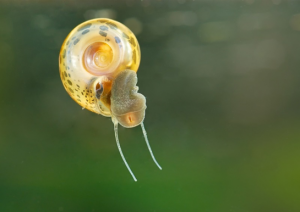
CRISP-Cas9 gene drives could help control infectious diseases by accelerating the spread of engineered traits that limit parasite transmission in wild populations. However, gene drive technology in mollusks has received little attention despite freshwater snails being hosts of parasitic flukes that cause 200 million annual cases of schistosomiasis.
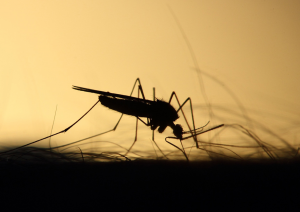
Malaria, a disease that has affected more than 200 million people with a recorded half a million deaths per year, has caused Africa severe economic losses amounting to around $12 billion a year. An editorial article written by Dr. Federica Bernardini from the Imperial College London explores the innovative use of gene drive mosquitoes to fight malaria.