


News & Events
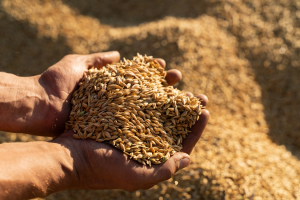
In an article published in Trends in Biotechnology, Polish scientists emphasized the need for Europe to use modern biotechnology tools like genetic modification (GM) and genome editing to ensure food security in the region, especially with the ongoing threat of the COVID-19 pandemic and conflict in Ukraine. The article aligns the European Green Deal set to make Europe climate-neutral by 2050 with the United Nations' Sustainable Development Goals (SDG) of 2015. One of the targets of SDG is to decrease food loss and waste.

An application was filed for marketing of DS-5670 mRNA vaccine to the Japanese regulatory authorities by its maker, Daiichi Sankyo. The vaccine was developed to help combat COVID-19 and is proposed to be used as a booster vaccine. The application follows the successful completion of the 1/2/3 trial phase of the DS-5670, wherein 5,000 healthy adults and the elderly who received two doses of mRNA vaccine participated in.
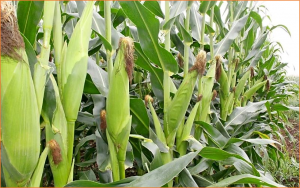
Leaf morphology and number determine the canopy structure and thus affect crop yield. Herein, the genetic basis and key genes for 25 leaf-related traits, including leaf lengths (LL), leaf widths (LW), and leaf areas (LA) of eight continuous leaves under the tassel, and the number of leaves above the primary ear (LAE), were dissected by using an association panel and a biparental population. Using an intermated B73 × Mo17 (IBM) Syn10 doubled haploid (DH) population, 290 quantitative trait loci (QTL) controlling these traits were detected across different locations, among which 115 QTL were individually repeatedly identified in at least two environments.
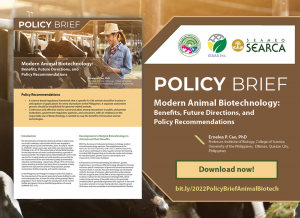
ISAAA Inc., in partnership with the Philippine Agriculture and Fisheries Biotechnology Program and the Southeast Asian Regional Center for Graduate Study and Research and Agriculture (SEARCA), released a policy brief on Modern Animal Biotechnology: Benefits, Future Directions, and Policy Recommendations. Authored by Dr. Ernelea P. Cao, Professor at the University of the Philippines Diliman, the policy brief provides a summary of genetically engineered animals and research on genome-edited animals conducted in various institutions worldwide.
Scientists at the U.S. Department of Agriculture Agricultural Research Service (USDA ARS) and Purdue University have discovered a gene in sorghum that could help fortify the crop's defense against anthracnose, a disease that could reduce yields by up to 50 percent. The discovery could lead to the development of disease-resistant sorghum cultivars that are less reliant on fungicides.
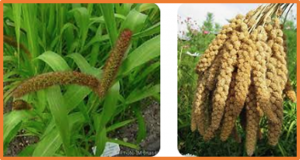
The color of leaves has been widely used as a marker for the hybrid breeding of foxtail millet; however, few related gene have been cloned to date. Here, we used two F2 populations generated from crosses between the highly male-sterile material 125A with yellow–green leaves, and CG58 and S410, which have green leaves, to identify the genes underlying the yellow–green color of the leaves of foxtail millet. The leaves of 125A seedlings were yellow–green, but they became green at the heading stage. The content of chlorophyll a and chlorophyll b was lower, the number of thylakoid lamellae and grana was reduced, and the chloroplasts was more rounded in 125A than in S410 at the yellow–green leaf stage;

Thailand has updated its regulations on genetically modified organisms (GMOs). According to the USDA Foreign Agricultural Service GAIN Report, the Ministry of Public Health (MOPH) Notification No. 431 B.E. 2565 (2022) (Foods Derived from Genetically Modified Organisms) and Ministerial Notification No. 432 (Labeling of GM Foods) went into force on December 4, 2022. The updates and implementation of these regulations are also posted on the Thai Food and Drug Administration website.
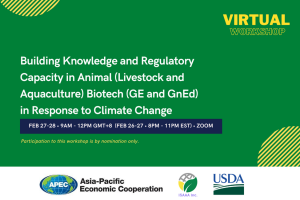
ISAAA Inc., in cooperation with the US Department of Agriculture under the Asia-Pacific Economic Cooperation (APEC) High-Level Policy Dialogue on Agricultural Biotechnology (HLPDAB) Forum, organizes the virtual workshop titled Building Knowledge and Regulatory Capacity in Animal (Livestock and Aquaculture) Biotech (GE and GnEd) in Response to Climate Change to be held on February 27-28, 9 AM-12PM GMT+8 (February 26-27, 8 PM-11 PM EST). ISAAA Inc. will host the event via Zoom.
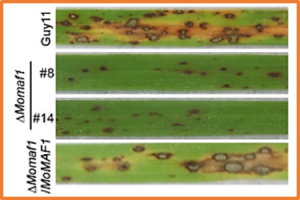
In eukaryotes, Maf1 is an essential and specific negative regulator of RNA polymerase (Pol) III. Pol III, which synthesizes 5S RNA and transfer RNAs (tRNAs), is suppressed by Maf1 under the conditions of nutrient starvation or environmental stress. Here, we identified M. oryzae MoMaf1, a homolog of ScMaf1 in budding yeast. A heterogeneous complementation assay revealed that MoMaf1 restored growth defects in the ΔScmaf1 mutant under SDS stress.

ISAAA Inc.'s first webinar of the year, titled Biotechnology Applications and Impact on the Philippine Livestock Industry, was held on January 31, 2023, via Zoom. It was conducted in partnership with Winrock International through the Building Safe Agricultural Food Enterprises (B-SAFE) Project to highlight the current opportunities and potential benefits with trait improvements of livestock-related to food and agriculture and resilience to climate change in the Philippines.
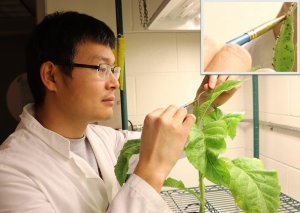
One of the promising approaches to pest control is to target insect genes that are essential to their survival. However, it is a challenge to find targets whose silencing will kill pests but not beneficial insects. A team of researchers at the Boyce Thompson Institute (BTI) led by Georg Jander, has shown that horizontally transferred genes (HTGs), or genes transmitted from one species to another, found in insect genomes are valid targets for selectively killing green peach aphids, whiteflies, and potentially other insects that cause major damage to food crops worldwide.
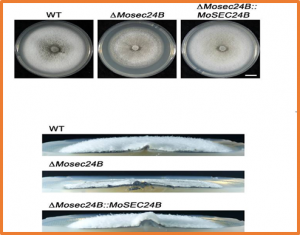
The endoplasmic reticulum (ER) acts as the starting point of the secretory pathway, where approximately one-third of the proteins are correctly folded and modified, loaded into vesicles, and transported to the Golgi for further processing and modification. In this process, COPII vesicles are responsible for transporting cargo proteins from the ER to the Golgi. Here, we identified the inner shell subunit of COPII vesicles (MoSec24B) and explored the importance of MoSec24B in the rice blast fungus.