


News & Events

In many African countries, rice consumption outstrips production, which leads to huge imports to meet local demand. One of the key challenges affecting the rice sector in the region today is the lack of efficient seed production and delivery systems that would encourage wider use of quality seed of improved, climate resilient, and high-yielding varieties. Developing a competitive formal seed sector will ensure the timely availability of quality seeds of new varieties at affordable prices, particularly to smallholder farmers

The training combined theoretical and practical sessions and was organized in partnership with the Kilimanjaro Agricultural Training Center (KATC), Tanzania Agricultural Research Institute (TARI), Tanzania Official Seed Certification Institute (TOSCI), Agricultural Seed Agency (ASA), and Kilimo Trust (KT). Ms. Nice Wilfred Ntupwa from the Ministry of Agriculture, George Iranga from IRRI Tanzania, and the acting principal of (KATC) Peter Aloyce Kabelo officiated the opening of the training.
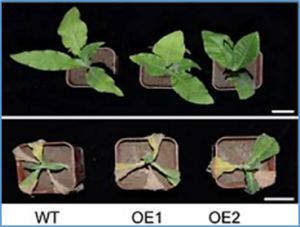
Phytochrome-interacting factors (PIFs) are essential for plant growth, development, and defense responses. However, research on the PIFs in sweet potato has been insufficient to date. In this study, we identified PIF genes in the cultivated hexaploid sweet potato (Ipomoea batatas) and its two wild relatives, Ipomoea triloba, and Ipomoea trifida. Phylogenetic analysis revealed that IbPIFs could be divided into four groups, showing the closest relationship with tomato and potato
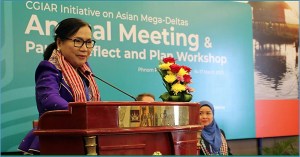
To strengthen its strategy, cooperation, and results management, the CGIAR Initiative on Asian Mega-Deltas (AMD) conducted its Annual Meeting and Pause, Reflect, and Plan Workshop in Phnom Penh, Cambodia from 14 to 17 March 2023. The workshop aims to provide a space for national partners and OneCGIAR scientists to reflect on the progress and achievements of the AMD Initiative in some of its priority countries, namely Bangladesh, Cambodia, and Vietnam.

The field of genetic testing is expanding and evolving at an incredible rate, thanks to our growing knowledge of genetic conditions, dropping costs, and higher demand. This rapid expansion has dramatically changed how we diagnose and screen for genetic conditions, who we test, and how informative the results are. Learning about the recent advances in genetic testing and sequencing technologies has important implications for anyone working in health care and related sectors.
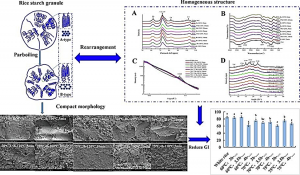
To investigate the multi-scale structural changes and digestibility of parboiled rice, the side chain distribution, helical structure, short/long-range ordered structure, and lamellar structure were systematically characterized and an in vivo postprandial blood glucose test was applied. The results indicate that parboiling has little effect on the side chain distribution, double helix content and helical structure order of parboiled rice.
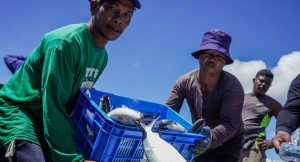
It has taken almost 20 years, but finally, on 4 March 2023, UN member states came to an historic agreement: to legally protect the world’s high seas. In a first of its kind, the High Seas Treaty will place a third of the world’s oceans into marine protected areas (MPAs) in a bid to reverse biodiversity loss. The high seas—the parts of the ocean that lie outside a country’s exclusive economic zone (EEZ)—cover about half the earth’s surface. They’re full of life—from microscopic plankton that produce more atmospheric oxygen than all of the world’s tropical rainforests, to blue whales, the largest creatures that ever existed on earth.
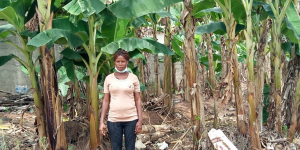
Many young people leave their homes in the rural areas of West Africa with a dream of succeeding in the city. But all too often, they can only find poorly paid jobs in the informal sector—if they find work at all. In Nigeria, the most populous country in Africa, one in five young people are unemployed. To stop the flow of young people out of rural areas, the IFAD-supported pilot of the Youth Employment in Agri-business and Sustainable Agriculture (YEASA) initiative gave more than 2,000 unemployed rural youth in Nigeria and Benin the skills and equipment needed to become successful agri-entrepreneurs.
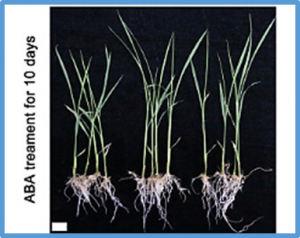
The expression of OsSAPK3 was up regulated by drought, NaCl, PEG and ABA. OsSAPK3 mutated seedings (sapk3-1 and sapk3-2) showed reduced hypersensitivity to exogenous ABA. In addition, under drought conditions, sapk3-1 and sapk3-2 showed more intolerance to drought, including decreased survival rate, increased water loss rate, increased stomatal conductance and significantly decreased expression levels of SLAC1 and SLAC7. Physiological and metabolic analyses showed that OsSAPK3 might play an important role in drought stress signaling pathway by affecting osmotic adjustment and osmolytes, ROS detoxification and expression of ABA dependent and independent dehydration-responsive genes.
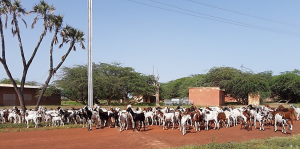
Niger: The United States Agency for International Development (USAID) and the International Crops Research Institute for the Semi-Arid Tropics (ICRISAT) has launched a new project to benefit 1,500 farmers from 2022 to 2025, based on the ancient practice of crop-livestock integration, which has seen a revival in recent decades.The project 'Enhancing the productivity and resilience of agro-pastoral systems, and income, food, and nutrition security
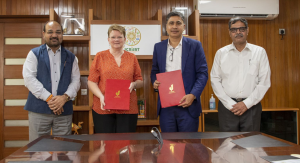
Zuari Farmhub Ltd (ZFHL) has announced a new research partnership with the International Crops Research Institute for the Semi-Arid Tropics (ICRISAT) aimed to promote sustainable agricultural practices to improve farmer incomes in Maharashtra, Karnataka, and Uttar Pradesh. The two-year project will prioritize carbon sequestration to reduce agricultural greenhouse gases, thereby mitigating the impact of climate change on the farming community. The agreement was formalized through the signing of a Memorandum of Agreement (MoA) on Thursday by Dr. Jacqueline Hughes, Director General of ICRISAT, and Mr. Madan Mohan Pandey, Managing Director of ZFHL, in Hyderabad, India.
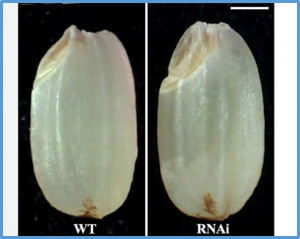
Storage starch synthesis is essential for grain filling. However, little is known about how cereal endosperm controls starch synthesis initiation. One of core events for starch synthesis initiation is short maltooligosaccharide (MOS) mobilization consisting of long MOS primer production and excess MOS breakdown. By mutant analyses and biochemical investigations, we present here functional identifications of plastidial α-glucan phosphorylase (Pho1) and disproportionating enzyme (DPE1) during starch synthesis initiation in rice (Oryza sativa) endosperm.