


News & Events
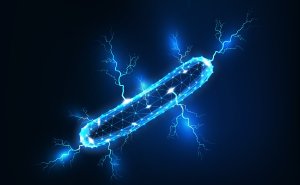
Scientists from Monash University in Melbourne, Australia, identified an enzyme that uses small amounts of hydrogen to create an electrical current. If utilized properly, the enzyme can make energy from thin air and support a new source of sustainable power. The scientists extracted the enzyme Huc found in the bacteria Mycobacterium smegmatis. It is responsible for using traces of atmospheric hydrogen to convert them to an electrical current.

Plant-based pharmaceutical engineering gained the attention of medical researchers in the 21st century in light of viral outbreaks like Ebola and coronaviruses. Austrian researchers investigated the components that support this technological advancement and found that it has cost and accessibility advantages over its mammalian cell-based protein production systems counterpart. Common engineering tools for plant-based molecular farming include nuclear expression and plastid production.
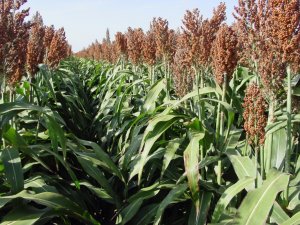
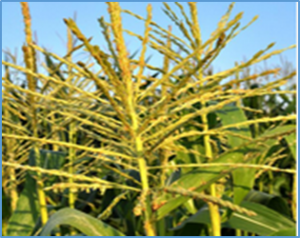
Sorghum is mainly used for brewing distilled liquors in China. Since grain tannins play an important role in liquor brewing, accurately understanding the relationship between grain color and tannin content can provide basis for selection standards of tannin sorghum. We resequenced a panel of 242 Chinese sorghum accessions and performed population structure and genome-wide association study (GWAS) to identify quantitative trait locus (QTL) affecting pericarp color, testa pigment, and tannin content. Phylogenetic analysis, principal component analysis (PCA), and admixture model were used to infer population structure.
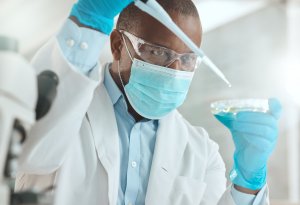
African governments must invest in appropriate regulatory structures and monitoring mechanisms for biotech crops and animals. This is according to African scientists who attended the International Conference on GMO Analysis and New Genomic Techniques held this month in Berlin, Germany. They said that investments in laboratories would ensure proper oversight of biotech products and eventually maximize the potential of agri-biotech in the continent.
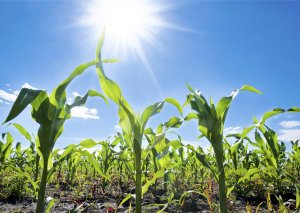
A study conducted by researchers at Aalto University in Finland reports that from 1980 to 2009, farmers had to deal with growing seasons that were too hot and dry for their crops. The paper published in Nature also reveals that increasing heat and drought bring down crop yields globally. Wheat growers saw the biggest change, according to the paper, with the chance of extreme heat and drought during the growing season increasing six-fold over the study period while the risk for maize, rice, and soybeans doubled.
Protein structures play an important role in bioinformatics, such as in predicting gene function or validating gene model annotation. However, determining protein structure was, until now, costly and time-consuming, which resulted in a structural biology bottleneck. With the release of such programs AlphaFold and ESMFold, this bottleneck has been reduced by several orders of magnitude, permitting protein structural comparisons of entire genomes within reasonable timeframes

Murdoch University, ISAAA Inc., and partners aim to assist both small and large-scale exporters in understanding the potential of gene editing for crop improvement, and the issues related to trade in gene-edited produce. A two-day international meeting titled International Conference on Gene-edited Crops: Enabling Future Commercialisation and Trade is being organised on April 26-27, 2023 at The Shine Dome, ACT, Australia. The early bird registration is open until March 31.

The online event is part of a webinar series to raise awareness of the general public on the impact of livestock and fishery biotechnology. It also aims to highlight the current opportunities and potential benefits of trait improvements related to food and agriculture and resilience to climate change. The webinar will feature Dr. Eric Hallerman, Professor at the Department of Fishery and Wildlife Conservation of Virginia Polytechnic Institute and State University, and Dr. Mudjekeewis Santos,
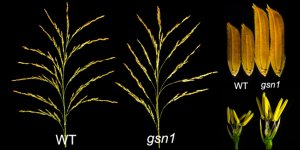
A key to achieve the goals put forward in the UN's 2030 Agenda for Sustainable Development, it will need transformative change to our agrifood systems. We must mount to the global challenge to achieve food security in a sustainable manner in the context of climate change, population growth, urbanization, and depletion of natural resources. Rice is one of the major staple cereal crops that has contributed, is contributing, and will still contribute to the global food security.

The U.S. Food and Drug Administration (FDA) has completed its second pre-market consultation for human food made from cultured animal cells. California-based GOOD Meat, a division of Eat Just, Inc., uses animal cell culture technology to take living cells from chickens and grow the cells in a controlled environment to make cultured animal cell food. The FDA issued a "no questions" letter to GOOD Meat as part of pre-market consultations for a new kind of meat, poultry, and seafood made from cells instead of raised and slaughtered animals.
he Precision Breeding Act covers precision-bred plants and animals developed through techniques such as gene editing, which is different from genetic modification. Under the Act, a new science-based and streamlined regulatory system will be introduced to facilitate greater research and innovation in precision breeding while maintaining stricter regulations for genetically modified organisms (GMOs). The government will take a step-by-step approach and enable precision breeding technologies for plants first, followed by animals later.
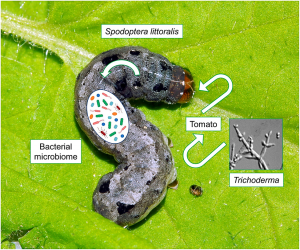
Trichoderma (Ascomycota, teleomorph: Hypocrea) is comprised of species that are multipurpose, plant-beneficial fungi with importance in agriculture as a direct biological control agent (BCA). However, due to its interaction with plants, it has become recognized also as an indirect BCA and a biostimulant, permitting reduced applications of agrochemicals, thus promoting an ecosustainable agriculture (1).