


News & Events
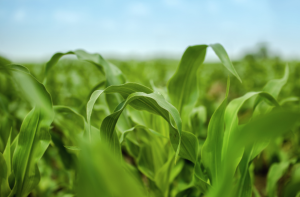
Origin Agritech announced that its genetically modified (GM) corn hybrid is the one and only triple-stacked trait corn that was selected for the national demonstration plot in China and is currently being grown there for the commercial launch this year. The corn hybrid has the approved triple stack trait BFL4-2, which includes two different insect resistance genes, making it resistant to all the major corn pests, and an herbicide resistance gene.
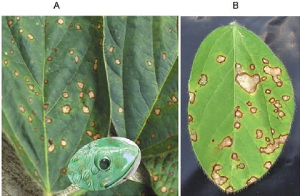
Frogeye leaf spot (FLS) causes severe yield loss in soybean and has been found in several countries worldwide. Therefore, it is necessary to select and utilize FLS-resistant varieties for the management of FLS. In the present study, 335 representative soybean materials were assessed for partial resistance to FLS race 7. Quantitative trait nucleotide (QTN) and FLS race 7 candidate genes were identified using genome-wide association analysis (GWAS) based on a site-specific amplified fragment sequencing (SLAF-seq) approach.

Water, and the international water management agenda, is also a key, cross-cutting element in CGIAR’s mission to deliver science and innovation that advance the transformation of food, land, and water systems in a climate crisis. The UN 2023 Water Conference ended with the adoption of a new Water Action Agenda that aims to unite the world for action on water, bringing cross-cutting solutions for sustainable development.
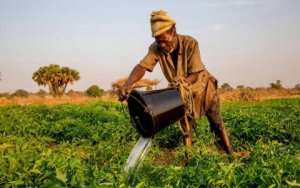
Unlike large-acreage government irrigation schemes, small-scale irrigation is typically farmer led. Farmers decide what technologies to use to extract water, be it manual lifting or solar water pumps. They also choose the mode of irrigation, whether by buckets or drip kits. Farmers purchase, run, and maintain the operation themselves on their own farms or as part of small groups of farmers. Small-scale irrigation can help smallholder farmers to increase agricultural productivity and incomes.
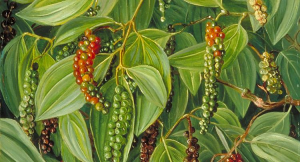
Piper nigrum, also known as black pepper, is an economically and ecologically important crop of the genus Piper. It has been titled as the king of spices due to its wide consumption throughout the world. In the present investigation, the chloroplast genome of P. nigrum has been assembled from a whole genome sequence by integrating the short and long reads generated through Illumina and PacBio platforms, respectively. The chloroplast genome was observed to be 161,522 bp in size, having a quadripartite structure with a large single copy (LSC) region of 89,153 bp and a small single copy (SSC) region of 18,255 bp separated by a copy of inverted repeats (IRs), each 27,057 bp in length.

Miyazaki, Japan - With hunger levels rising and domestic food prices inflation soaring in much of the world, collective actions are necessary to meet immediate and longer-term global food security objectives, QU Dongyu, Director-General of the Food and Agriculture Organization of the United Nations (FAO), said today at the G7 Ministers of Agriculture Meeting. “We need to work together in an efficient, effective and coherent manner to address the challenges, and identify the solutions needed for concrete actions leading to tangible results on the ground,” he said.
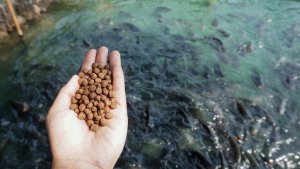
Using genetically modified (GM) crops and their derivatives by the Indian aqua-feed sector can enhance the supply of feeding ingredients, according to experts. This adoption can lead to growth and disease resistance of aqua products and the reduction of input costs in production, which mainly benefits fish farmers and consumers. In a workshop organized by Biotech Consortium India Ltd (BCIL) and Central Marine Fisheries Research Institute (CMFRI) of the Indian Council of Agricultural Research, Dr. Vibha Ahuja, Chief General Manager of BCIL, explained that using GM crops can boost aquatic yield.
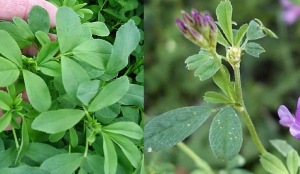
Yield is one of the most important target traits in alfalfa breeding; however, yield is a complex trait affected by genetic and environmental factors. In this study, we used multi-environment trials to test yield-related traits in a diverse panel composed of 200 alfalfa accessions and varieties. Phenotypic data of maturity stage measured as mean stage by count (MSC), dry matter content, plant height (PH), biomass yield (Yi), and fall dormancy (FD) were collected in three locations in Idaho, Oregon, and Washington from 2018 to 2020.

Mr. Shuichi Tokumoto, an exemplary farmer, solely founded the Japan Biotech Crop Network (JBCN). Mr. Tokumoto wants to practice sustainable agriculture in Japan and partner with professional local and international farmers, as well as other stakeholders, including researchers, journalists, manufacturers, and retailers, to bring together their knowledge and promote exchanges on the latest in agriculture such as biotechnology and no-tillage farming, and also discuss proposals for policies.
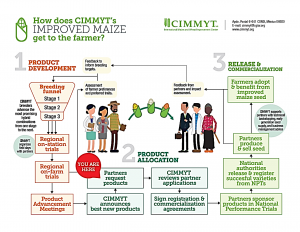
The International Maize and Wheat Improvement Center (CIMMYT) announced new tropical maize hybrids which are now available to interested public and private sector partners in South Asia and similar agro-ecologies in other regions. The new maize varieties (CAH201, CAH202, CAH203, CAH204, and CAH205) are all high yielding and drought tolerant. Some of them are waterlogging tolerant and resistant to diseases such as Turcicum leaf blight, Fusarium stalk rot, and Macrophomina stalk rot.
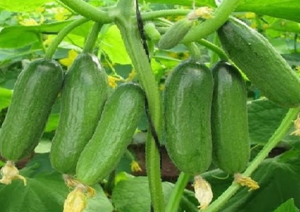
Fruit color of cucumber is a very important agronomic trait, but most of the genes affecting cucumber white fruit color are still unknow, and no further studies were reported on the effect of cucumber fruit quality caused by white fruit color genes. Here, we obtained a white fruit mutant em41 in cucumber by EMS mutagenesis. The mutant gene was mapped to a 548 kb region of chromosome 2. Through mutation site analysis, it was found to be a null allele of CsARC6 (CsaV3_2G029290). The Csarc6 mutant has a typical phenotype of arc6 mutant that mesophyll cells contained only one or two giant chloroplasts. ARC6 protein was not detected in em41, and the level of FtsZ1 and FtsZ2 was also reduced.
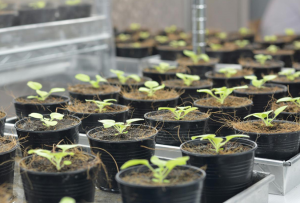
Researchers at the Earlham Institute in Norwich have turned tobacco plants into solar-powered factories for moth sex pheromones using genetic engineering techniques. The team engineered Nicotiana benthamiana to produce moth sex pheromones. The team at Earlham Institute worked with scientists at the Plant Molecular and Cell Biology Institute in Valencia, Spain to engineer N. benthamiana, a species of tobacco, to produce the sex pheromones of two moths.