


News & Events

Fighting global hunger requires greater and better investments in science, technology and innovation to ensure that our agrifood systems are able to produce more with less while leaving no one behind, the Director-General of the Food and Agriculture Organization of the United Nations (FAO) told a Global Food Security Summit in London on Monday.

As the world gears up for the 2023 United Nations Climate Change Conference, or COP28, in a year with soaring temperatures and progressive extreme weather events, attention is turning towards innovative solutions to address the climate crisis. The scientists from the Intergovernmental Panel on Climate Change (IPCC) said it earlier this year: the effective solutions to mitigate and adapt to climate change lie in climate-resilient development and holistic measures— including in the food and agriculture sectors.
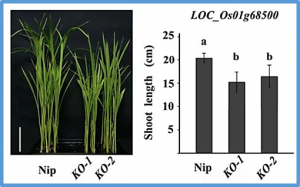
Strong seedling vigor is an important breeding target for rice varieties used in direct seeding. Shoot length (SL) is one of the important traits associated with seedling vigor characterized by rapid growth of seedling, which enhance seedling emergence. Therefore, mining genes for SL and conducting molecular breeding help to develop varieties for direct seeding. However, few QTLs for SL have been fine mapped or cloned so far
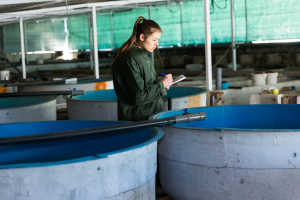
Researchers from Nofima, a food science research institute in Norway, and partners presented a guide for evaluating gene editing in aquaculture. Their review paper is available in Reviews in Aquaculture. Gene editing can transform aquaculture through improved animal welfare, nutrition, and farming efficiency. However, side effects on other vital traits or gene transfer to wild populations must be managed. Thus, Nofima created a framework for risk-benefit analysis of gene editing in aquaculture.

Researchers reviewed the potential of specialized microbes to remove heavy metals in extreme environments. These specialized microbes are described to be halo-alkaliphilic because they thrive in environments with high salinity and pH. The review also presented the role of microbes in industrial wastewater treatment and metal recovery from waste.
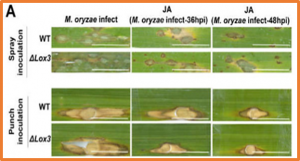
Lipoxygenase 3 (LOX3) is a lipid peroxidase found in rice embryos that is known to affect seed quality. Interestingly, deletion of the LOX3 gene has been shown to improve rice seed quality but decrease resistance to rice blast disease and drought. To investigate these opposing effects, we generated a LOX3 knockout construct (ΔLox3) in rice (Oryza sativa L.) plants. Blast resistance and transcription levels of rice genes in ΔLox3 rice plants and the effects of exogenous jasmonic acid (JA) on resistance and transcriptional levels of rice genes in Magnaporthe oryzae-infected ΔLox3 rice plants were further elucidated.

Researchers from Germany produced a novel method to find and create peptides that can be used against different types of bacteria. Their findings demonstrate the great potential of the technique in the health industry. Antimicrobial resistance is one of the top 10 health threats in the world, causing over 1 million deaths annually. To add to this troubling issue, the production of new microbials is also lagging behind. Researchers from various institutions in Germany combined AI with synthetic biology to develop a cell-free protein synthesis pipeline that can be used to create antimicrobial peptides from DNA templates.
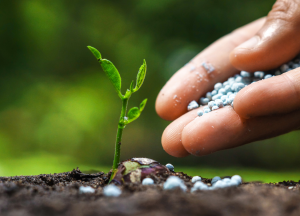
Chemical Engineers from Massachusettes Institute of Technology (MIT) have developed microbes coated with a metal-phenol network (MPN) that contains a combination of manganese and a polyphenol called epigallocatechin gallate (EGCG) to improve seed germination and shelf life during transportation. Long-term use of chemical fertilizers will not just contribute to carbon emissions but also contribute to the depletion of soil nutrients.
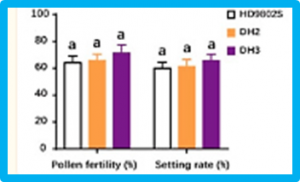
Rice blast caused by Magnaporthe oryzae is one of the most serious rice diseases worldwide. The early indica rice thermosensitive genic male sterile (TGMS) line HD9802S has the characteristics of stable fertility, reproducibility, a high outcrossing rate, excellent rice quality, and strong combining ability. However, this line exhibits poor blast resistance and is highly susceptible to leaf and neck blasts. In this study, backcross introduction, molecular marker-assisted selection, gene chipping, anther culture, and resistance identification in the field were used to introduce the broad-spectrum blast-resistance gene R6 into HD9802S to improve its rice blast resistance.

The Philippines' annual celebration of National Biotechnology Week (NBW) officially started on November 20, 2023, at the SM Seaside City Cebu, with the theme “Empowering Innovation for a Sustainable Future with Biotechnology.” This year's celebration is hosted by the Philippine Agriculture and Fisheries Biotechnology Program (DA Biotech), in collaboration with various public and private institutions in the country. The week-long celebration of NBW will feature a series of events and activities from November 20 to 24, 2023.
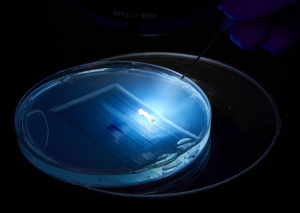
Eggs are prepared for microinjection with CRISPR-Cas3 at the CAT Finfish Genetics Innovation Center. Photo Source: The Centre for Aquaculture Technologies.The Centre for Aquaculture Technologies (CAT), a leading provider of genetics solutions in aquaculture, in collaboration with C4U Corporation, has developed CRISPR-Cas3 gene editing technology for aquaculture while ensuring that it maintains greater safety and unhindered legal access compared to its cousin CRISPR-Cas9.
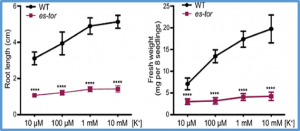
Potassium (K) is an essential macronutrient for plant growth, and its availability in the soil varies widely, requiring plants to respond and adapt to the changing K nutrient status. We show here that plant growth rate is closely correlated with K status in the medium, and this K-dependent growth is mediated by the highly conserved nutrient sensor, target of rapamycin (TOR).