


News & Events
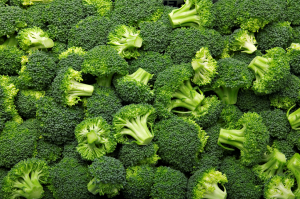
A study published in the Plant Biotechnology Journal shows that the knockout of ORF138 has restored the fertility of cytoplasmic male sterility (CMS) derived broccoli hybrids. The results of this study provide significant insights into the role of mitochondria in sex production machinery and the temperature-responsive ability of vegetable crops.

Yield10 Bioscience, Inc. has filed a request for a Regulatory Status Review (RSR) with the U.S. Department of Agriculture Animal and Plant Health Inspection Service (APHIS) Biotechnology Regulatory Services for elite Camelina sativa varieties modified to produce seed oil with essential omega-3 fatty acids eicosapentaenoic acid (EPA) and docosahexaenoic acid (DHA).
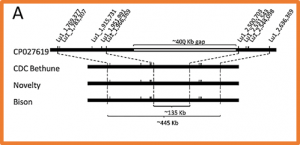
Fusarium wilt, caused by the soil-borne fungal pathogen Fusarium oxysporum f. sp. lini, is a devastating disease in fax. Genetic resistance can counteract this disease and limit its spread. To map major genes for Fusarium wilt resistance, a recombinant inbred line population of more than 700 individuals derived from a cross between resistant cultivar ‘Bison’ and susceptible cultivar ‘Novelty’ was phenotyped in Fusarium wilt nurseries at two sites for two and three years, respectively.
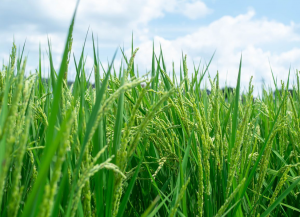
Scientists have discovered a novel gene in rice that promotes root development and provides tolerance to abiotic stresses. The gene can be utilized as a molecular marker to develop rice that is tolerant to extreme environmental conditions. Root architecture and function are essential for plants to obtain water and nutrients from the soil. However, environmental stresses can affect the development of the roots.
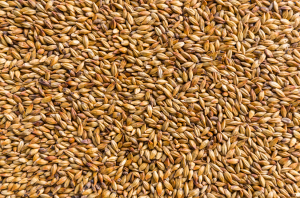
Researchers from the Hungarian University of Agriculture and Life Sciences and partners have identified a gene in barley that controls grain size and protein content. Their findings are reported in Plant Science. Grain Width and Weight 2 (GW2) is a gene that controls cereals' size and weight. Switching off this gene may lead to improving crop productivity.
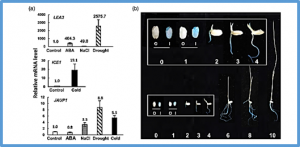
Root architecture and function are critical for plants to secure water and nutrient supply from the soil, but environmental stresses alter root development. The phytohormone jasmonic acid (JA) regulates plant growth and responses to wounding and other stresses, but its role in root development for adaptation to environmental challenges had not been well investigated. We discovered a novel JA Upregulated Protein 1 gene (JAUP1) that has recently evolved in rice and is specific to modern rice accessions
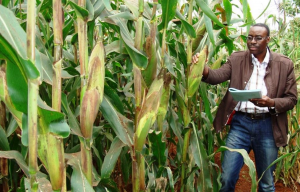
The Federal Government of Nigeria has approved the commercial release of genetically modified insect-resistant and drought-tolerant maize varieties, known as TELA maize. With this latest development, GM maize becomes the second food crop, after Bt cowpea, to be commercialized in the country. The approval was granted by the National Committee on Naming, Registration, and Release of Crop Varieties, Livestock Breeds/Fisheries (NCNRRCVLF) on January 11, 2024, in Ibadan. The varieties approved are SAMMAZ 72T, SAMMAZ 73T, SAMMAZ 74T, and SAMMAZ 75T.

In the past decade, gene editing and other breakthroughs in molecular biology led to new techniques for easing genetic improvement. These techniques do not lead to different results from those that earlier techniques could obtain; they just allow to reach the same results easily, faster, and with increased knowledge/control of the outcome. These techniques are now being discussed globally and many have asked questions about the regulation of gene editing.
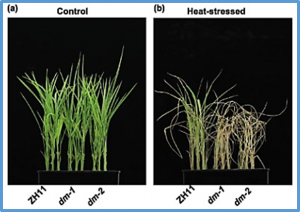
Rice (Oryza sativa L.) production is threatened by global warming associated with extreme high temperatures, and rice heat sensitivity is differed when stress occurs between daytime and nighttime. However, the underlying molecular mechanism are largely unknown. We show here that two glycine-rich RNA binding proteins, OsGRP3 and OsGRP162, are required for thermotolerance in rice, especially at nighttime. The rhythmic expression of OsGRP3/OsGRP162 peaks at midnight, and at these coincident times, is increased by heat stress. This is largely dependent on the evening complex component OsELF3-2.
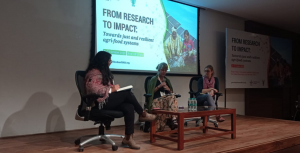
Despite the global commitment to sustainability outlined in the Sustainable Development Goals, our agri-food systems are far from being sustainable, resilient, and just. Social inclusion and environmental protection, which are essential pillars of sustainability, are currently lagging. Despite agri-food systems remaining a primary driver of environmental damage, there is still a global increase in undernourishment, according to the Global Hunger Index.
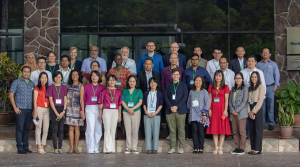
The event’s primary focus was to evaluate the previous year’s progress, refine strategies, and address challenges within the deltaic food systems. The workshop aimed to enhance AMD’s activities towards nutrition security in the Ganges-Brahmaputra Delta in Bangladesh and the Mekong Delta in Cambodia and Vietnam. The workshop’s objectives encompassed a comprehensive assessment of achievements and challenges, refinement of existing strategies and Theory of Change (TOC),
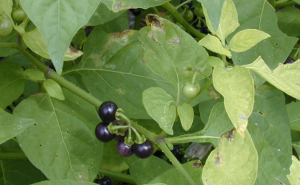
Solanum americanum serves as a promising source of resistance genes against potato late blight and is considered as a leafy vegetable for complementary food and nutrition. The limited availability of high-quality genome assemblies and gene annotations has hindered the exploration and exploitation of stress-resistance genes in S. americanum. Here, we present a chromosome-level genome assembly of a thermotolerant S. americanum ecotype and identify a crucial heat-inducible transcription factor gene, SaHSF17, essential for heat tolerance.