


News & Events

Crop technologies developed in partnership with CGIAR centers have been adopted to 221 million hectares globally. The report, published in World Development, revisits the relevant contributions of CGIAR, a network of international agricultural research centers, in agricultural productivity, particularly in developing countries, from 1961 to 2020.

This International Women’s Day, 8 March 2024, join the United Nations in celebrating under the theme Invest in women: Accelerate progress. The world is facing many crises, ranging from geopolitical conflicts to soaring poverty levels and the escalating impacts of climate change. These challenges can only be addressed by solutions that empower women. By investing in women, we can spark change and speed the transition towards a healthier, safer, and more equal world for all.

Flavonoids are a class of secondary metabolites widely distributed in plants. Regiospecific modification by methylation and glycosylation determines flavonoid diversity. A rare flavone glycoside, diosmin (luteolin-4'-methoxyl-7-O-glucosyl-rhamnoside), occurs in Chrysanthemum indicum. How Chrysanthemum plants evolve new biosynthetic capacities remains elusive. Here, we assemble a 3.11-Gb high-quality C. indicum genome with a contig N50 value of 4.39 Mb and annotate 50,606 protein-coding genes

Scientists from China used gene editing on bread wheat to boost grain length and weight. They also identified the molecular mechanisms that affect grain development. Bread wheat is a staple food crop that is consumed by 40% of the global population. Since there is an increase in food demand and a decrease in farmlands, it is crucial to breed for higher wheat yield.
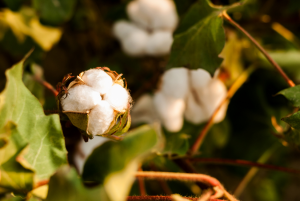
CRISPR-Cas-derived base editors offer precise gene editing, enabling major advances in basic research and crop improvement. However, their efficiency remains variable between target sites. Scientists from Huazhong Agricultural University and partners developed highly efficient base editors for cotton plants. Fusing GhABE8e to conventional nCas9 achieved 99.9% editing efficiency with no detectable off-target effects. Additionally, replacing nCas9 with dCpf1 broadened the range of editable target sites.
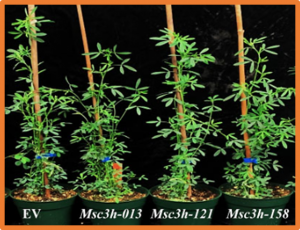
Alfalfa (Medicago sativa L.) forage quality is adversely affected by lignin deposition in cell walls at advanced maturity stages. Reducing lignin content through RNA interference or antisense approaches has been shown to improve alfalfa forage quality and digestibility. We employed a multiplex CRISPR/Cas9-mediated gene-editing system to reduce lignin content and alter lignin composition in alfalfa by targeting the COUMARATE 3-HYDROXYLASE (MsC3H) gene
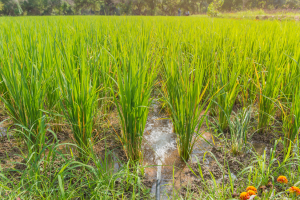
Researchers from the Heilongjiang Academy of Agricultural Science reported improved chilling tolerance in rice by overexpression of the OsRBCS3 gene. Their findings are published in the Plant Signaling & Behavior journal. Chilling stress is an essential environmental factor impacting rice production. The booting stage is the most sensitive stage in rice growth to chilling stress.
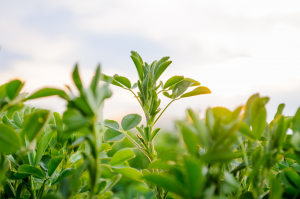
Researchers from Oklahoma State University and partners employed a multiplex CRISPR-Cas9 mediated gene editing system to reduce shoot lignin content and improve the digestibility and nutritional values of alfalfa. The paper is published in Frontiers in Plant Science. The forage quality of alfalfa is significantly affected by lignin disposition in cell walls during the advanced maturity stages of the plant.
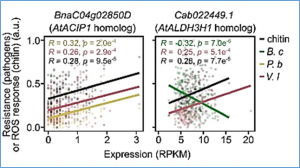
Crops are affected by several pathogens, but these are rarely studied in parallel to identify common and unique genetic factors controlling diseases. Broad-spectrum quantitative disease resistance (QDR) is desirable for crop breeding as it confers resistance to several pathogen species. Here, we use associative transcriptomics (AT) to identify candidate gene loci associated with Brassica napus constitutive QDR to four contrasting fungal pathogens

Researchers from China utilized CRISPR-Cas9 on rice to boost yield while under salinity stress. Their findings may help breed salt-tolerant crops in the future. Crops quickly grow when subjected to optimal conditions. However, environmental stresses, like salt stress, limit the grain yield and crop architecture of rice. Breeding crop varieties that are salt-tolerant is necessary for better agricultural productivity.

A study published in the Journal of Integrative Plant Biology shows that the CRISPR-Cas12i3 mediated editing of GmBADH1 and GmBADH2 improves 2-Acetyl-1-pyrroline (2-AP) and aroma of soybean. This research highlights the potential of gene editing in enhancing the taste quality of soybeans and their products.
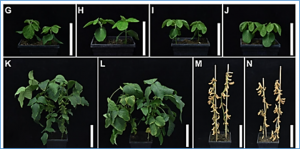
Soybean (Glycine max (L.) Merr.) is a major source of vege-table protein and oil in human diet and animal nutrition.Soybean seeds have been extensively used in various foodproducts and snacks. Taste quality, particularly the aroma, af-fects cooking and eating, and ultimately influences consumerpreference. Soy milk is particularly popular in China and hasbeen gaining popularity in many other countries in the world.