


News & Events
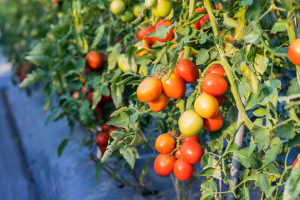
China Agricultural University researchers reported a key gene, SlWRKY37, which plays a vital role in tomato seed dormancy and germination. Their findings are published in the Social Science Research Network (SSRN). Seed germination, the process involved in transforming seeds into a new plant, is important for the survival and propagation of plants. Thus, the researchers explored the role of SlWRKY37 in this process.
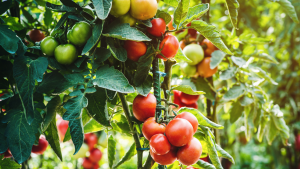
Researchers from Universidad Miguel Hernández in Spain released a review article highlighting recent developments in improving tomatoes through gene editing. The review, published in the International Journal of Molecular Sciences, presented three studies on using TALENs for tomato gene editing, particularly in gibberellin signaling, anthocyanin production, and potyvirus resistance.
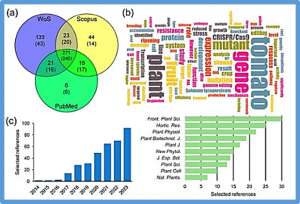
The use of gene-editing tools, such as zinc finger nucleases, TALEN, and CRISPR/Cas, allows for the modification of physiological, morphological, and other characteristics in a wide range of crops to mitigate the negative effects of stress caused by anthropogenic climate change or biotic stresses. Importantly, these tools have the potential to improve crop resilience and increase yields in response to challenging environmental conditions.

Scientists used multiplex gene editing to produce barley mutants that have higher grain weight or dietary fiber content. Their research may help breed barley with better health benefits. Barley is a widely cultivated cereal around the world. Barley and other cereal grains contain resistant starch (RS) that boosts gut health and minimizes glycemic index. RS is positively associated with amylose, but increasing the amylose levels in crops is difficult.
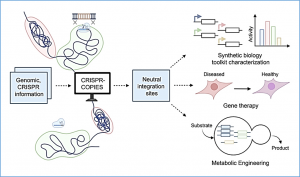
Researchers at the Center for Advanced Bioenergy and Bioproducts Innovation (CABBI) are further improving CRISPR's versatility and ease of use with a newly developed tool called CRISPR-COPIES, or COmputational Pipeline for the Identification of CRISPR-Cas-facilitated intEgration Sites. CRISPR-COPIES can identify genome-wide neutral integration sites for most bacterial and fungal genomes within two to three minutes.
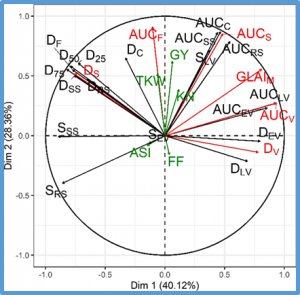
Key message Green Leaf Area Index dynamics is a promising secondary trait for grain yield and drought tolerance. Multivariate GWAS is particularly well suited to identify the genetic determinants of the green leaf area index dynamics. Abstract Improvement of maize grain yield is impeded by important genotype-environment interactions, especially under drought conditions. The use of secondary traits, that are correlated with yield, more heritable and less prone to genotypeenvironment interactions, can increase breeding efciency.
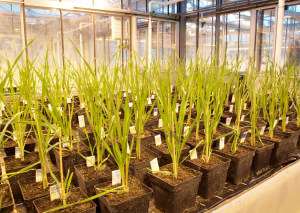
The Swiss Federal Office for the Environment has approved Agroscope's field trial of spring barley. The field trial is focused on a barley gene that has been disabled by using CRISPR-Cas9 technique to determine whether yields can be increased in this manner. The CKX2 gene is involved in seed formation. Disabling this gene using CRISPR-Cas9 genome editing increases yields in rice and oilseed rape.

Australia's Office of the Gene Technology Regulator announced the notification of application for the conduct of field trials of genetically engineered wheat with enhanced tolerance to environmental stress. The application was submitted by Trigall Australia Pty Ltd. The application indicated a proposed trial spanning for 5 years in 10 sites, a maximum of 20 hectares per year.
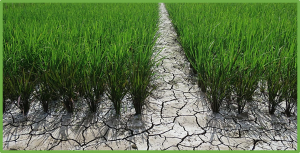
The crosstalk between gibberellin (GA) and abscisic acid (ABA) signaling is crucial for balancing plant growth and adaption to environmental stress. Nevertheless, the molecular mechanism of their mutual antagonism still remains to be fully clarified. In this study, we found that knockout of the rice NAC (NAM, ATAF1/2, CUC2) transcription factor gene OsNAC120 inhibits plant growth but enhances drought tolerance, whereas OsNAC120 overexpression produces the opposite results.

Chinese scientists genetically engineered succulents using a recently developed technique that does not involve tissue culture. Their results showed that the technique may be used to various plant species. Succulents are an essential part of the floriculture market due to their ornamental appeal and drought tolerance. However, only a few succulent species can undergo genetic engineering. Researchers from various institutions in China utilized a cut-dip-budding (CDB) gene delivery system to modify three succulent varieties,
For decades, researchers worldwide have been harnessing the natural gene-silencing technique called RNA interference (RNAi) for crop improvement. One of the earliest applications of RNAi was the development of the delayed-softening trait in tomatoes reported in 1992. RNAi works like a dimmer switch for genes to lessen their expression instead of entirely removing them. This method offers many benefits compared to other gene editing tools.
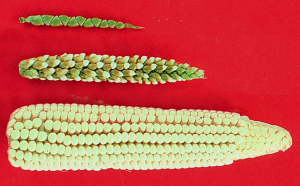
Genomic selection offers new prospects for revisiting hybrid breeding schemes by replacing extensive phenotyping of individuals with genomic predictions. Finding the ideal design for training genomic prediction models is still an open question. Previous studies have shown promising predictive abilities using sparse factorial instead of tester-based training sets to predict single-cross hybrids from the same generation. This study aims to further investigate the use of factorials and their optimization to predict line general combining abilities (GCAs) and hybrid values across breeding cycles.