


News & Events

Director-General QU Dongyu has signed, on behalf of FAO, a Letter of Intent with the Swiss Food & Nutrition Valley (SFNV) to promote innovation and safeguard global agrifood systems for the future. The signing ceremony took place at an event held today at Agropole, a campus in the Swiss town of Molondin dedicated to shaping the future of food. Also in attendance at the event were Marie-France Tschudin, the President of SFNV's Steering Committee, and Christina Senn-Jakobsen, SFNV's Chief Executive Officer.
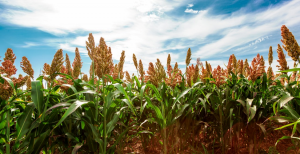
Researchers from Mekelle University and Addis Ababa University reviewed the current advancements in gene editing of sorghum. Their study also showcases the potential of using gene editing on sorghum to address issues on food security. Sorghum is a staple food in Africa and ranked fifth as the most important cereal around the world. Similar to other crops, it is threatened by various issues, such as pests, pathogens, climate change, and other environmental problems.
Soil salinity is a major environmental stressor affecting agricultural productivity worldwide. Understanding plant responses to salt stress is crucial for developing resilient crop varieties. Wild relatives of cultivated crops, such as wild tomato, Solanum pimpinellifolium, can serve as a useful resource to further expand the resilience potential of the cultivated germplasm, S. lycopersicum.
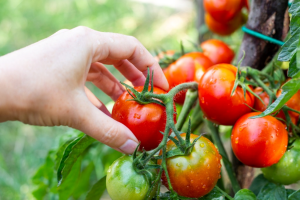
Scientists from King Abdullah University of Science and Technology and partners identified various factors and genes that are associated with the salt stress tolerance of wild tomatoes. Soil salinity is a major stressor that affects agricultural productivity around the world. It is important to understand how crops respond to salt stress to develop resilient varieties.

Researchers from Embrapa Genetic Resources and Biotechnology in Brazil, together with partners, conducted a survey to assess the public perception of folate-biofortified lettuce varieties. Their findings are published in Transgenic Research. Lettuce, a dietary staple worldwide, offers a promising platform to increase folate consumption through biofortification. To address potential folate deficiencies, researchers developed a genetically modified lettuce with elevated folate levels
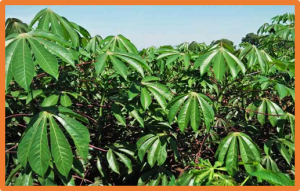
In this study, we investigated the mechanisms responsible for cassava plant height development using phenotypic, anatomical, and transcriptomic analyses. Phenotypic and anatomical analysis revealed that compared to the high-stem cassava cultivar, the dwarf-stem cassava cultivar exhibited a significant reduction in plant height and a notable increase in internode tissue xylem area. Meanwhile, physiological analysis demonstrated that the lignin content of dwarf cassava was significantly higher than that of high cassava. Notably, transcriptome analysis of internode tissues identified several differentially expressed genes involved in cell wall synthesis and expansion,
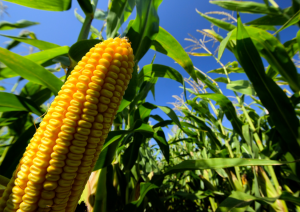
The European Food Safety Authority (EFSA) GMO Panel has released its Scientific Opinion on the safety of genetically modified (GM) insect-protected maize MON 95275, for import, processing, and food and feed uses within the European Union (EU) and does not include cultivation. Following the submission of application GMFF-2022-5890 EFSA-Q-2022-00330 under Regulation (EC) No. 1829/2003 from Bayer CropScience, the EFSA GMO Panel was asked to deliver a Scientific Opinion on the safety of GM insect-protected maize MON 95275.
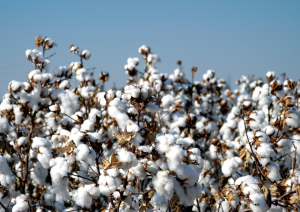
A new study is shedding light on how to make cotton more climate-resilient through improved water use efficiency (WUE). WUE, a critical trait for crop resilience in the face of climate change, measures the amount of biomass or economic yield produced per unit of water used, often summarized as "crop per drop." A research team at Clemson University led by Sruthi Narayanan has discovered that certain root traits in Upland cotton can significantly enhance WUE.
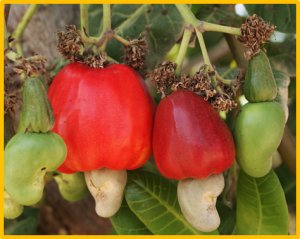
Weeds are among the limiting factors that influence low production of economically important crops including cashew (Anacardium occidental L.). Shrub weeds attribute to inter-competition for resources, hinder harvesting and ultimately reduce cashew yields in Tanzania. The current study determined the distribution, characteristics and chemical control option of Dichapetalum Engl in Lindi and Mtwara regions, Southeastern Tanzania. The distribution study involved a survey for weed presence along the areas of Lindi and Mtwara regions.
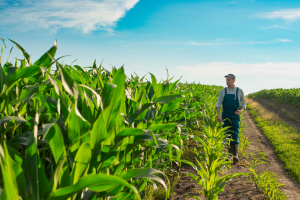
Researchers from Bingham University and the National Biotechnology Research and Development Agency analyzed and provided recommendations to address the socio-economic implications of foods enhanced through biotechnology. The results of their study are published in the International Journal of Research and Scientific Innovation. Based on the assessment of the Cost of a Healthy Diet (CoHD) in Nigeria, the authors highlighted several policy interventions essential for accelerating the accessibility and affordability of biotechnological products.
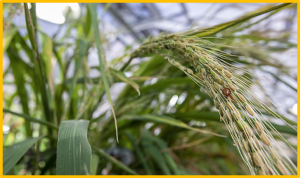
Discovering and engineering herbicide-resistant genes is a crucial challenge in crop breeding. This study focuses on the 4-hydroxyphenylpyruvate dioxygenase Inhibitor Sensitive 1-Like (HSL) protein, prevalent in higher plants and exhibiting weak catalytic activity against many β-triketone herbicides (β-THs). The crystal structures of maize HSL1A complexed with β-THs were elucidated,
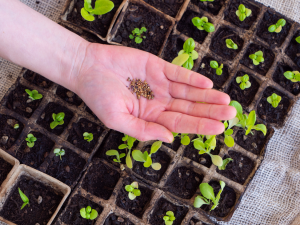
A report published by Spherical Insights forecasts a 10.20% growth of the global transgenic seeds market from 2023 to 2033. The market is predicted to reach a revenue of $80.91 billion by 2033. Transgenic seeds are developed through the modification of DNA using genetic engineering (GE) procedures. Recently, there has been an increasing demand for transgenic seeds due to different factors, such as enhanced agricultural productivity, higher nutritional value, tolerance to adverse environmental conditions, and resistance to pests and diseases.